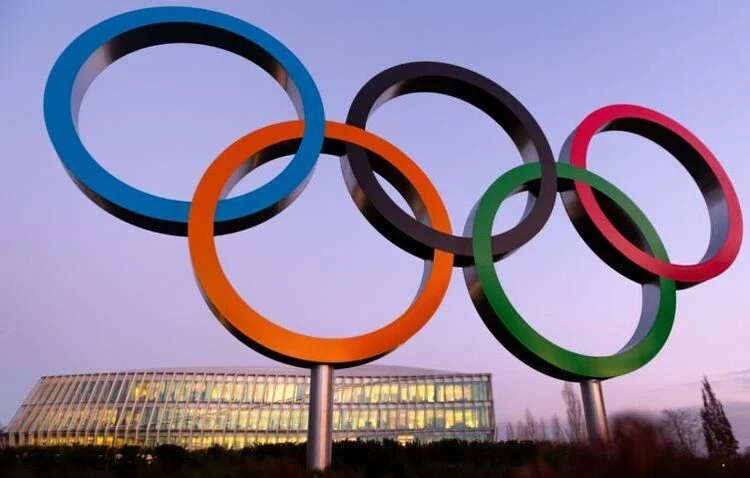
Since their inception, the Olympic Games have always been positioned as a symbol of international unity; however, in practice, this has proven to be more complicated. The founder of the modern Olympic Games, Pierre de Coubertin, unfortunately, could not foresee how difficult it would be to separate sports from politics. Throughout its history, the International Olympic Committee (IOC) has often acted as an arbiter, imposing sanctions on entire countries. Over more than a century of existence, an impressive list has formed of those who have been banned from competition, with reasons ranging from wars to doping scandals.
The initial disqualifications began as a result of World War I. In 1920, Antwerp denied participation to Germany, Austria, Hungary, Bulgaria, and Turkey. Four years later, the Germans found themselves out of the game again at the Paris Olympics. A similar situation occurred during World War II: in 1948, athletes from Germany and Japan were not welcomed in London. At that time, sports became a tool of punishment for international crimes.
The longest isolation affected the Republic of South Africa. Due to the policy of racial segregation and apartheid, South Africa was excluded from the Olympic Games for nearly thirty years—from 1964 to 1992. Only after the fall of the regime were athletes from this country able to participate in competitions again. Political conflicts and internal issues also called into question the participation of countries such as Iraq, Afghanistan, and Yugoslavia, emphasizing that the Olympic Charter requires adherence to both sports and humanitarian standards.
In the 21st century, the focus has shifted to internal problems within sports organizations. For example, Kuwait faced sanctions due to the government's attempts to interfere in the affairs of the national Olympic committee, which in 2016 forced Kuwaiti athletes to compete under a neutral flag. However, the most resonant issue has been the prolonged conflict related to Russia. Initially, doping scandals deprived the country of its flag at the Games in Pyeongchang, Tokyo, and Beijing, and then the events of 2022 led to stricter measures. As a result, athletes from Russia and Belarus effectively became "stateless athletes," allowed to compete only as individual participants under strict conditions.
These examples of disqualifications clearly demonstrate that, despite the slogan "sport is outside politics," the Olympic Games continue to reflect all conflicts and changes in global civilization.