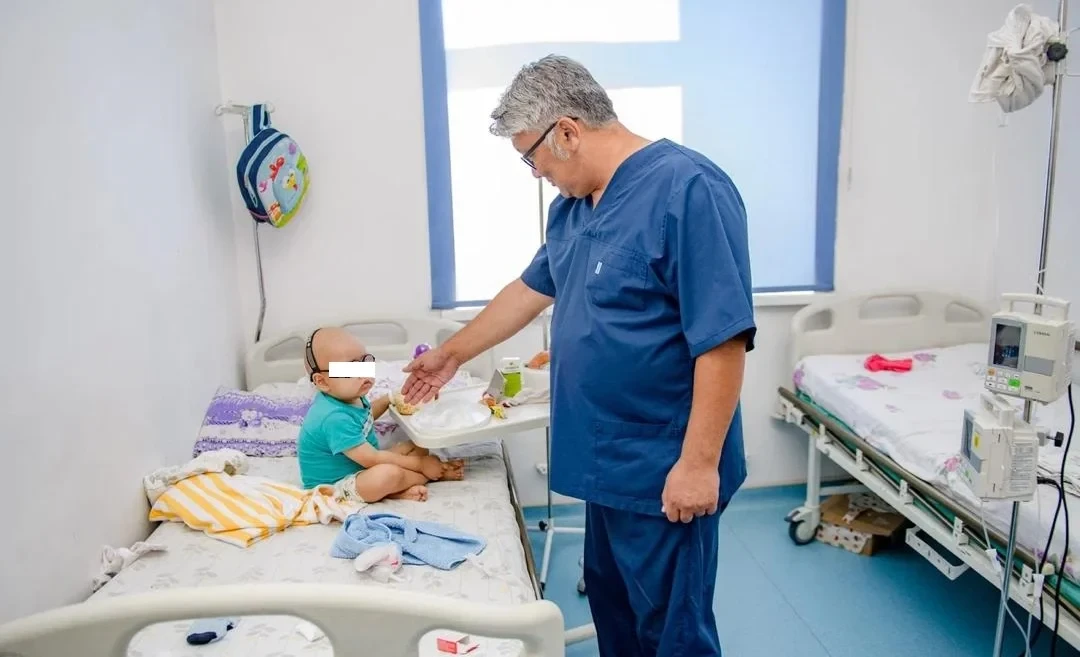
Professor, Doctor of Medical Sciences Valentin Sinitsyn highlights the significance of internet infrastructure for progress in the field of radiological diagnostics in his article.
Valentin Sinitsyn holds the position of head of the radiological diagnostics department at the University Clinic and head of the department of radiological diagnostics and therapy at the Faculty of Fundamental Medicine of the M.V. Lomonosov Moscow State University, and he is also the president of the Russian Society of Radiologists and Radiologists (ROPR).
Text of the article:
“Digitalization and the implementation of artificial intelligence have revolutionized the field of radiological diagnostics. It is now becoming evident that the integration of all components of this process is critical for its effective functioning.
There is a need to unite modern medical equipment, highly qualified specialists, digital image archives, and reports through telecommunication networks that connect diagnostic offices and departments with all levels of healthcare services, including local, regional, and national.
It is important to note that the efficiency and accessibility of radiological diagnostics depend not only on the technical specifications of the equipment, such as the performance of tomographs, but also on the speed of transmitting important information.
Modern radiology requires the transmission of large volumes of data (up to 1-2 gigabytes per study) for procedures such as CT, MRI, or PET-CT. The implementation of teleradiology and telemedicine is becoming increasingly common, allowing doctors analyzing studies to be far from the locations where examinations are conducted.
Moreover, to date, the share of studies processed by artificial intelligence systems before their interpretation by doctors has significantly increased. This processing is often carried out remotely, in specialized computer centers, with information transmitted over long distances.
High-speed internet, providing high bandwidth, has become critically important for radiological diagnostics and medicine as a whole.
Delayed diagnosis due to delays in data acquisition can have serious negative consequences for patients in emergency situations, leading to incorrect or delayed treatment and worsening prognosis. Rapid information transmission for prompt description of studies allows for faster diagnosis and initiation of treatment, which directly impacts patient survival.
High-speed internet helps eliminate territorial disparities, providing residents of remote and sparsely populated areas access to quality diagnostics.
Furthermore, high-speed internet gives doctors of all specialties access to cloud archives of diagnostic images (PACS), artificial intelligence systems for data analysis, and enables collective discussions of complex cases, involving experts and consultants from anywhere in the country and the world. Without rapid data transmission, these technologies lose their value.
It is clear that high-speed internet has become not just a convenient tool for diagnostic doctors, but a fundamental element of the healthcare ecosystem, ensuring the speed, accuracy, and accessibility of diagnostics.
Investing in the digital infrastructure of medicine is an investment in the quality and timeliness of medical care for every patient.”
Previously, Professor Igor Pershukov noted that modern science is global, and for scientists to work successfully, they need fast and stable access to international medical and scientific resources. Poor quality internet connections, delays, and overloaded channels reduce the effectiveness of scientific work. The full text of the article is available at the link.