The study notes that since the early 20th century, there have been about 100 tsunamis in the Mediterranean Sea and its surroundings, accounting for approximately 10% of the total number of recorded cases worldwide. Despite the fact that this region is historically considered relatively safe, scientists emphasize that even minor waves can pose a serious threat to densely populated coastal areas.
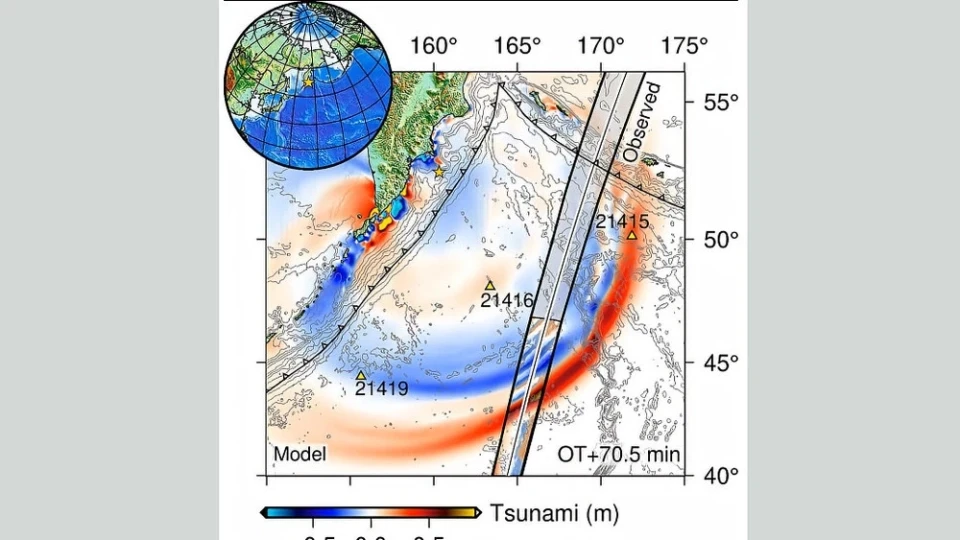
Tsunamis are typically triggered by powerful earthquakes or volcanic eruptions and can consist of several successive waves, the first of which is not always the strongest. The main source of danger comes from strong currents that can flood harbors, threaten swimmers, and cause significant damage to coastal infrastructure.
Among the most vulnerable areas, experts highlight several "hot spots." First and foremost is Greece, particularly regions such as the island of Crete, the Hellenic Arc, and the Aegean Sea, where the African Plate is subducting beneath the Eurasian Plate. One of the most well-known examples is the earthquake of 365 AD in Crete, which triggered a powerful tsunami that flooded significant areas of the eastern Mediterranean.
Additionally, areas of increased risk include the southern regions of Italy, including Sicily and the Strait of Messina, where a tsunami of up to 13 meters occurred in 1908. There is also a danger off the coast of Spain, particularly around the Balearic Islands and Valencia, as well as along the shores of Algeria and Morocco in North Africa.
The coast of Portugal is also at risk, as the African and Eurasian tectonic plates collide there. Although the likelihood of large waves is lower compared to active seismic areas of the Pacific Ocean, the threat remains significant.
Western Turkey, especially the Aegean coast around Izmir and the Bodrum Peninsula, is also among the regions with increased seismic activity where small tsunamis may occur. A moderate risk persists along the southern coast of France, including Nice, Marseille, and Toulon.
Experts note that the compact size of the Mediterranean Sea is a distinctive feature. This means that tsunamis can reach the shores within 20-40 minutes after an earthquake, significantly reducing the time for warnings and evacuation of the population.
Currently, countries in the region participate in UNESCO's tsunami warning system (NEAMTWS). France, Italy, Greece, Turkey, and Portugal have their national monitoring and warning centers that respond to potential threats.
According to experts, the highest tectonic activity is observed off the coasts of Greece, Turkey, and Italy in the eastern Mediterranean. The risk in the central part of the region is assessed as moderate, while in the western part it is lower; however, the possibility of a tsunami cannot be completely ruled out.