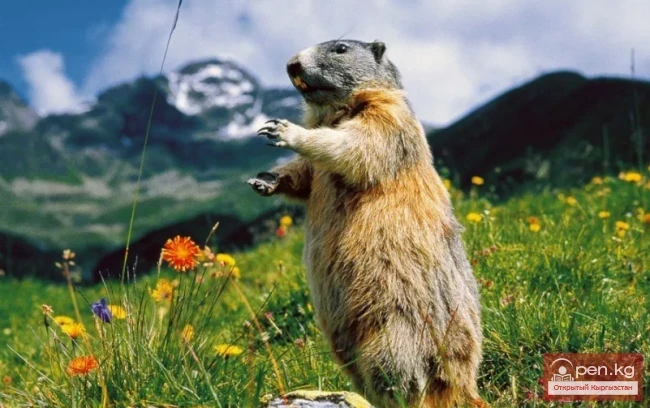
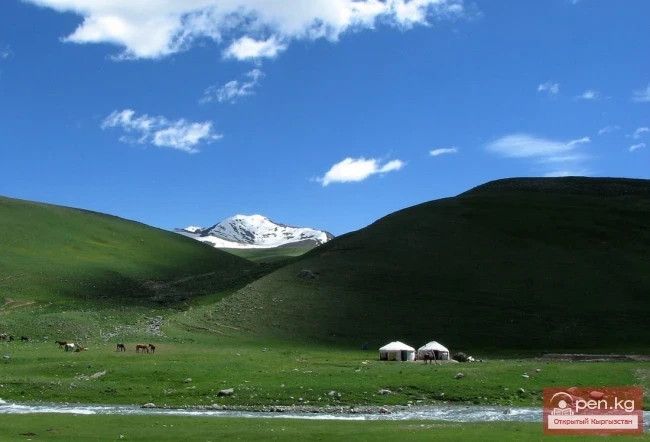
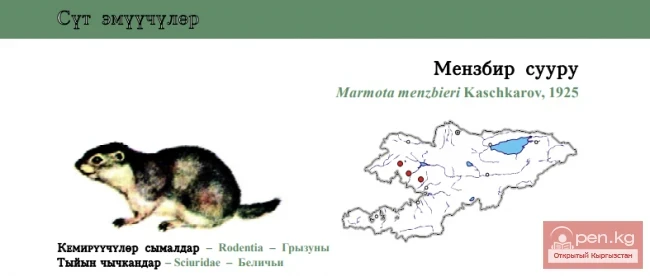
Talgat, a villager, shared with a Turmush correspondent his unusual discovery that occurred in December 2025. In the snowy mountains of Suusamyr, he encountered a solitary marmot. This behavior of the rodent surprised him: instead of sleeping in its burrow, as is typical in winter, the marmot was sitting on a snow-covered slope. “I brought it closer to the nearest burrow entrance, and it quickly disappeared. But its behavior was strange: it didn’t try to run away and showed no fear of humans. I had seen marmots in the mountains before, but this is my first encounter with them in winter,” Talgat said.
Ecologist Alexander Sosnovsky explained why the marmot was above ground at such an unusual time. “Marmots are known for their long winter hibernation, which can last up to seven or eight months. They are usually active from April to August. At three years old, marmots begin to reproduce: from May to June, they give birth to three to five pups. Once they reach the size of a juvenile marmot, their parents bring them above ground, where the young marmots play and wrestle under the supervision of adults,” the ecologist noted.
Marmots create deep burrows where the entire family gathers in winter. An interesting fact is that they expel weak and sick relatives from the burrow who have not been able to accumulate enough fat reserves. This behavior seems to be instinctual: a sick individual could infect others, and its death in the burrow could disrupt the winter sleep of the entire family. Additionally, marmots can be carriers of dangerous diseases, including the plague. Therefore, if travelers or hunters encounter a marmot exhibiting unusual behavior, it should be destroyed, and the carcass burned,” Sosnovsky added.
According to the ecologist, the activities of marmots in the soil are significant for mountain ecosystems. They bring soil layers to the surface, which contributes to drainage and aeration of the soil, as well as affects the vegetation cover. Some species of mountain plants can only grow in areas inhabited by marmots.