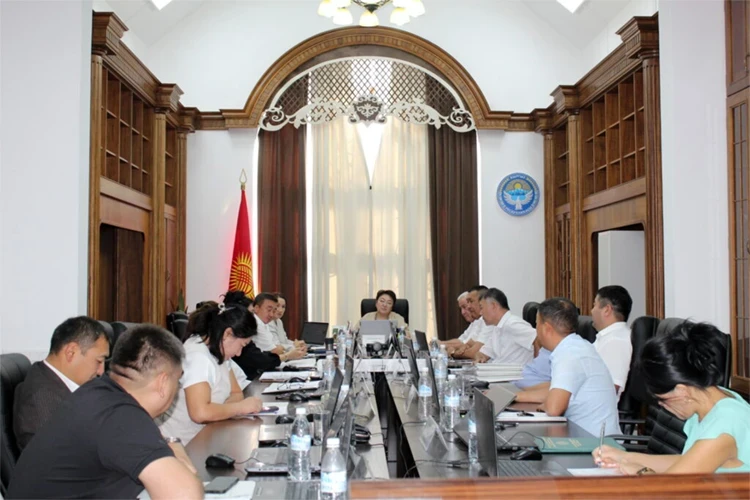
The public organization MoveGreen, which conducts independent air quality monitoring, has presented its analytical report covering the period from December 2024 to November 2025.
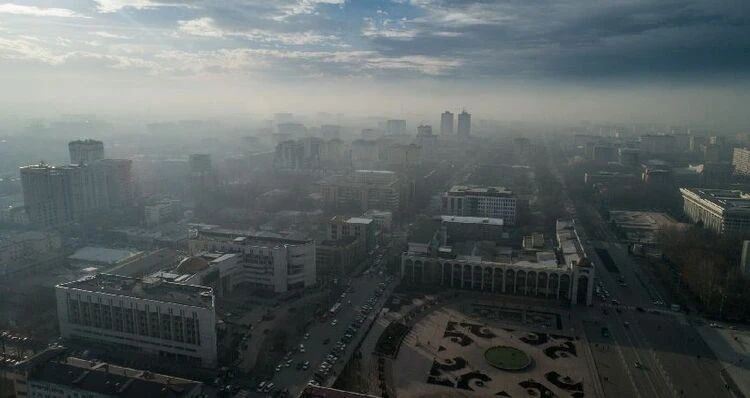
The information from the report shows that air pollution has pronounced seasonal fluctuations and is particularly exacerbated during the heating season. Bishkek recorded about 120 days with exceedances of established norms, while the maximum pollution occurred on December 24, 2024, exceeding the government norm by more than 11 times.
In Osh, the situation is even more critical: out of 336 days of observation, pollution was recorded on 159 of them. Unlike the capital, air pollution in this city occurs throughout the year, with an annual average concentration of PM2.5 of about 74 micrograms per cubic meter, which is nearly 5 times higher than the government norm and 15 times higher than the norm established by WHO.
The analysis also showed that buildings do not fully protect against street smog during periods of high concentration, leading to the registration of 58 days with indoor levels exceeding norms.
To address this issue, MoveGreen recommends developing green energy, improving public transport, increasing the number of green spaces, and expanding the monitoring system with public access to data.
Experts emphasize that air quality depends not only on PM2.5 levels. During the warm season, cities also experience significant exceedances of norms for nitrogen oxides (NOx) and formaldehyde (CH2O), which pose health risks.
Thus, one of the important steps towards improving air quality is the establishment of a comprehensive monitoring system:
- installation of sensors to track various pollutants;
- increasing the density of the sensor network in Bishkek and Osh;
- expanding the sensor network beyond major cities;
- collecting and publishing data in open data format.
According to the recommendations of the World Bank and MoveGreen, government agencies need to take a series of comprehensive steps to improve the situation.
In the energy sector:
- implementation of energy-efficient technologies to reduce coal consumption;
- encouragement of the transition to green energy for heating residential buildings;
- installation of highly efficient filters to capture PM2.5 at boiler houses and industrial enterprises.
In the transport sector:
- financing of environmentally friendly vehicles;
- increasing the attractiveness of public transport, including reducing travel time for passengers (dedicated lanes);
- introducing technical inspections for vehicles.
Regarding greening:
- combating road and soil dust in the city (greening instead of bare soil, road and sidewalk repairs);
- comprehensive multi-level greening (grass, shrubs, trees), vertical greening of facades, and modernization of irrigation systems.
In air quality management:
- improving the legislative framework and coordination between various levels of government;
- ensuring accountability to the public and providing open access to air quality data;
- supporting the development of civil air quality monitoring in Kyrgyzstan;
- joint efforts to combat transboundary air pollution with other Central Asian countries.
Reference 24.kg
PM2.5 refers to the smallest airborne particles with a diameter of up to 2.5 micrometers, which can deeply penetrate the lungs and bloodstream, posing a serious threat to human health.