Capital Development Plan
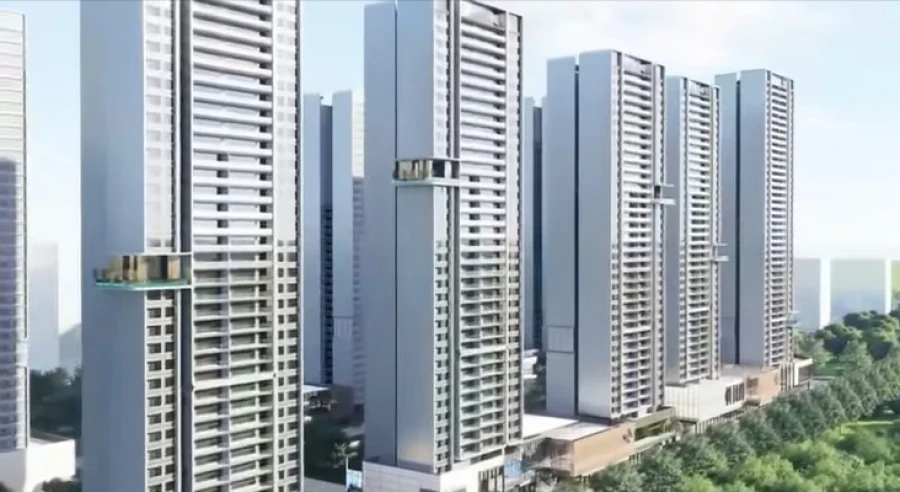
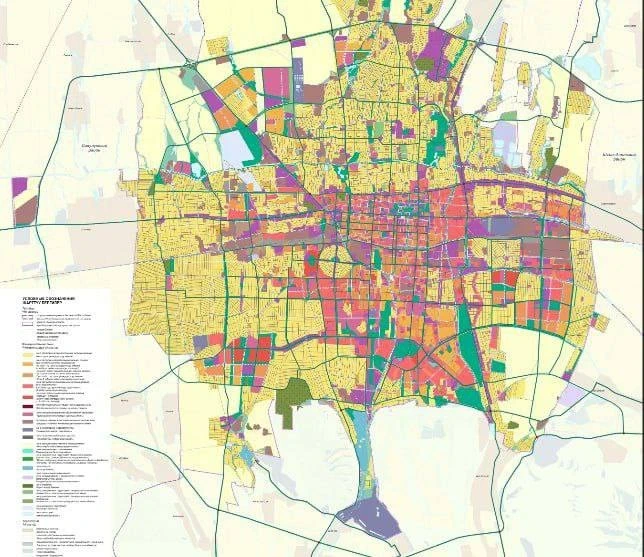
The new general plan emphasizes the construction of multi-story residential complexes. It is expected that over 60% of new housing will consist of apartment buildings, of which nearly half will be high-rise (nine stories and above). Medium-rise buildings will account for about 11%, while low-rise houses up to three stories will make up only 10% and will be built only in areas where high-rise construction is prohibited.By 2050, it is planned to construct and commission about 24.8 million square meters of housing, of which approximately 30% will be built according to already approved projects.
Thus, by 2050, the total area of the city's housing stock should reach 42.2 million square meters, which means almost a twofold increase over 25 years.
Where Will High-Rise Buildings Be Constructed?
Separate zones have been designated for high-rise construction in Bishkek. According to zoning, high-rise buildings are expected to be built in the following areas:- the area of the old racetrack;
- Aitmatov Street near the canal;
- the territory above Aaly Tokombaev Street, where work on new residential complexes is already underway;
- Ankara Street;
- the village of Orok, where the new "Bishkek Arena" stadium is being built.
Additionally, medium-rise houses are planned to be built in the city center.
Preservation of Stalinki
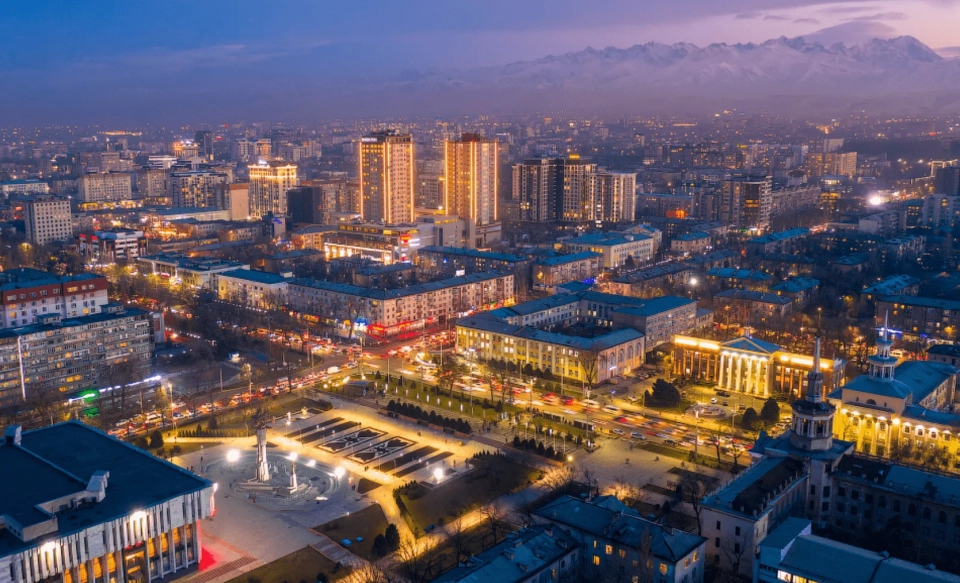
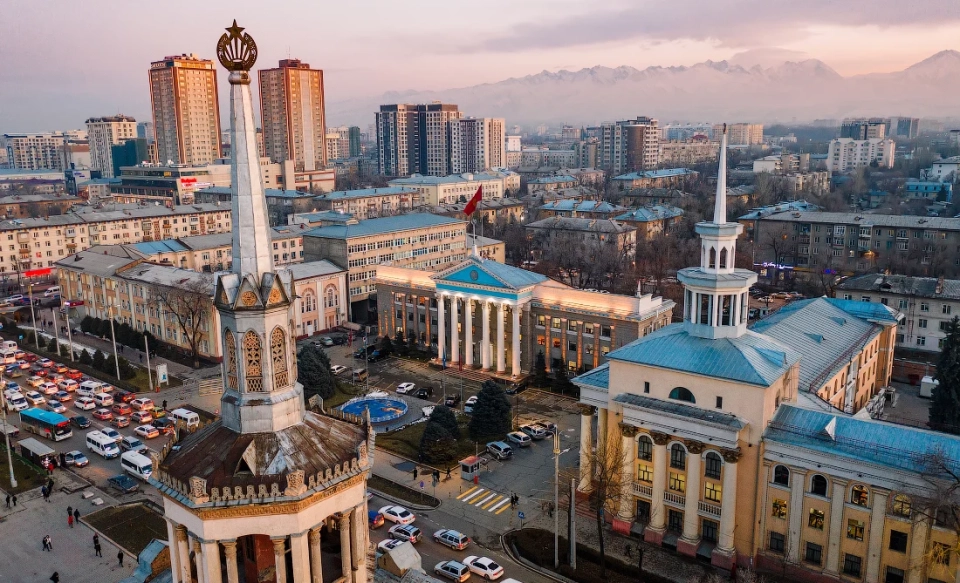
The appearance of the historical center of Bishkek will be preserved, authorities promise. The Stalinki will remain, while in other areas, high-rise buildings may be constructed in their place. Furthermore, multi-story complexes are planned to be built on the sites of shanties. The city hall noted that the issue of replacement should be resolved by property owners with investors.Multi-Story Development on the Outskirts
As a result of administrative reform, some villages have become part of Bishkek. During public discussions, residents of these villages raised questions about their land plots. It turned out that some agricultural lands, for example in the village of Maevka, are planned for residential development. City hall representatives assured that private property will remain inviolable. These lands may be transformed, and owners can unite into a cooperative or enter into agreements with investors for construction.Sadyr Japarov announced at a public kurultai that due to a lack of land, the State Housing Corporation plans to start building low-rise houses in rural areas by 2030.
Demographic Forecasts
It is projected that the population of Bishkek will increase to 1.9 million people by 2050.Water Supply Limitations
Currently, Bishkek receives water from "Bash-Kara-Suu" and "Orto-Alysh." The city hall plans to develop a third source - the Issyk-Ata deposit, to ensure further water supply to the city.However, this may not be enough. The expected water consumption in the capital by 2050 will be about 500 thousand cubic meters per day. Authorities intend to introduce limits on drinking water consumption.
City Energy Supply
It is forecasted that electricity consumption in Bishkek will increase by approximately 573 MW, considering the load from residential buildings, public institutions, and street lighting. Small industrial enterprises will add about 176 MW.To support this growth, JSC "NESC" and "BPES" plan to:
- construct a 500 kV substation;
- build a 220 kV substation;
- create a double-circuit 220 kV power transmission line.
- to build at least three 110/35/10 kV substations;
- to reconstruct existing power lines and replace outdated equipment at substations.
- modernized CHPP-1;
- completion and unsealing of CHPP-2;
- planned solar power plants outside the city (Issyk-Kul region);
- Ala-Archa HPP cascade;
- new HPPs south of Bishkek;
- mini-CHPPs;
- solar panels for private houses.
Measures to Combat Smog
To reduce smog levels, a phased transition of CHPPs and private heating systems to cleaner fuels, primarily gas, is planned. Boiler houses and power plants will be equipped with modern filters.Industrial enterprises located near residential areas will be modernized or relocated outside the city.
Emission reductions will also be achieved by improving transport infrastructure: bypass roads will be built, and transit trucks will be removed from residential areas. The development of bike paths, eco-friendly transport, and the increase of green zones are also planned.
Increasing Green Zones
According to regulations, there should be 16 square meters of green space per resident. Currently, this figure is only 4.5 square meters.In recent years, the area of green spaces in Bishkek has decreased by 20%, which particularly exacerbates the situation in winter. Air pollution in the city exceeds permissible norms by three to five times.
Currently, the area of green spaces is about 450 hectares, but another 2,950 hectares are planned to be allocated for new parks and squares, including an urban forest park on the heights of Boz-Boltok. By 2050, the area of public green zones should increase to 3,400 hectares.
Some Nuances
It has been found that some plots designated in the general plan as green zones are privately owned. The city hall acknowledges that the data will be adjusted, and the actual area for greening may turn out to be smaller.Moreover, according to Kalichi Umuraliyeva, in the new general plan, some parks and squares have lost their protected status. Authorities promise to address this issue as well.
The "15-Minute City" Concept
The general plan envisions the development of the "15-minute city" concept, where schools, medical institutions, and other social facilities will be within walking distance.It is planned to build 174 new schools:
- 59 in the Lenin district;
- 62 in the Oktyabr district;
- 35 in the Pervomaisky district;
- 18 in the Sverdlovsk district.
- A National Center for Traumatology and Orthopedics at: Bishkek, Krivonosova St., 206;
- Maternity Hospital No. 1 at: Bishkek, Usenbaev St., 40;
- A medical town in the southeast of the capital.
Public Transport
The idea of building a metro in Bishkek has been rejected due to high costs and low passenger traffic. Monorails and cable cars are also not considered as transport solutions. A cable car is only possible as a tourist project with investment.A new form of public transport is the tram. In the first phase, it is planned to build 28 km of lines along Jibek Jolu Avenue and the streets of Shabdan Baatyr, Fuchik, and Akhunbaev. Kyiv Street will become pedestrian.
Additionally, metro buses will be introduced to connect the North with the South and the Center.
Infrastructure for Scooters and Bicycles
The general plan includes the development of infrastructure for scooters and bicycles. The total length of bike routes will be 152 km, but the question of where exactly scooter users will ride - on sidewalks or roadways - remains open.New Urban Center
In Bishkek, administrative, cultural, and business centers are concentrated in one place. The new general plan proposes to change this by distributing large facilities across various districts according to their purpose.- The business center will be located near Bishkek-City in the Lenin district;
- The administrative center - in the southern part of the city along Chingiz Aitmatov Avenue;
- Shopping centers - in the areas of the "Dordoy," Alamedin, "Talai," "Etalon Stroy," and Osh markets.
Construction of New Roads
A new railway mainline of 175 km is planned to be created, which will bypass the residential areas of Bishkek and allow transit freight trains to exit the city. An 11.2 km branch to "Manas" airport and a separate railway station are also provided.Additionally, a full-fledged bypass road around Bishkek with a length of 89 km is planned, necessary for transit transport and redistributing urban flows. The southern section of 49.4 km is expected to be built, while the northern section of the Almaty - Bishkek - Tashkent road, 39.4 km long, will be reconstructed. The project includes two overpasses over the railway and 15 multi-level interchanges.
A new bus station is also planned to be built near the new Osh market, along the Bishkek - Manas International Airport road, to serve intercity and suburban routes.
Reconstruction of Internal Roads
The update of existing highways with a total length of over 331 km is planned, part of which will meet the standards of high-speed highways, while the other part will be formatted for regulated traffic.New roads of about 255 km in length are also planned to connect different parts of the capital and relieve overloaded routes. The general plan includes the construction and reconstruction of major road facilities: seven overpasses over the railway, 15 multi-level interchanges, and bridges over rivers.
It is not yet specified where these roads will run.
Process of Developing the General Plan
Initially, the general plan was to be developed by the Japanese company Nikken Sekkei. At the government's request, the city hall signed a contract with them to prepare the city's master plan. However, later the development of the general plan itself was transferred to the St. Petersburg Institute of Future Urban Development. The reasons for the change of developer have not been explained by the city hall.No exact information has been provided about the cost of the general plan. It is known that funding has been provided by a foreign investor. Vice Mayor Azamat Kadyrov reported that last year an investment project was implemented at the site of the old racetrack, and a clause on financing the development of the general plan was included in the agreement with ROX Group, so all expenses are covered by the foreign investor.
Discussion of the General Plan: Issues Raised
During the discussions of the general plan, speculation in the land market arose, and false information about the change of status of plots was spread. Fraudsters tried to take advantage of the expectations of city residents. The city hall urges people to refer only to official sources and not to fall for the tricks of scammers.When Will the General Plan Be Approved?
The document is expected to be approved after the New Year holidays. After its adoption, the development of a detailed plan will begin, where the boundaries, placement of facilities, number of floors, and density of construction will be clearly indicated.Then, sectoral schemes will be created.