Let’s recall the key events that took place in the capital in 2025:
1
Road Repairs
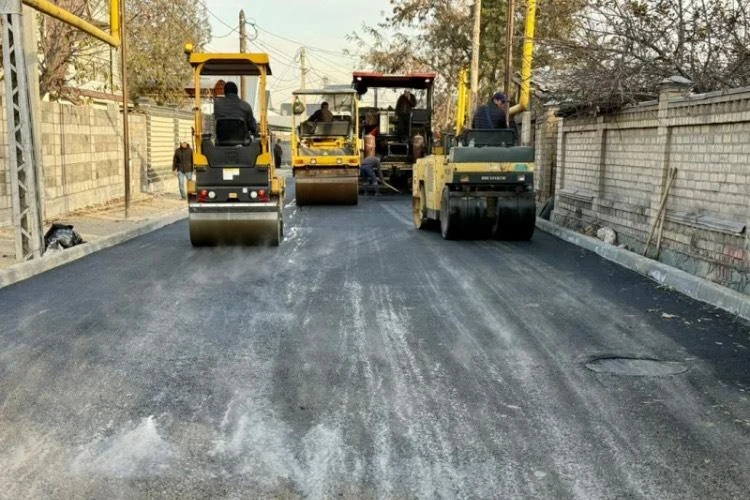
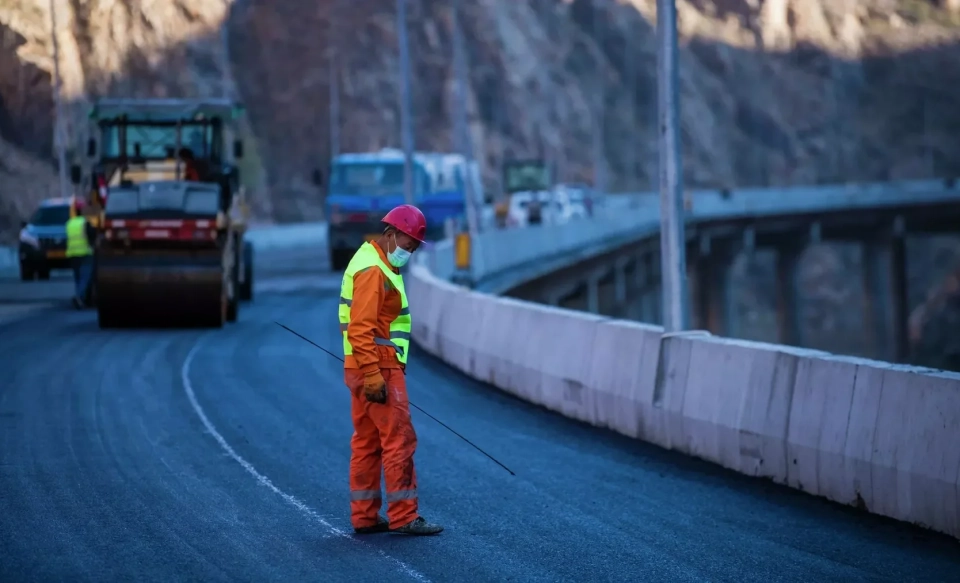
Last year, nearly 100 kilometers of roads were repaired in Bishkek, covering 147 streets (of which asphalt was laid on 122, and sidewalks were restored on 25).
According to Vice Mayor Ramiz Aliyev, this is a record figure for the city, as previously only up to 30 kilometers were repaired.
For 2026, officials have also planned ambitious tasks — they intend to reconstruct more than 100 kilometers of roads, including not only central streets.
2
Traffic Jam Issues
At the beginning of the construction season, authorities promised that streets would be closed in turn to avoid excessive congestion. However, in practice, this did not always happen, and alternative routes were limited.
With the start of the school year on September 1, the situation worsened, and on some days, road congestion reached 9 out of 10. During peak hours, many students found it difficult to get home, and public transport could not cope with the passenger flow, leaving many unable to board buses.
After repairs, parking spaces disappeared on some streets as they were closed off by curbs.
During the work, the width of the roadway was increased by demolishing fences and extensions that extended beyond the red line. However, this does not solve the traffic jam problem, as the more roads are built, the harder life becomes without cars.
3
Scandals on the Avenue
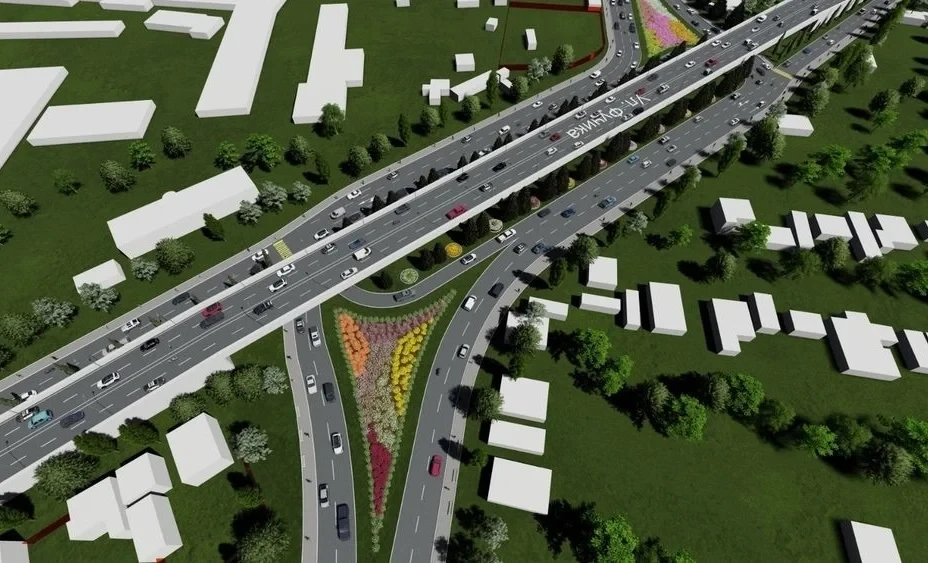
Chingiz Aitmatov Avenue came into the spotlight. The decision to expand it to six lanes with a dedicated public transport lane and a bike path sparked much debate. Dozens of plots of land belonging to residents of the "Kyrgyzstan-1" and "Kyrgyzstan-2" residential areas were partially demolished. The demolition of fences was accompanied by clashes with the police.
Residents demanded compensation, as they had documents for the land plots. The city hall insisted that the road expansion had been planned since Soviet times, and "the implementation of the project only began in 2025." Instead of compensation, officials filed lawsuits but later decided to withdraw them and offer residents equivalent options or compensation.
After the avenue was expanded, the section became unsafe. Due to the lack of traffic lights and pedestrian crossings, people were forced to risk crossing the road, leading to several accidents with fatalities and injuries. As a result, underground crossings were planned for the new sections.
During the road expansion, access to secondary streets was closed, creating additional difficulties for motorists and emergency services. For example, residents complained about difficulties for ambulances, and in December, firefighters faced challenges reaching the site of a fire.
By the way, the renovated avenue became known for its new streetlights, similar street fixtures even appeared in Balykchy.
4
Construction of Old Bishkek
A large-scale construction of the Old Bishkek shopping and entertainment complex began in the TSUM area, implemented by the team of former mayor Nariman Tyuleev. This involved closing sections of Chuy Avenue and Shopokov Street, causing inconvenience for both drivers and pedestrians.
Residents expressed concern about the fountain complex; the project initiators promised to preserve it, making it more attractive and adding musical accompaniment.
Critics noted that the new three-story building does not match the original project. As a result, the head of the State National Security Committee, Kamchybek Tashiev, instructed Tyuleev to demolish the extra floor and widen the roadway of Chuy Avenue.
Construction is planned to be completed in April or May, and until then, residents of Bishkek are asked to be patient.
“I will make Monte Carlo here, just wait a little,” the former mayor stated earlier.
Let’s hope this promise will be fulfilled.
5
Reduction of Green Spaces
The active reconstruction of roads and construction of new facilities has led to a reduction in the green fund in Bishkek. In 2025, more than 2,200 mature trees were cut down, while in previous years, 600-700 plantings were removed.
On Chingiz Aitmatov Avenue, about 1,200 poplars were cut down.
The municipality claims that the removal of dead trees reduces the risk of falling trees, thereby minimizing damage and the number of injuries. Officials assure that they plant several times more than they cut down, but in exchange for an old tree with a wide crown, small saplings appear that may not survive without proper care. How long it will take for a new tree to provide shade remains in question.
Read more on the topic There will be no shrubs, thujas are for beauty. The mayor of Bishkek on the greening of the capital
On Chingiz Aitmatov Avenue, 493 Canadian maples were planted, but more than a third of them dried up. There were also losses among flowers — hundreds of rose seedlings dried up. Officials promise to replace the dead plants, but the time and resource costs remain unchanged.
The reduction of green spaces prompted Kyrgyz citizens to create a petition requesting to stop the cutting down of healthy trees in the capital, arguing that this is not only an act of vandalism but also a threat to the health and comfort of residents.
6
Traffic Jams and Heat in Buses
Last year, the city hall continued to increase the number of municipal public transport vehicles.
At the beginning of 2025, 120 new electric buses arrived from China. The former trolleybus depot was renovated to service them. Starting from September 25, electric buses began to serve city routes.
In December, 95 Yutong buses equipped with air conditioning for the summer and heating for winter were delivered to Bishkek.
Every day, more than 1,500 public transport units operate in the capital. Nevertheless, this number is insufficient — during peak hours, buses are overcrowded. Summer also creates problems when temperatures in buses reached over 50 degrees, and there were cases where passengers fainted. The problem is that officials purchased buses without air conditioning, which does not encourage citizens to switch to public transport.
7
Violation of Cultural Heritage
During the work on Chingiz Aitmatov Avenue, the mosaic "Meeting of Guests," which became a symbol of the friendship of the peoples of Kyrgyzstan, was completely destroyed. Previously, the city hall promised to preserve and restore this work of art.
The city authorities stated that they were not involved in the dismantling and did not make the decision to demolish. The dismantling was carried out at the direction of the president's office.
Read more on the topic A deputy called for punishing those responsible for the destruction of historical objects in Bishkek
This panel is included in the State Register of Historical and Cultural Monuments, and its demolition could only occur with the permission of the Ministry of Culture. However, the ministry did not grant such permissions; on the contrary, after the mosaic disappeared, it appealed to law enforcement agencies.
The results of the investigation are still unknown.
At the end of 2025, one of the oldest fountains, built in 1956, was demolished in Oak Park.
8
Animal Rights
In 2025, the capital's authorities planned to update the rules for keeping pets. Some norms of the project were supported by residents (for example, a ban on cruelty), but others caused dissatisfaction.
Read more on the topic Rules for animals in Bishkek: bans, fines, culling
Residents noted the lack of infrastructure for pet owners — there were no specialized areas for walking pets.
City dwellers launched a petition requesting to revise the project taking into account the interests of all citizens and to create walking zones, including specialized areas in every district of Bishkek.
The city hall promised to designate places for dog walking.
9
Energy from Waste
For many years, the capital suffered from problems with the landfill. In 2025, a waste incineration plant was launched, which will generate energy and recycle residues into building materials.
The capacity of the new facility will be up to 1,200 tons of waste per day, exceeding the average daily waste volume in the city. After full launch, it will be able to produce up to 30 megawatts of electricity.
10
Corruption Among Officials
In 2025, several officials were detained.
The vice mayor of the capital, Talaybek Baigaziev, who was responsible for the fuel and energy complex, was detained in a bribery extortion case, returning part of the previously received $35,000.
Another deputy mayor, Jamalbek Yrsaliev, was detained on suspicion of abuse of power and corruption, but was soon released under a travel ban, and the question of accountability remains open.