In recent years, there has been an intensification of a trend in Kyrgyzstan initiated by Russia aimed at strengthening and preserving traditional values. Experts assert that in the age of gadgets, education should become the foundation upon which family values, love for the homeland, and the desire to preserve historical heritage, as well as the unity of peoples, are formed.
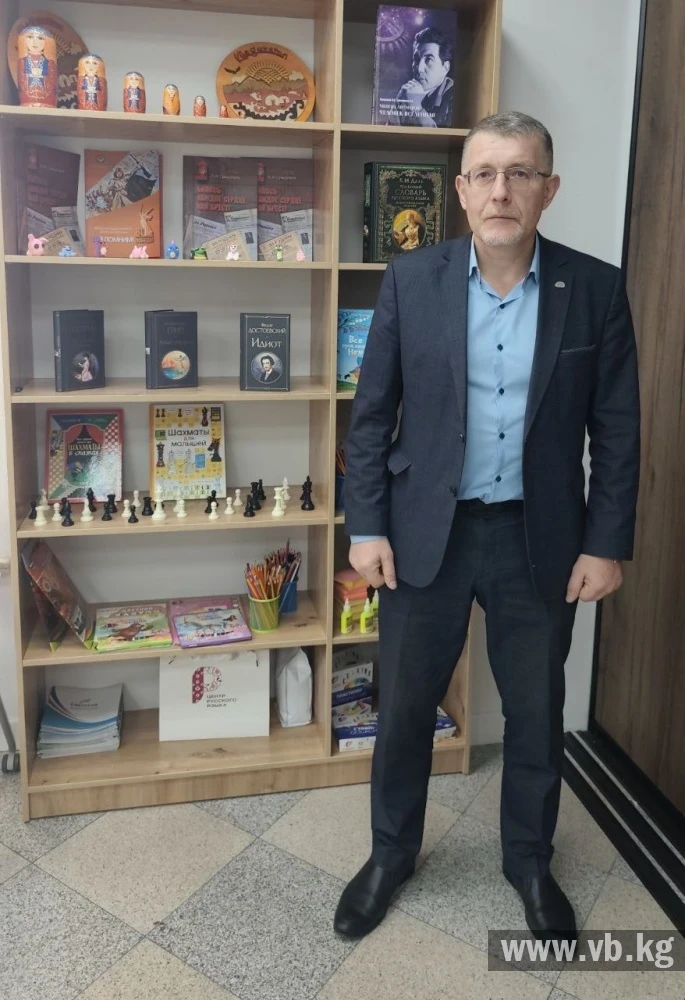
On this topic, VB.KG spoke with Temyr Khagurov, Doctor of Sociology and the first Vice-Rector of Kuban State University, who is also responsible for educational activities and the quality of education.
- Why is there a change in attitude towards knowledge in modern society?
- This process is indeed evident and is largely due to information overload. Every smartphone user is immersed in numerous streams of information: work and study chats, family conversations, social networks, and Telegram channels. Today's youth faces an amount of information that was processed by an editor of a large media holding just 15–20 years ago. This leads to stress and overload, causing our consciousness to operate in survival mode.
Moreover, the approaches to perceiving knowledge have also changed. With the spread of technology, the need to memorize information has disappeared, as "Okay, Google" has become the main source. We are dealing with generations that are not accustomed to memorization, which negatively affects their memory and ability for deep analysis.
The transformation of educational systems also affects our region. Initially, this was noticeable in the West, but now it has become relevant for us as well, with a focus on reducing "excessive theory" and emphasizing practical skills. This competency-based approach, while useful, undermines overall erudition and cultural baggage.
This leads to people finding it increasingly difficult to understand reality. Additionally, there are cognitive wars between various global centers of influence competing for dominance in interpreting reality.
- How does digital culture affect traditional values such as collectivism and respect?
- If no measures are taken, the influence will be negative. Global digital culture is subject to market laws and seeks to offer what is easier to sell. Consumer psychology, according to research, pushes people to avoid tension and seek pleasure.
Traditional culture, whether religious or national, shapes personality through overcoming difficulties: to learn something, to help others, or to show respect, effort is required. This is a culture that forms character.
Digital culture, on the other hand, offers familiar comfort and consumption, actively promoting selfishness: "Love yourself," "No one owes anyone anything," "Get rid of toxic people." But what if the "toxic" ones turn out to be parents who demand studying or engaging in sports? This creates conflicts between generations and erases common values.
Nevertheless, digital culture also has positive aspects: access to remote education, the opportunity to study at the best universities, as well as the dissemination of folklore and classic cinema. But this requires targeted work.
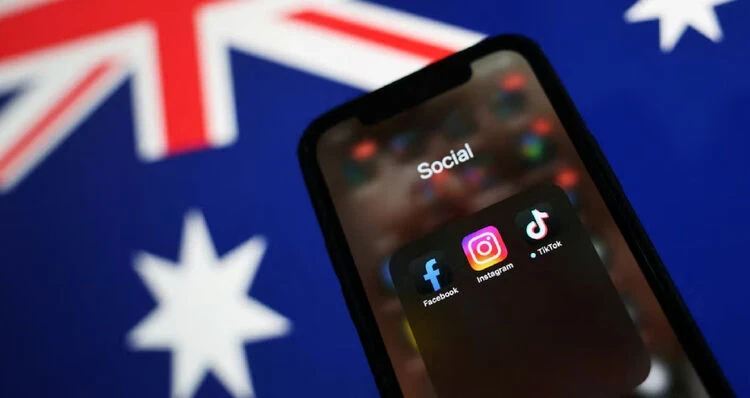
- Some countries, including those in the post-Soviet space, are introducing bans, for example, on TikTok. How effective can this be in protecting youth?
- Bans can be necessary, especially for small children. We do not allow children to go outside unsupervised, understanding that it can be dangerous. A smartphone is primarily a source of entertainment information. Research shows that until the age of 16–18, children use it 90% for entertainment: short videos, games, and sometimes content that negatively affects their psyche.
In Silicon Valley, many children under 15–16 use button phones, which is not accidental: experts understand the harm that early immersion in the digital environment can cause.
However, bans alone are not enough. Teenagers find ways to circumvent them. The problem is deeper: we are dealing with parents raised in a consumer ideology who advocate for children's "rights" to freedom of choice, even if it harms their development. This creates serious challenges for pedagogy and state youth policy.
- How do the influences of money, status, and external attributes affect motivation and professionalism?
- Motivation always has two aspects: the selfish — money, status, recognition, and the ideal — love for the craft, service, the desire to be useful to others.
When the first aspect predominates, the profession becomes a means of self-realization for oneself. If the second is also present, a person realizes themselves by investing in society and people.
Unfortunately, in the post-Soviet period, especially until the mid-2010s, this ideal component was almost destroyed. The main focus became "success in the labor market," which caused disappointment among youth searching for the meaning of life.
Only in recent years have discussions about patriotism, service, and traditional values resurfaced. But many adults have lost faith in them, and children feel this. Formal slogans do not work. True inspiration comes from educators who genuinely love their work.
- In Kyrgyzstan and Russia, there is a return to traditional values. Who should play a key role in this process — family or school?
- Ideally, they should work in tandem. In Russia, for example, the education law emphasizes upbringing, not just education. It clearly states that upbringing includes the transmission of traditional values, patriotism, and family values.
But now both family and school face strong pressure from global consumer culture. This is not just a cultural phenomenon, but a tool of political influence. As Zbigniew Brzezinski wrote, American mass culture is "cultural weaponry" aimed at youth.
Therefore, the issue is not only about pedagogy but also about creating "gaps" in the educational environment, free from digital noise, where books, language, and national consciousness are preserved.
- What actions should society take to avoid cultural and cognitive degradation?
- First of all, it is necessary to recognize that in the post-Soviet period we have been under the influence of "his majesty the market." We adopted economic centrism and believed in the Western myth of a single model of education. However, in the West, elite education is fundamentally different from mass education: it is not subject to market laws. There, as in pre-revolutionary gymnasiums or Soviet schools, books, subject learning, art, and sports that shape the character of the future elite are valued.
We need to create similar spaces in our educational institutions — places where books are honored, where Chingiz Aitmatov and Pushkin are revered, and where national identity is strengthened.
Global culture seeks to erase unique national traits, turning them into elements of "global exoticism." However, our peoples have a long and heroic history, a sense of roots, and this must be preserved.
- What laws are necessary at the state level to protect traditional values?
- In many countries, including Russia, such laws already exist. For example, Presidential Decree No. 809 on state policy regarding traditional spiritual and moral values clearly establishes priorities: creative activity, family as a union of a man and a woman, and the primacy of spiritual values over material ones.
However, the main thing is not only the adoption of laws but also the mechanisms for their implementation. There is a gap between declarations and real practice. Pay attention to evening television programs or the number of films aimed at strengthening traditional values — there is a clear imbalance.
The state must ensure a coordinated policy in the fields of education, culture, media, and youth policy; otherwise, declarations will remain only on paper. This is a real war — for the souls and hearts of our children, and we cannot afford to lose it.