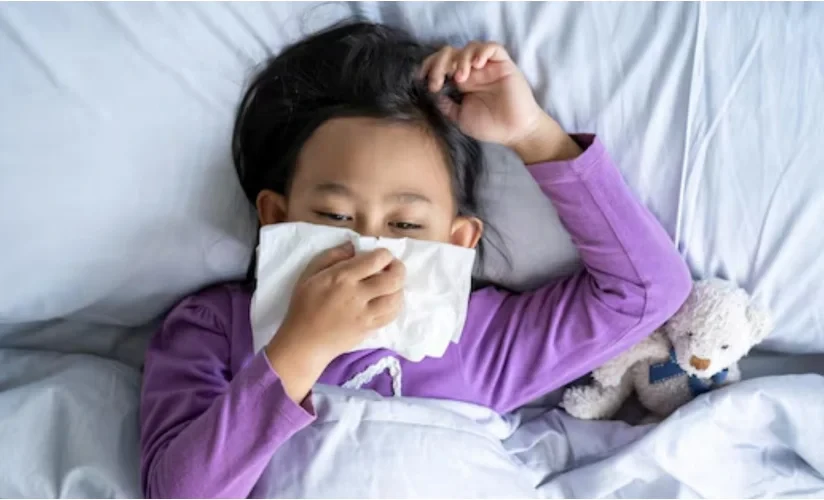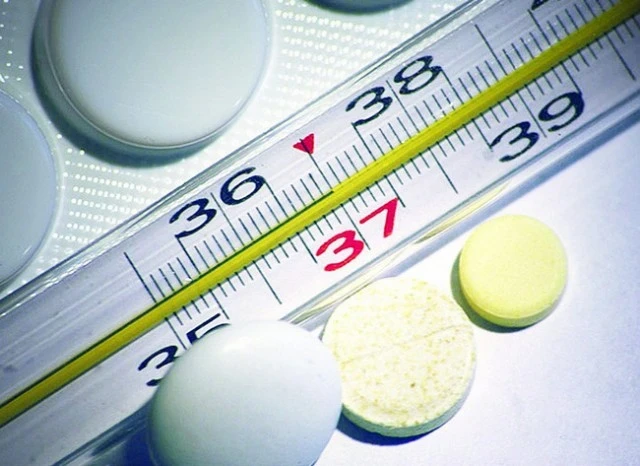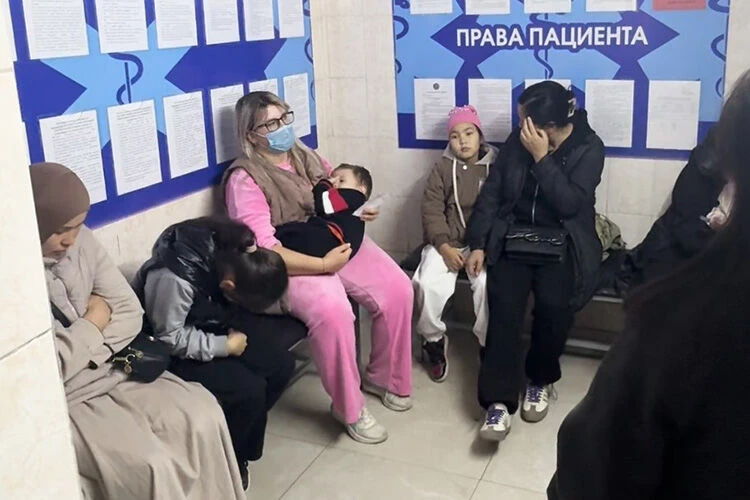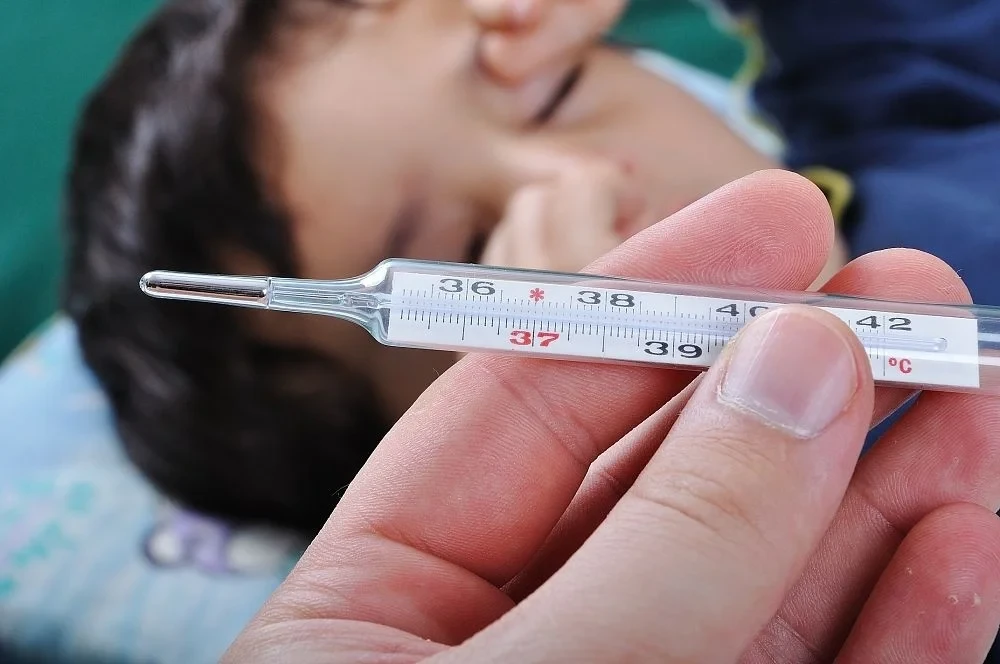

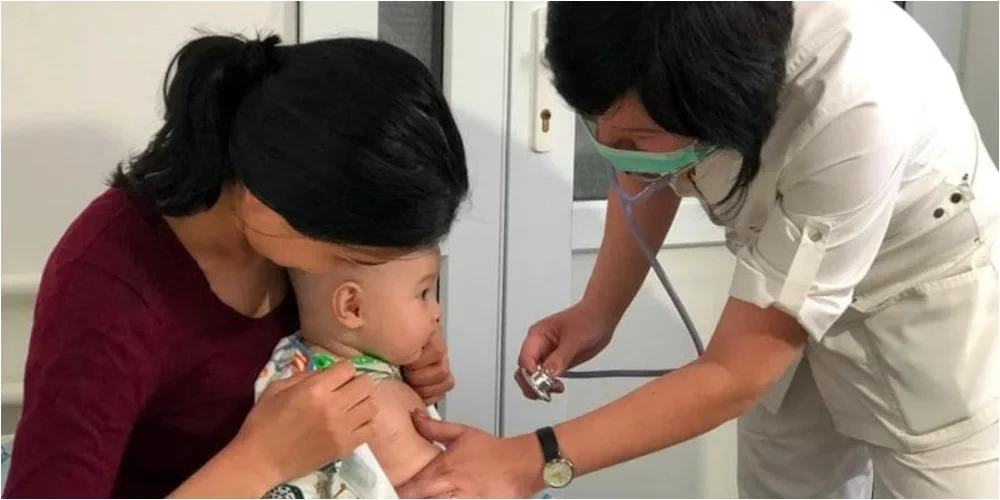



– In recent months, there has been an increase in the incidence of typical ARVI, including parainfluenza viruses, adenoviruses, and seasonal flu. From late October to early November, the flu virus is actively spreading in the city, leading to a large number of cases. Clinics and hospitals are overcrowded, and we receive between 15 to 35 patients a day. The symptoms are similar: temperatures reach 39-40 degrees, are difficult to reduce, and paracetamol has a weak effect. Parents are in a state of stress and panic. Rhinovirus is often detected in young children.
– When should one consult a doctor, and when is it enough to monitor the child at home?
– You can monitor at home if the temperature is not high, the child is drinking actively, remains active, and breathing is not difficult. Medical help is necessary if the temperature persists for more than three days, there is pronounced lethargy, refusal to drink, difficulty breathing, a sharp deterioration in condition, or inability to reduce the temperature.
– How can one distinguish between ARVI and flu at an early stage?
– The flu starts suddenly with a high temperature of 39-40 degrees, severe chills, body aches, and pronounced weakness. ARVI, on the other hand, manifests gradually: with a runny nose, sore throat, and moderate fever. However, an accurate diagnosis can only be made after examination and, if necessary, testing.
– Often, upon seeing a temperature of 39 degrees, parents start to panic and give excessive doses of paracetamol or do so too frequently, which can cause a dangerous drop in temperature to 34-35 degrees. Some also start using intramuscular antibiotics without a doctor's prescription, which is strictly prohibited. We recommend maintaining hydration, ventilating the room, and keeping the air cool and humid. Temperature should be assessed based on the child's condition: some children are active at 39 degrees, while others are lethargic at 38 degrees. Antipyretics should be used in the correct doses and with proper intervals.
It is categorically forbidden to give antibiotics "just in case," use alcohol or vinegar rubs, perform hot steam inhalations at elevated temperatures, or use strong medications without a doctor's prescription, as this can worsen the condition and provoke seizures.
– Are antiviral medications necessary?
– In most cases, they are not needed, as many of them are ineffective. I often tell parents that it's better to spend money on food, such as meat and fruits, which will be more beneficial. The main methods of treatment include rest, plenty of fluids, and maintaining cool and humid air. Antiviral medications are prescribed only for confirmed flu.
– In what cases does a child need antibiotics?
– Antibiotics are necessary only in the presence of bacterial complications, such as otitis, pneumonia, sinusitis, or bacterial tonsillitis. They are prescribed strictly after examination, not for ordinary ARVI.
– What about vitamins and immunomodulators for children?
– Vitamins are prescribed only when there is a confirmed deficiency or poor nutrition. First, I conduct tests, and only upon identifying a deficiency are the necessary medications prescribed.
Parents often look for "magic" vitamins that will help their child not get sick and eat better. But such miracles do not exist. A comprehensive approach is needed, including a varied diet, regular walks, room ventilation, and hardening. Sometimes it's okay to treat a child to ice cream, regardless of the season; this is also a form of hardening.
Personally, I do not like multivitamins, as a large number of components can interfere with absorption. Immunomodulators are not recommended without indications.

– In preventive doses, vitamin C and vitamin D3 can be given without tests. Other vitamins and iodine-containing preparations are prescribed only after tests and upon confirming a deficiency.
Unfortunately, many parents give their children various multi- and multivitamins without supervision. I always emphasize that an excess of vitamins can also be harmful and cause toxic reactions in the body. Therefore, vitamins should only be taken in the case of a real deficiency.
Even vitamin D3 is calculated strictly according to the child's age.
– What do you think about "grandma's methods"? What is useful, and what is dangerous?
– Warm drinks, fresh air, a humid room, and rinsing the nose with saline solutions are indeed beneficial. However, mustard plasters, alcohol rubs, inhalations over boiling water, and dubious homemade mixtures, especially with honey for children under one year old, can be dangerous.
– Lastly, I heard that the Central Children's Hospital has extended its working hours. Do doctors really work until 8:00 PM now?
– Yes, in clinics, on-call doctors work from 6:00 PM to 8:00 PM. We remind parents that it is not necessary to go directly to the 3rd Children's Hospital; they can visit their own clinic until 8:00 PM.