This time, Turmush focused on archival information related to the special operation "Buiygu".
_____________________________________________________________
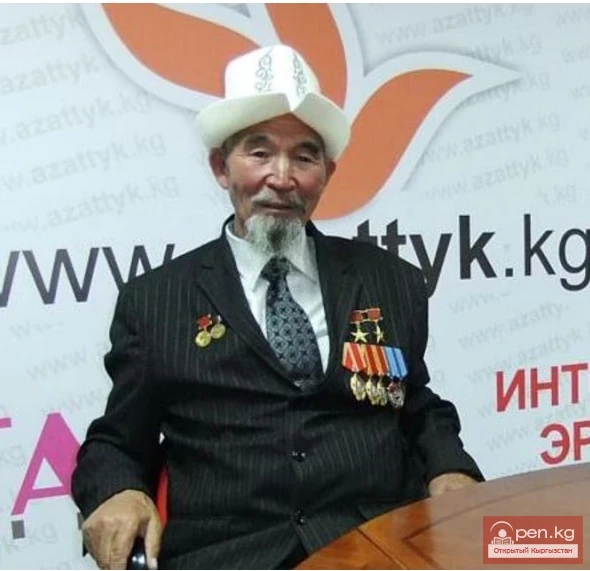
After the successful completion of the operation to rescue General Iskhakbek Moniev and his family, Adzhike Kutmanaliev returned to Irkeshtam, where he continued his service on the border of the Kyrgyz SSR and China. In his memoirs, he described how in 1943, decisive battles were taking place on the Stalingrad front, determining the fate of the Soviet Union. At that time, the Kuomintang government of China violated all friendly relations with the USSR, suspending many agreements and creating tension at the border. They urged all Soviet citizens to leave Xinjiang and began provoking incidents at the border. However, as Kutmanaliev noted, Soviet border guards responded to such provocations with dignity, which was done in preparation for a possible attack on the Central Asian republics in the event of the Soviet Union's defeat at the front.
The complex situation of that time is illustrated by the report of the head of the border troops of the NKVD of the Kazakh district, Major General Ivan Kuzmich Ukhov. He reported that the head of the province, Shen Shicai, despite outward manifestations of friendship, actually exhibited pro-Japanese orientation. Under the pretext of the unnecessary guarding of the border with the USSR, he disbanded border posts, replacing them with police, whose numbers exceeded those of the border guards. At a time when fascist Germany attacked the USSR, Shen Shicai organized "defensive" measures, including the restoration of fortifications and improvement of transportation infrastructure.
According to Kutmanaliev's memoirs, despite the brutal repression in northern Xinjiang, a democratic uprising broke out in November 1944. The uprising led to the capture of military fortifications and armaments, initiated under the leadership of Fatih Muslimov in the areas of Nilka and Gana-Batyr in Yamata. The Russian emigration, consisting mainly of the army of Ataman Dutov, also joined the uprising.
It is possible that Kutmanaliev changed the name of Colonel Aleksandrov Petr Romanovich to Ivan Polinov in his records, as many names of participants in the events remained secret for a long time. Only years later did specialists manage to gain access to previously unknown documents.
In a report from the People's Commissars of Internal Affairs L. Beria and State Security V. Merkulov to Stalin on December 8, 1944, it was reported that on September 23, in the Nilkhin County of Xinjiang, Muslims revolted against the Chinese administration, defeating a detachment of 300 soldiers and on October 7 capturing the county town of Nilkhe. One of the instigators of the uprising was Muslimov Fatih Mustafievich, who accepted Soviet citizenship in 1926.
To support the rebels, on November 5, Aleksandrov Petr Romanovich was sent to Xinjiang, who had previously lived in Kuldja and engaged in trade. As a result of persecution by the Chinese authorities, he fled to the USSR in August 1944. On November 11, Alihan Shakirhodzhaev, chairman of the Committee of Eastern Turkestan, reported that the clergy and the Muslim population accepted the committee as the people's power but lacked the military strength to resist the Chinese.
He sent an appeal to the Soviet government requesting urgent assistance and protection for the peoples from violence. The appeal raised questions about the necessity to send military advisors and transfer prepared units to fight against the Chinese garrisons.
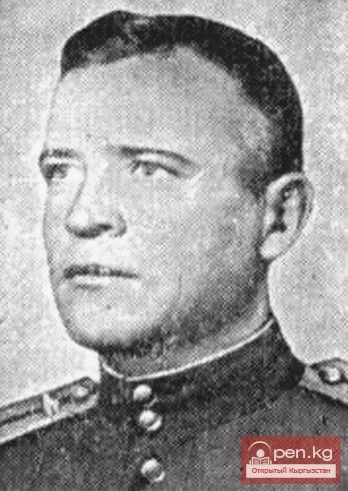
Adzhike Kutmanaliev, in his memoirs, mentions Major General Egnarov Vladimir Stepanovich, who organized the operation to rescue General Moniev. Egnarov, born in 1903, served in the NKVD of the USSR from 1944 and was involved in supporting the national liberation movement of the Muslims of Xinjiang.
In Xinjiang, two units were formed for special operations: "Buiyga" and "Baatyr". According to the memoirs of KGB veteran Tokon Usubakunov, the "Baatyr" unit consisted of 67 people and was based in Issyk-Ata. The "Buiyga" unit, numbering about 100 people, was created under the command of Iskhakbek Moniev and underwent training in the village of Gulcha. Both units were to cross the border through Irkeshtam and Torugart, but the uprising began earlier, requiring their urgent transfer to the border.
These units, dressed as locals and using local horses, were armed with foreign weapons. The transfer occurred under conditions where Shakirhodzhaev seemed hesitant to cross the forbidden line. Major General Egnarov made the decision to evacuate him to the territory of the USSR to meet with Iskhakbek, who had just left Kuldja, avoiding arrest.
Iskhakbek, with his army, stormed the besieged Airanbakh, facing difficulties throughout the winter of 1945. The siege of the garrison continued, and soon it became known about the preparations of the Chinese troops for a breakthrough. In early February, the garrison broke through to the mountains, and Iskhakbek, not wanting to pursue the enemy, decided to occupy strategically important roads.
Under Iskhakbek's command, a successful operation was organized, resulting in the enemy being surrounded and losing combat capability. February 27, 1945, became the day of victory for the revolutionary forces, after which news of the death of the Chinese commander, who committed suicide, became known.
With the fall of the Kuomintang regime in 1949, Stalin's leadership gained a new ally in Mao Zedong. This threatened the further fate of the East Turkestan Republic, which soon faced new challenges.
In August 1949, negotiations began with China, resulting in the crash of a plane carrying the government of the ETR on board. Adzhike Kutmanaliev recalled his combat comrades, emphasizing their heroism and the sacrifices made for freedom. For carrying out a government assignment in Xinjiang, he was awarded an order and a medal from the East Turkestan Republic.