Gulayim Tursunalieva, the head of library No. 6, told the correspondent of Turmush about the history of the village.
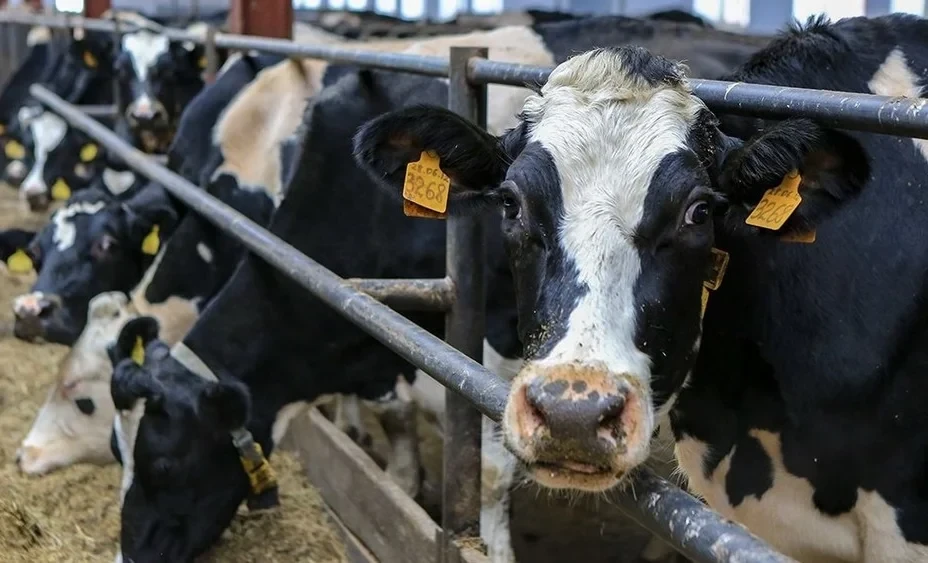
The village of Ilyich, founded in 1930, developed in conjunction with livestock breeding from the very first days of its history. The local natural conditions favored the breeding of sheep and cattle, which determined the direction of the village's economic activities.
In 1937, breeding animals were brought from the Kostroma and Smolensk regions of the RSFSR to improve the breed qualities of the local livestock. In the same year, the "Ilyich Breeding Farm" was established, which soon became one of the key farms in the region.
For several years, specialists worked on selection: local bulls were crossed with imported breeds, and the resulting offspring were raised in specialized conditions. After long efforts, a new breed of brown cattle was developed.
On December 14, 1950, the Council of Ministers of the USSR decided to name this breed "Alatau." The main selection work was carried out from 1937 to 1940. The breeding material was distributed not only across the republics of the USSR—Kazakhstan, Georgia, Armenia, Uzbekistan, Turkmenistan, and Tajikistan—but also beyond the country's borders: to Afghanistan, China, Mongolia, and Korea.
According to the Institute of Animal Husbandry and Pastures of Kyrgyzstan, during the Soviet period, the "Ala-Too" breed was widely distributed in various regions of Kyrgyzstan and Kazakhstan, and the Ilyich Breeding Farm remained one of the main centers for its breeding.
In the following decades, the village continued to develop actively. In 1956, a secondary school with a 10-year curriculum was built, as well as a House of Culture, which still functions today. In 1970, a kindergarten for 140 places and a cafeteria were established. In the 1980s, a large livestock complex designed for 1,500 heads of cattle was created, where workers were provided with medical care and other social services, which at that time was considered a high level of infrastructure.
However, with the collapse of the Soviet Union, the kindergarten fell into disrepair and was destroyed. Currently, a new preschool institution for 100 places is being built in its place. There is also a feldsher-obstetric station and a mosque operating in the village.
The modern secondary school is named after Lieutenant General Bakayev Anarbek Kuramaevich, and one of the main streets of the village is named in honor of Koshoyev Omurzak.
During the Great Patriotic War, 210 residents of the village went to the front, and only 53 of them returned. This tragic page remains an important part of the memory of the local residents.
The village of Ilyich has become the birthplace of many well-known figures, including:
— Koshoyev Omurzak (1890–1971) — shepherd, Hero of Socialist Labor;
— Sadvakas Kochkimbaev (1898–1971) — foreman, awarded the Order of the Red Banner;
— Zhuma Baltabaev — peasant, holder of the Order of Lenin;
— Beyshyke Zhandarov (1937–2006) — honored artist of the Kyrgyz SSR;
— Bakayev Anarbek Kuramaevich (1950–1997) — lieutenant general;
— Sadyrkulov Medet Chakanovich (1954–2009) — extraordinary and plenipotentiary ambassador of the Kyrgyz Republic, public and political figure.