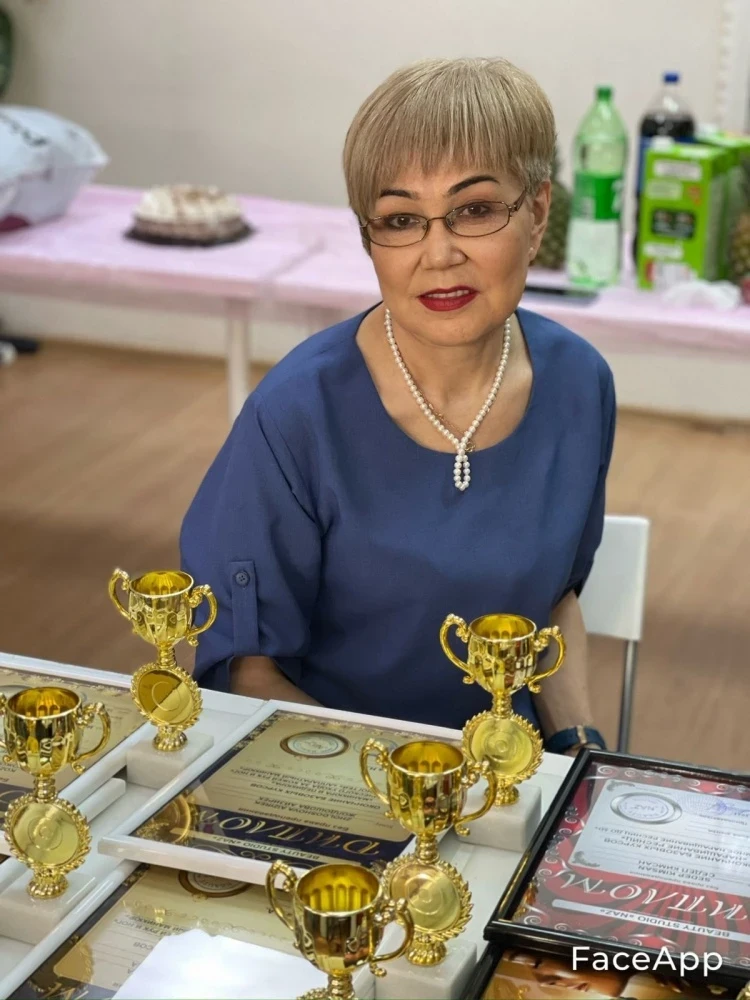
For many years, Kyrgyz people have been building their lives in Russia, making a significant contribution to the economy of their country. For many of them, Moscow has become a symbol of opportunities. One of those who not only found her place but also helped others is Nazira Isakova, the founder of the beauty training center "NAZ".
We discussed with Nazira Abdullayevna her life journey, migration, changes in Russian politics, and the factors that contribute to the confidence of Kyrgyz people living far from their homeland.
- How did your journey in Moscow begin?
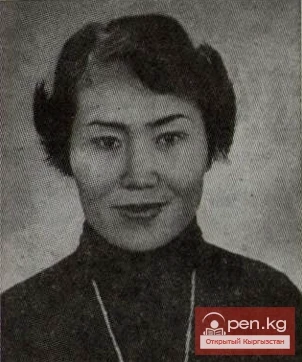
- I was born in the village of Chymbay, located in the south of Kyrgyzstan, in the Uzgen district. From a young age, I showed responsibility and a desire to learn. In 1982, after finishing school, I got a job at a textile factory in Osh. However, in August 1983, I decided to come to Moscow to continue my studies but missed the entrance exams. Not losing my composure, I got a job at the Likhachev Plant (ZIL), where tens of thousands of employees worked. I was provided with accommodation and temporary registration for five years, which became the first step towards an independent life in a big city. Alongside my work, I studied part-time: first at the Orekhovo-Zuyevo Technical School in the accounting department, then at the Shchukino Technical School, where I studied fur and leather trade.
After the collapse of the Soviet Union, these educational institutions closed, but the knowledge I gained stayed with me. My work at the factory was recognized with honorary certificates, and even my photo adorned the honor board. When I left the factory, the dormitory manager, a person of honest reputation, informed me that I had earned a private room and permanent registration in Moscow. This was an important acknowledgment of my efforts and hard work.
- How did you start your business after working at the factory?
- After I received my apartment, I decided to engage in commerce, using the experience I had gained at the factory. Everything I achieved was the result of diligence, responsibility, and honesty, which have always been my core principles. I got married, and together with my husband, we started our own business. At that time, business was challenging due to the unstable economy and high risks. We opened a restaurant, but unfortunately, we lost it and were forced to sell the apartment. It was a difficult time, but we did not give up: my husband became a taxi driver, and I continued trading, restoring financial stability. This period became a true test that strengthened our character and taught us to cope with difficulties.
- When did you decide to master the profession of a manicurist?
- In 2007, when I turned 42, I took a step that many found unexpected — I started studying manicure. Despite the bewilderment of those around me, I was confident that age should not be a barrier to development. I successfully completed the courses and got a job at a beauty salon, where I met a 72-year-old master who supported me with the words: "It's never too late to start something new." These words inspired me and confirmed that there is always an opportunity for growth.
- How did your training center come about?
- While continuing to develop my skills and taking advanced training courses, I met Svetlana, the owner of a salon, and we decided to join forces. We quickly found common ground: Svetlana and her husband worked with eyelashes and tattoos, while I focused on manicure and pedicure, and my husband took care of massage. We attended courses and practiced, preparing to pass on our knowledge to others. Over time, our team evolved into a professional collective, and we opened a training center where everyone could share experiences and help students develop in their profession. This journey proved to me that persistence and self-belief can open new horizons at any age.
- What does your center do, and who are your students?
- I am now 60 years old, and I continue to run my business, even though I am retired. Although I have Russian citizenship, most of my work is related to Kyrgyz people. Our school, located in the center of Moscow on Marksistskaya Street, trains people of various nationalities for professions in demand in the beauty market. When we first started, many students did not speak Russian, so classes were conducted in Kyrgyz and Russian. This allowed us to attract students who could not adapt to regular Russian courses. Soon my partner Sveta moved on to another business, and I continued working with my husband. Nevertheless, we remain on good terms. Over the years, we have trained over 100,000 students and helped many of them obtain diplomas and find jobs.
- How do you assess the interaction between Kyrgyz and Russians?
- I am proud that our business benefits both the Russian and Kyrgyz economies. We do not just teach; we create opportunities: our graduates work both in Russia and abroad. We collaborate with salons in Moscow, Dubai, and other countries, sending specialists to apply their skills in practice. Our goal is to provide knowledge, open new perspectives, and build bridges between cultures through vocational education.
- What do you think unites Kyrgyz and Russians?
- In my opinion, Kyrgyz and Russians are united by a common history, culture, and language. We share traditions, values, and experiences that shape our understanding of each other. This sense of unity manifests itself in both everyday life and professional spheres, facilitating successful cooperation. In our school, where we teach people of various nationalities, I notice how mutual understanding eases the learning process and helps students adapt and unlock their potential. We learn from each other and jointly create opportunities that benefit both Russia and Kyrgyzstan. We are united by the desire for development and education, regardless of where we live, which allows our graduates to successfully implement their skills in Moscow, Dubai, and other countries.
- What changes in Russia's migration policy do you consider most significant for Kyrgyz entrepreneurs?
- In my opinion, several changes in Russia's migration policy are particularly important for Kyrgyz entrepreneurs. First, the reduction of the visa-free stay period to 90 days requires more careful planning of trips. Second, new fees for migration procedures increase administrative costs. Additionally, there has been increased control over foreigners: mandatory biometrics and digital registries raise the requirements for legalizing residency. These changes affect business, from hiring employees to interacting with Russian and foreign partners. Compliance with new rules reduces risks and promotes stable business development. Furthermore, Kyrgyz citizens working in Russia officially can receive social benefits, such as maternity allowances, and in the future, pensions. This indicates support from Russia. Additionally, free childbirth, surgeries, and medical assistance from the state are available in Russia, which is a significant advantage.
- What contribution do Kyrgyz entrepreneurs make to strengthening relations between the countries?
- I am convinced that Kyrgyz entrepreneurs play a key role in strengthening ties between Kyrgyzstan and Russia. We create jobs, opportunities for knowledge exchange, and cultural values. Our business serves as a bridge between the two countries: we train specialists, help Kyrgyz people find jobs in Russia, support entrepreneurs, and develop small and medium-sized businesses. This strengthens economic ties and builds trust between peoples. For me, it is important to see how our projects help people grow professionally and open new horizons. I believe that it is through cooperation and initiative that we can develop true friendship and mutual understanding between our peoples.