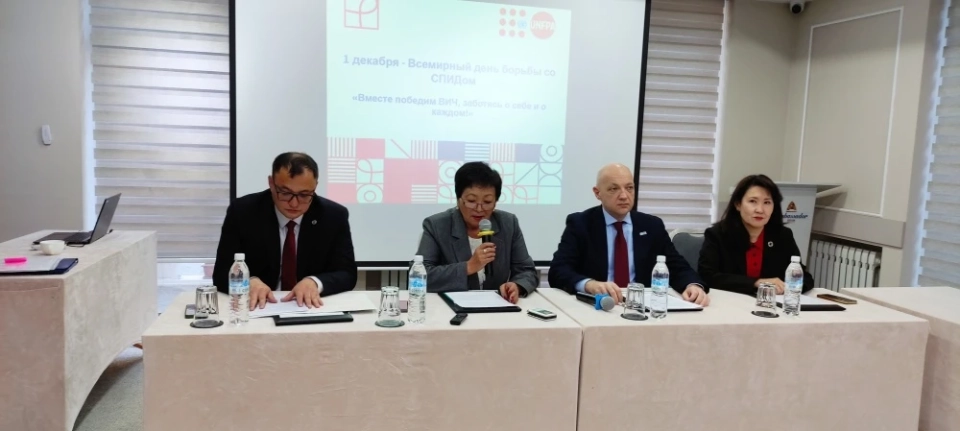
According to Zhanibek Azhibekov, acting director of the Republican Center for Psychiatry and Narcology, a program was launched in 2018 that will last until 2030 and aims to protect the mental health of citizens. Nurgul Ibraeva, head of the primary health care department of the Ministry of Health, noted that within the framework of this program, a multidisciplinary team has been created, and financial incentives for medical professionals have been provided.
Erkingul Dyusheeva, a representative of the Mandatory Health Insurance Fund, reported on the implementation of funding mechanisms for outpatient treatment of patients with mental disorders. In particular, funding is allocated for the work of multidisciplinary teams consisting of a psychiatrist, psychologist, and visiting nurses who provide support to patients, including at home. The team receives a fixed amount of 12,000 soms for managing one patient over the course of a year, which is then distributed among specialists in a percentage ratio.
Zhanibek Azhibekov emphasized that this approach allows for outpatient treatment of patients and reduces the need for hospitalization. According to specialists' estimates, the cost of keeping a patient in a hospital is about 50,000 soms per case, which is significantly more expensive than monitoring at the primary care level. Currently, multidisciplinary teams are functioning in 17 medical institutions, where they were launched as pilot projects. Although there are plans to expand this experience to the entire healthcare system, the process is slow due to a shortage of specialists, especially in the regions. By 2030, the number of teams is expected to increase to 50, but to fully cover the population, around 180-200 such teams will be needed.
Experts also noted that mental disorders create a significant economic burden. Psychiatrist Boris Li mentioned that losses due to temporary and permanent disability amount to about 0.4% of the country's GDP.
Additionally, specialists highlighted the issue of late help-seeking. Due to stigma, many people do not consult specialists in the early stages, leading to a deterioration in their condition and increasing the risk of disability.
"Without treatment, a person loses years of life. According to estimates by the World Health Organization, timely intervention can provide tens of thousands of additional healthy years of life over 10 years across the country. If we do not treat an ulcer or gastritis for a long time, it can develop into cancer. People with mental disorders face similar issues: mild depression or anxiety can escalate into a more severe and chronic form in just one or two years," added Boris Li.
Specialists urge individuals to seek help if they experience prolonged symptoms such as persistent sadness, loss of interest in life, sleep and appetite disturbances, chronic anxiety, fatigue, concentration problems, constant sadness, irritability, or feelings of emptiness, as well as feelings of guilt or helplessness.
Photo on the main page is illustrative: istockphoto.com.