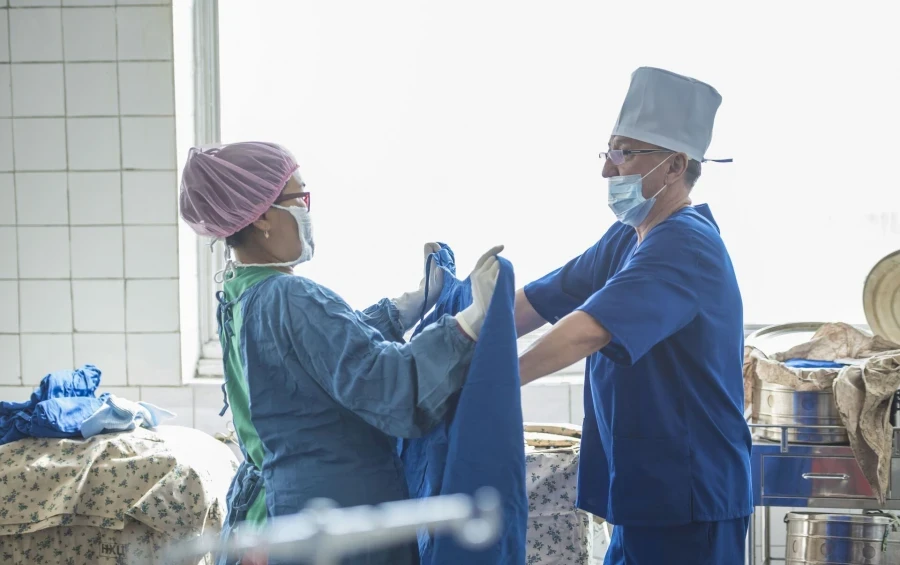
The shortage of doctors and nurses in the regions of Kyrgyzstan continues to be a serious problem. Currently, the country lacks about 23,000 medical workers, including 6,500 doctors, 8,500 nurses, 3,500 sanitary workers, and about 2,000 technical specialists. The lack of qualified doctors is particularly acute in remote areas.
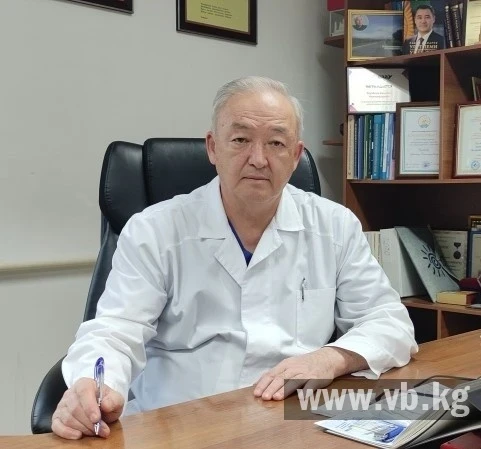
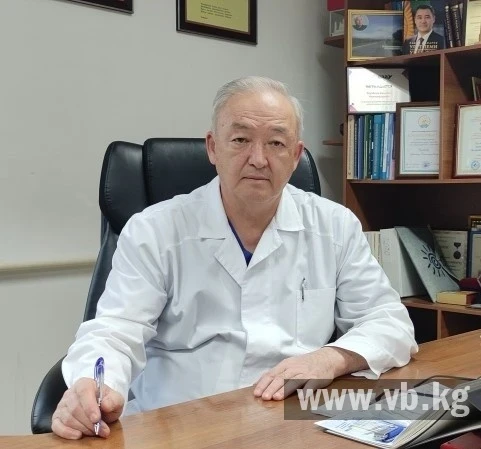
How can the problem of medical staff shortages be solved? What steps are necessary to ensure quality medical care, especially in the regions? What changes will allow patients to see improvements? Answers to these questions can be found in an interview with Akyilbek Usupbaev, the director of the Republican Scientific Center of Urology at the National Hospital, who is deeply familiar with the healthcare system.
Why, despite salary increases, does the number of vacancies in state medical institutions not decrease?
- Despite significant salary increases, this does not solve the problem of staff shortages in the regions. For example, in the Talas region, there is still only one urologist working. Financial incentives cannot attract young specialists because there are no opportunities for professional growth and modern equipment. Young doctors are eager to master new technologies, such as laparoscopy and laser surgery. For them, earning potential is not the only priority; gaining knowledge and experience is also crucial.
In the context of rapid updates in medical knowledge, where information doubles every 73 days, doctors who have not undergone retraining for more than three years may be using outdated methodologies. To attract specialists to regional hospitals, it is necessary to equip them with modern and high-quality equipment. How can a urologist-surgeon in the Talas region study innovations if he has nothing but a scalpel?
The condition of regional medical institutions directly affects the attraction of specialists and the quality of medical services. Every patient expects professionalism and modern standards. However, often expectations do not align with what local medical professionals can offer. According to the Ministry of Health, there is a severe shortage of personnel in the Naryn region—over 140 doctors are needed, of which more than 20 work in the Naryn Regional Unified Hospital. The high workload on medical workers is increasing against the backdrop of a growing demand for inpatient care. Similar problems are observed in the Talas region, where about 170 specialists are lacking.
I am not exaggerating the situation—this is reality. Although there are certain positive changes in healthcare, the lack of qualified personnel in the regions leads to increased costs for treating complications and hospitalizations due to insufficient qualifications. In this situation, it is important not only to raise salaries but also to equip medical institutions with modern equipment, which will undoubtedly attract young specialists.
Today, patients in the regions often seek help in Bishkek, even in emergency cases. People are aware of new technologies and want to undergo surgeries using laparoscopic or laser equipment, even though such procedures have become paid. A significant portion of funds goes towards purchasing expensive consumables.
It is worth noting the experience of Uzbekistan, where, with the support of international organizations, peripheral medical institutions have been equipped with modern equipment. Specialists from major centers come to train doctors, helping to implement new technologies. This year, a national system for continuous professional development of medical personnel has also started operating in the country. A similar system is necessary in Kyrgyzstan.
Unfortunately, our promising young specialists are leaving the country. Many of my students work in Russia and are satisfied with their conditions and salaries. As a result, we are training personnel for other countries while remaining without the necessary specialists.
You mentioned the quality of equipment. How can new equipment be of poor quality?
- I am talking about an old and painful problem in our healthcare system. In tenders, cheaper equipment is often purchased, leading to its rapid breakdown. Although branded equipment costs more, its lifespan is significantly longer, and it is more reliable.
I remember three years ago when my Spanish colleague, one of the leading urologic surgeons in Europe, came to us to conduct master classes. During surgery, he faced problems due to poor equipment. He found it difficult to work, and I had to intervene to complete the operation. Two years ago, we updated the equipment in our center and now operate at European standards, except for the robot.
The purchase of a surgical robot is one of the current topics. Maintenance can cost almost as much as the robot itself.
- Therefore, it is extremely important to train specialists for servicing medical equipment in the country. Maintenance and consumables are much more expensive than the equipment itself. We must train our own technicians to reduce maintenance costs, which currently burden the budgets of healthcare institutions.