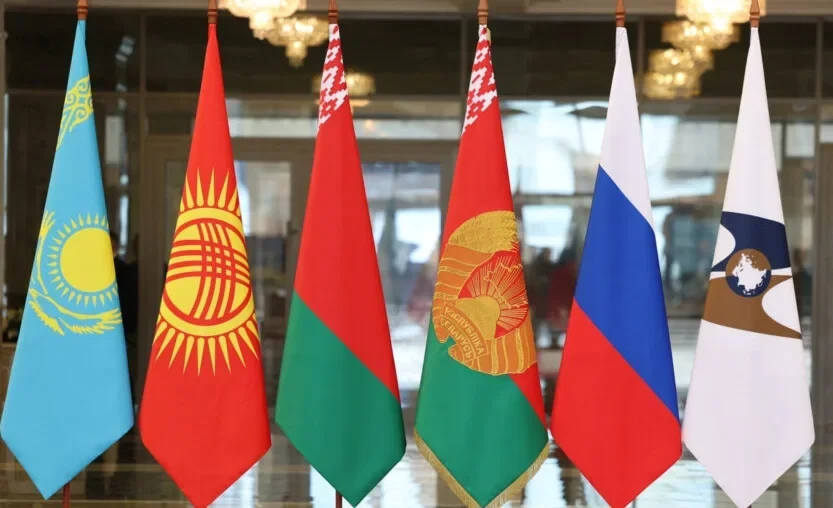
As a result of the new requirements, the following consequences are observed:
- mass cancellation of previously concluded contracts;
- significant reduction in the volumes of imported goods;
- financial difficulties for exporters from Kyrgyzstan.
In response to questions about how soon the situation might improve and what measures are needed for this, Associate Professor of the Department of Taxes and Tax Administration at the Financial University under the Government of Russia, Alexey Kostin, provided insights. He noted that in recent years, the importance of identifying counterfeit goods imported in violation of customs regulations has significantly increased, especially within the framework of the Eurasian Economic Union (EAEU), including supplies from Central Asia.
Kostin emphasized that Russia and Belarus have already begun joint efforts to combat customs risks. In 2022, an intergovernmental center was established to coordinate risk management efforts, which is successfully ensuring economic security. In 2024, the focus will be on monitoring violations related to the movement of goods that could lead to budget shortfalls. Last year, for instance, 250 violations amounting to over 800 million rubles were prevented, which allowed for an additional 60 million rubles to be collected in the budgets of the countries.
Nevertheless, the question of Kazakhstan and Kyrgyzstan joining the joint fight against customs risks remains open, as these countries are not yet participating in similar coordination formats.
The complexity of the tasks faced by customs authorities is exacerbated by the increase in the import of counterfeit products, which poses a threat to consumers. In response, mobile groups of the Federal Customs Service of Russia have been created. Recently, the President of Russia signed a decree concerning the specifics of customs regulation at the Russian-Kazakh border, aimed at legalizing goods imported into the EAEU and combating high risks such as undervaluation.
In the context of budget deficits and increasing competition between shadow imports and import substitution products, risk management efforts are likely to intensify. The expert noted that Kazakhstan and Kyrgyzstan should consider creating working groups, similar to Belarus, to discuss customs risk issues, as businesses need to adapt to new conditions.
Success will depend on the ability of businesses to quickly restructure and take an active position in the new organized market, rather than merely remaining carriers or intermediaries.
It is worth noting that earlier, Kyrgyzstan and Kazakhstan opposed the expansion of the pilot project for customs authorities to inspect clothing and footwear, which involves monitoring the average cost, quantities, and characteristics of goods, including information on manufacturers and countries of origin.