- The main principle of sustainability lies in the trusting and pragmatic relationships between states, based on their national interests rather than on changing global trends. SCO countries have learned to value each other and support one another in difficult times.
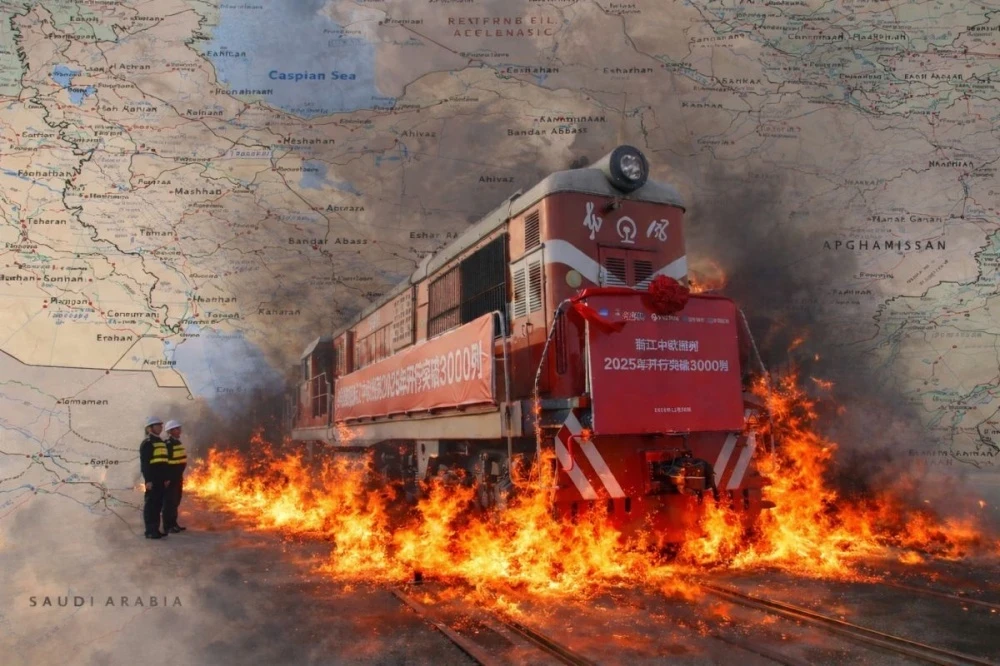
The Shanghai Cooperation Organization serves as a platform for aligning interests, as well as an alternative model for the economic, energy, and transport structure of Eurasia. The strength of this organization is manifested in response to conflict situations, such as events in Eastern Europe and the Middle East, where, for example, the closure of the Strait of Hormuz led to a sharp rise in oil prices and a shortage of hydrocarbons in the global market.
Despite the escalating crises, the SCO demonstrates remarkable resilience. Partner countries possess all the necessary resources to maintain economic growth even in unfavorable international conditions.
China and Russia actively leverage new opportunities, shaping regional and global chains of influence, which allows countries to reduce their dependence on Western structures. Thus, the SCO is transforming into a powerful pole of influence capable of significantly altering the strategic map of Eurasia.
As a result, there is a redistribution of spheres of influence and a change in logistics routes, which in turn alters the world and its usual order.
- What are Kyrgyzstan's priorities in the anniversary year of the SCO? Our country is chairing at a time when the world is undergoing significant transformations. What initiatives from Bishkek should be highlighted to strengthen cooperation within the SCO?
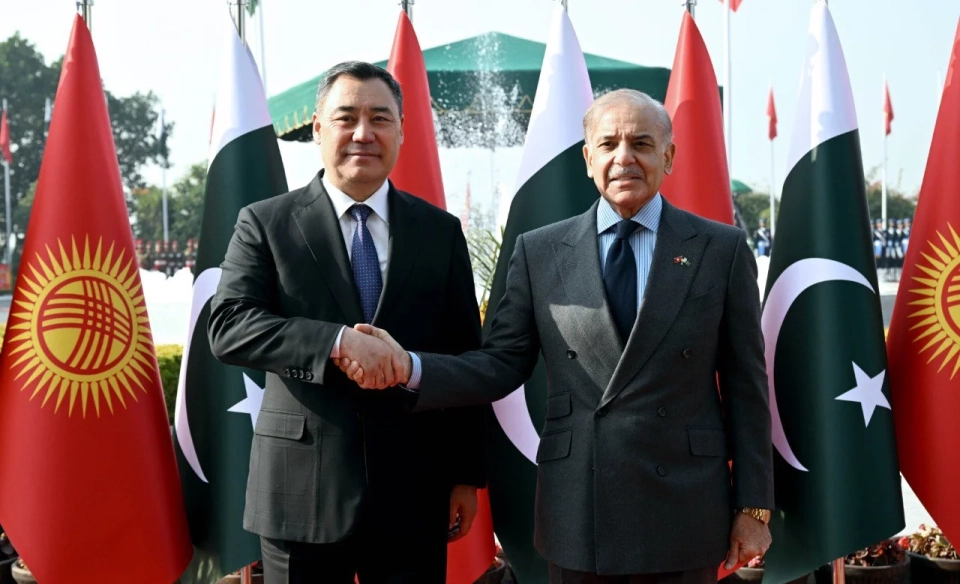
- For Kyrgyzstan, the chairmanship in the anniversary year of the Shanghai Cooperation Organization is not only a responsibility but also an opportunity to enhance its role in the new geopolitical reality of Eurasia.
The main areas of work are clear. First of all, it is transport and logistics. The Republic emphasizes the development of transit routes, including projects such as the China-Kyrgyzstan-Uzbekistan railway. These initiatives not only integrate the country into new supply chains but also strengthen its transit role between China and other regions, including Central and South Asia, the Middle East, and Europe.
Secondly, energy and water resources are important. Kyrgyzstan can take a key position in coordinating major projects that are significant for the sustainability and development of the region. Participation in such initiatives strengthens the country's status as a stabilizing hub, especially in the context of growing competition for resources. An example of successful partnership is the "Kambar-Ata-1" project in collaboration with neighboring states.
The third area is the digital and humanitarian sphere. The development of educational and scientific exchanges, as well as the creation of a common digital space for the SCO, allows Kyrgyzstan to act as an active integrator of knowledge and technologies, which enhances the strategic significance of the country within the organization.
Kyrgyzstan also focuses on cultural and tourism initiatives, supporting exchanges and events within the SCO. This fosters an atmosphere of trust and interdependence, which is particularly important in conditions of global instability.
- What is the reason for the resilience of the SCO? Is it a new philosophy of political cooperation or a fairer form of interaction? On what basis is this partnership structure built?
- Analyzing the evolution of the Shanghai Cooperation Organization, one can see that it is one of the few international formats where from the very beginning the emphasis was placed not on ideological unity but on trust and pragmatic cooperation.
Within the SCO, states with different civilizations interact — Chinese, Russian, Central Asian, South Asian, and Persian. These countries differ in political systems, religious traditions, and historical experiences, and this diversity has become a feature of the organization.
Experience shows that civilizational differences in themselves do not lead to conflicts. Conflicts arise when one model of development tries to impose itself as the only correct one.
The SCO was originally built on the principles of equality and consideration of the interests of all participants. That is why the term "Shanghai spirit" emerged — an atmosphere of mutual trust, consultations, and compromise-seeking.
In modern conditions, when bloc confrontation is once again intensifying, such a format of cooperation becomes particularly relevant. In fact, the SCO has become a laboratory where the possibilities of peaceful coexistence of various civilizational worlds are practically tested.
- Central Asia and Kyrgyzstan have successfully integrated into this model of cooperation. Following the path of development and conducting a peaceful policy, our region seems to be becoming an important, if not key, support for the SCO...
- Central Asia is one of the oldest platforms for globalization. Important routes of the Great Silk Road passed through the territory of modern Kyrgyzstan.
The Tian Shan not only served as a trade corridor but also became a space for cultural encounters. Here, Chinese, Indian, Persian, Turkic, and Middle Eastern traditions intersected. Along with goods, ideas, religions, scientific knowledge, and artistic styles came to the region.
It is no coincidence that the great poet of the Tang era, Li Bo, was born in this region, whom many associate with the city of Balasagun in the Chui Valley. His work well reflects the spirit of the open Eurasian space. In one of his poems, he wrote:
“I raise my cup — calling the bright moon, and my shadow becomes the third interlocutor.”
These lines convey the philosophy of a world without borders, where man, nature, and culture unite in a single space.
Therefore, the ideas of civilizational exchange sound particularly natural for Central Asia. Our region has served as a bridge between East and West for centuries.
Today, Central Asia can once again take an important place — to become a space for civilizational mediation in Eurasia, where different cultural worlds do not conflict but learn to understand each other.
In this context, modern initiatives for humanitarian and cultural dialogue effectively return the spirit of openness that once prevailed on the Great Silk Road.