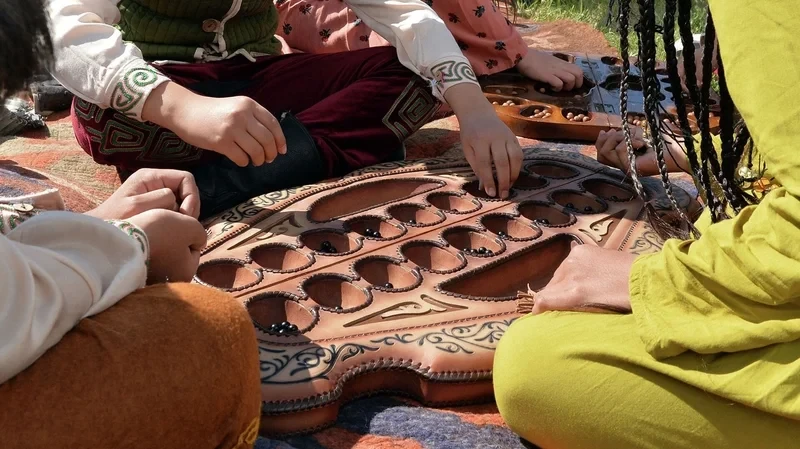



Toguz korgool is one of the popular games belonging to the mancala family. The word "mancala" translates to "movement" or "transfer." The main goal of these games is to collect stones to achieve victory.
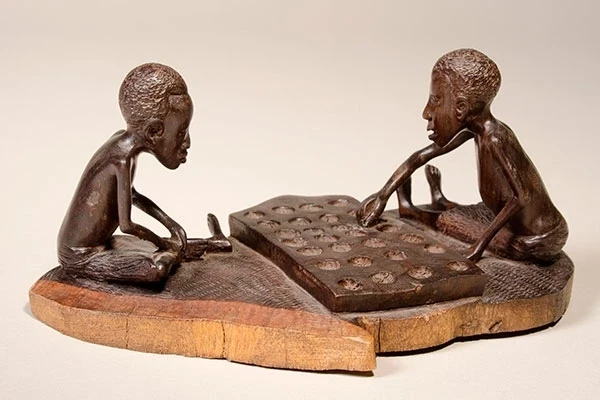
Among the 400 known variants of mancala, over 90 are widely spread across African countries. For example, in Morocco, this game is called "sig," in Ghana — "wari," in Liberia — "poo," and in Senegal — "kapo-kungo."
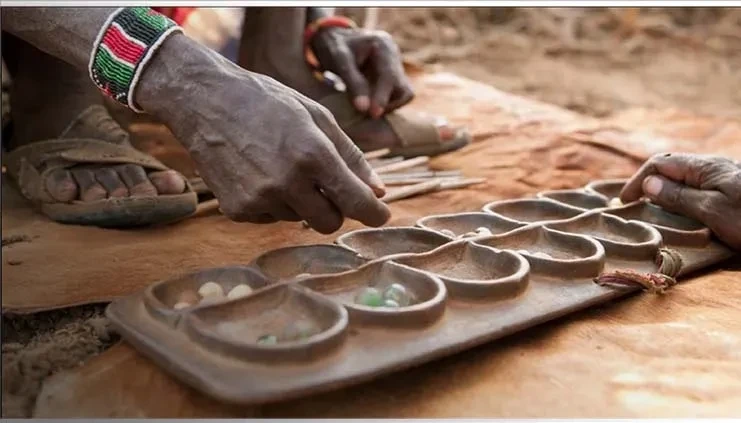
The first mentions of this game were found in the Egyptian pyramids and date back approximately 7000 years. The images found on stones show that traders played this game, likely for entertainment during long journeys. It is believed that it was these traders who spread the mancala games across Europe, Asia, and America.
Kyrgyz people have been playing toguz korgool since ancient times. Different peoples know it by different names: Kazakhs call it "toguz kumalak," Turks — "dokuz kumalak," and Mongols — "esen korgol."
This game is also widespread beyond Central Asia, including northeastern Afghanistan, some regions of Russia (such as Altai, Khakassia, Yakutia, Tatarstan, and Tuva), as well as in Western Mongolia and northwestern areas of China.
According to some sources, toguz korgool came to Central Asia via the Great Silk Road during the spread of Islam (7th–8th centuries).
The game is also mentioned in the famous epic of the Kyrgyz people — "Manas," where there are lines that describe the process of playing toguz korgool in detail.
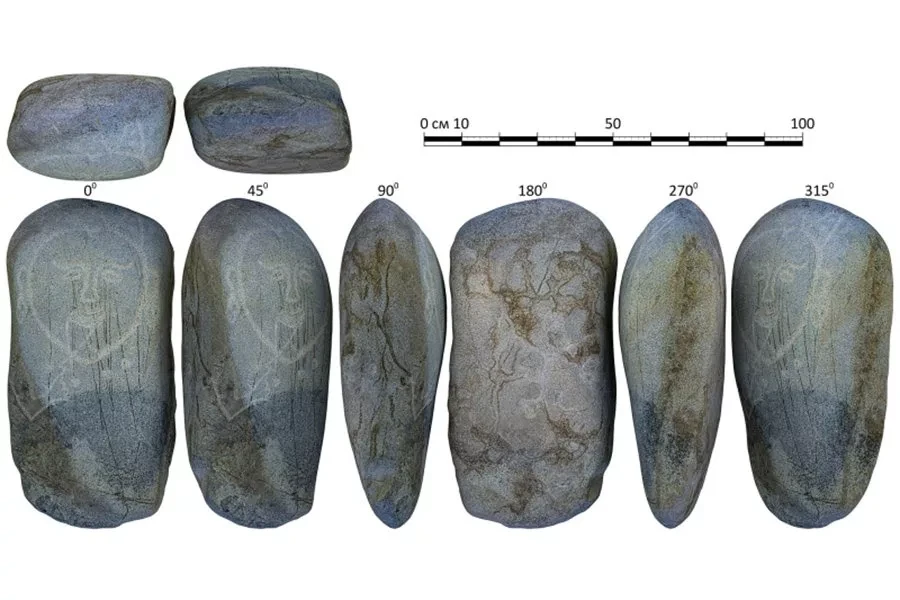
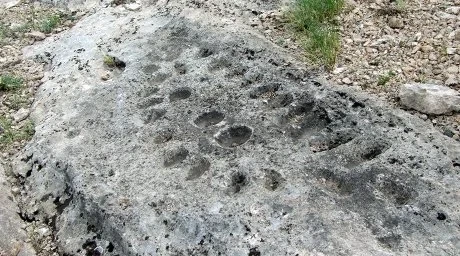
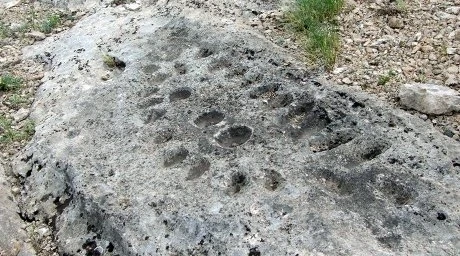
Archaeological finds confirm the ancientness of this game. In Tokmok, at the "Burana" museum, there is a stone game board weighing 120-150 kg. Similar artifacts have been found in the Oi-Tabylga area of the Chuy Valley and in the San-dyk-Konush area near the city of Kara-Kul in the Jalal-Abad region.
The Russian scholar N. Pantusov wrote the first scientific work on toguz korgool in 1906 titled "Kyrgyz Game - Toguz Kumalak." In 1911, the German anthropologist Richard Karutz also published his work on this game.
Kyrgyz athletes in toguz korgool achieve significant success both nationally and internationally. In 1993, the Toguz Korgool Federation was established to popularize and develop this ancient game.
A key moment in the history of toguz korgool was 1999, when Kyrgyz IT specialist Kubat Kartanbaev developed an electronic version of the game, significantly contributing to its spread. Now it can be played on mobile devices.
Since 2008, "Toguz Kumalak" has been officially represented at the international intellectual games olympiad.
Toguz korgool develops logical thinking and precise calculation skills, actively involving mathematical operations such as addition, subtraction, multiplication, and division during the game. Considering the benefits of the game for children, the Ministry of Education and Science of the Kyrgyz Republic decided to include toguz korgool in the school curriculum.
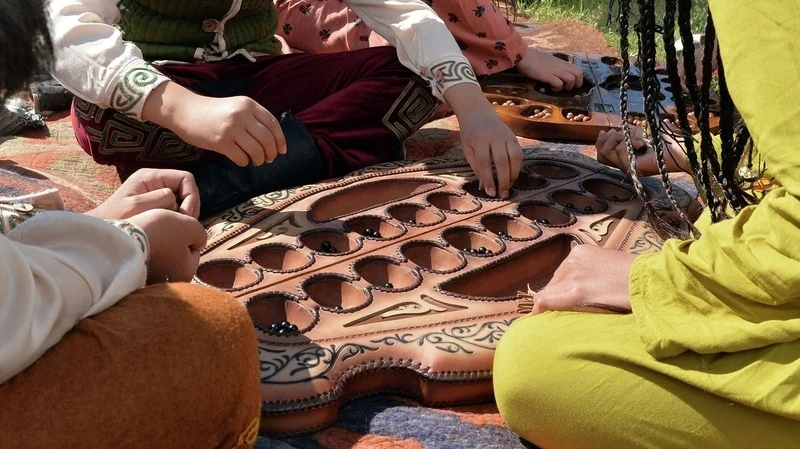
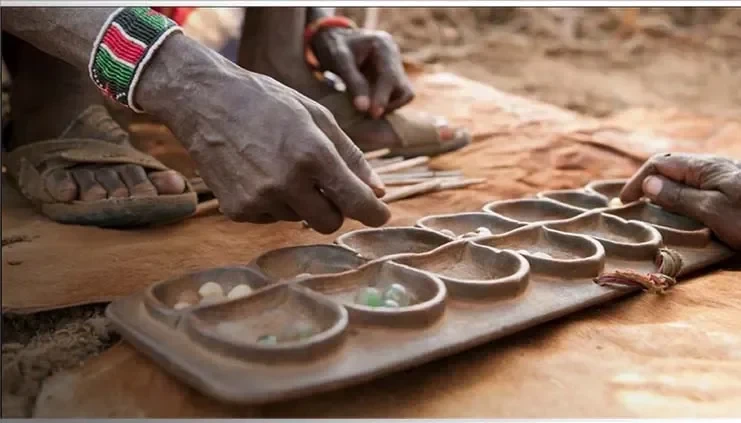
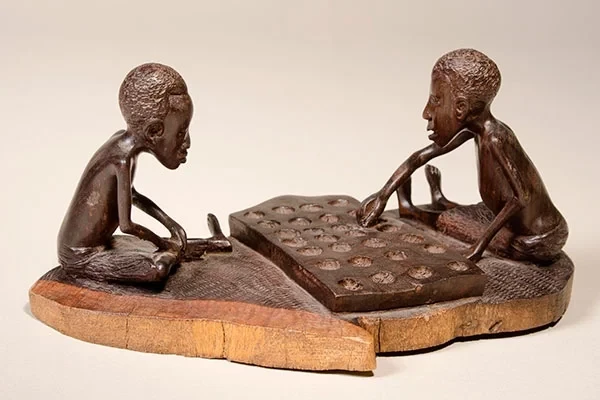
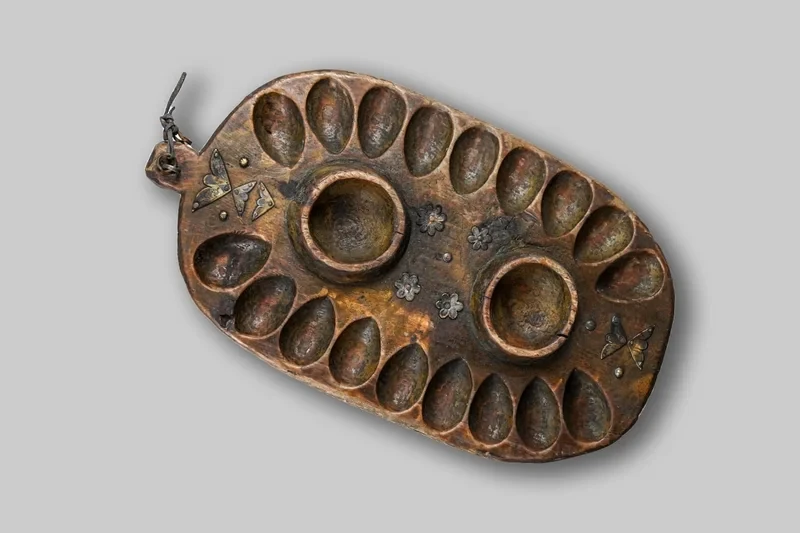
The game is played on a special board, which has 18 pits (uyuk) — 9 for each player, as well as two central accumulation hollows called "kazans," where the won stones (korgools) are collected.
In the game, 162 korgools are used, as well as special tokens to denote the "ace" (the won pit). At the beginning of the game, 9 korgools are placed in each of the 18 pits.
Goal and participants of the game
The game is designed for two participants who take turns making moves. The main goal is to collect the maximum number of korgools in one's "kazan." The winner is the one who first collects 82 korgools. If both players collect 81 korgools, the game is considered a draw. The game ends when one of the participants runs out of korgools in the pits.

The first move is determined by a draw. The player chooses any pit on their side, takes all the korgools from there, and distributes them one by one into the next pits counterclockwise. If the last korgool lands in the opponent's pit and the number of stones in it becomes even, the player takes them into their "kazan." If the number of stones is odd or the last token lands in a pit on the player's side, the stones remain in place.
The "Ace" rule
If the last korgool lands in the opponent's pit, where there are already two stones (making three in total), the player takes them and declares that pit their "ace." All korgools that land in this pit in the future will automatically go to the owner of the "ace."
Each player can declare an "ace" only once. Pit No. 9 cannot be an "ace," and an "ace" cannot be declared in a pit with the same number that is already occupied by the opponent's "ace."
Cultural significance of toguz korgool
According to Kerimbek Omuraliev, Vice President of the Toguz Korgool Federation and coach, this game holds immense significance for the Kyrgyz people. Athletes continue to win awards at both national and international levels.

Kyrgyz people believe that the history of toguz korgool spans over 3000 years, although the exact time and place of its origin remain unknown. Some believe that the game was invented by representatives of the nobility, while others think it was created by shepherds.
This game is also mentioned in the epic "Manas," where in the version of the storyteller Sagymbay Orozbakov, the lines sound:
“Your forty interesting games,
Bring forth the game of chatyrash,
Toguz, unite it, take toguz korgool.
Gather and take twenty, take the stone and the pebble.”

Our players in toguz korgool show impressive results. At the championship held in Almaty last year, they took prize places. It is especially worth noting the successes of the youth: at the U-15 World School Championship, Upol Abdymomunova became the world champion, while Nurel Sultashev and Almaz Jenishbek uulu became Asian champions.
Kyrgyz players traditionally occupy leading positions at the World Nomad Games. Currently, active preparations are underway for this year's upcoming games, where each team will feature four players - two men and two women. The national team has been formed based on the results of the recently held internal championship,” he added.
The vice president of the federation noted that such achievements highlight the immense potential of Kyrgyz players. According to him, it is necessary to continue developing the game, as it fosters ingenuity, quick calculation skills, and endurance.
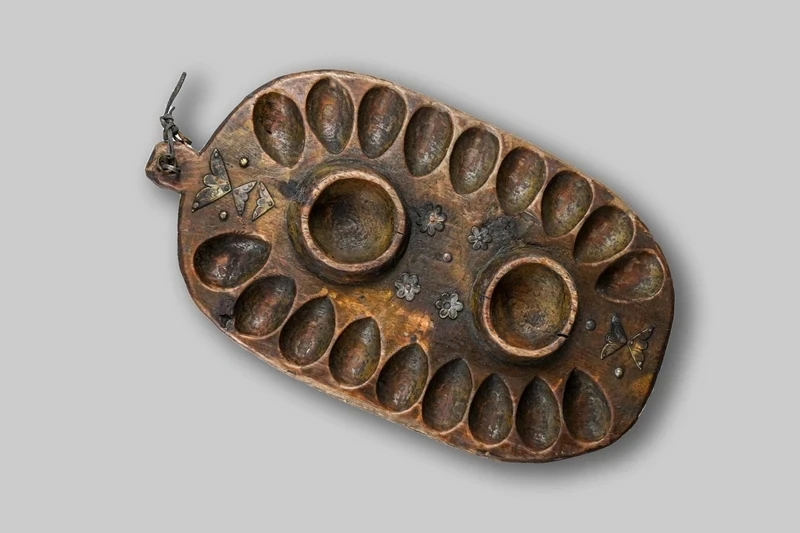
There is a legend linking the creation of the game to nomadic caravans. One day, travelers transporting goods on camels stopped for the night. In the center of their camp, they placed two large camels with loads, and they themselves settled around them.
The next morning, the caravan continued its journey. Later, other travelers passing by this place noticed unusual traces on the ground: eighteen depressions (nine on each side) and two large pits in the center, where the camels had been. In these pits, traces of camel dung remained.
One of the witnesses, pondering what he saw, invented this game. Since camel dung is called "korgool," the game was named "toguz korgool," based on the number of pits on each side.