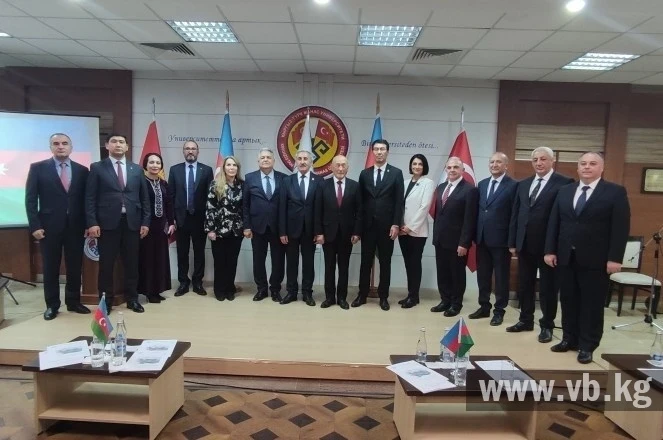
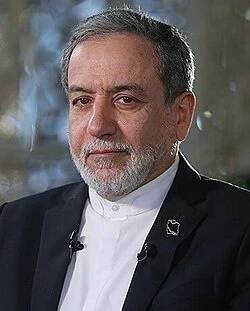
At the international conference "International Law in Conditions of Aggression: Invasion and Defense," Seyed Abbas Araghchi, the Iranian Foreign Minister, expressed concern about the current situation regarding international law.
He noted that on the 80th anniversary of the establishment of the UN, the world is facing serious challenges; instead of strengthening the foundations of international law, there are destructive attacks against it. Araghchi emphasized that against the backdrop of escalating conflicts and wars, which should be exceptions, violence has become the norm in international relations, and the use of force is a common tool of foreign policy for some countries.
In his opinion, the situation is a consequence of the concept of a "rules-based order," which is actively promoted by the United States and its allies. This order is practically oriented towards the short-term interests of the West and substitutes the true "law-based order." This has led to selective interpretation of norms and their use as a tool of domination, ignoring the calls from Global South countries to return to universal principles.
Araghchi also pointed out that even the very concept of a "rules-based order" is now being discussed less. He believes that there is currently an attempt to create a "power-based international order." The American doctrine of "Peace through Strength" has effectively transformed into "Hegemony through Strength." According to him, US officials openly demonstrate their unwillingness to act within the framework of international law, aiming only for victory, which effectively leads to a return to the "law of the jungle."
Military funding worldwide has reached a historic record of $3 trillion, with forecasts that average military spending in 2024 will exceed 7% of the state budgets of countries. This creates conditions for escalating competition among great powers, the development of offensive weapons, and deteriorating diplomatic relations. At the same time, Israel's attack on Iran on June 13, which occurred just two days before the start of Iranian-American negotiations, vividly illustrates how diplomacy is taking a back seat.
According to Araghchi, Western Asia is particularly suffering from this dangerous trend. Israel, receiving support from the US and some European countries, is committing war crimes and genocide by attacking neighboring states. Over the past two years, it has attacked seven countries and occupied territories in Lebanon and Syria, declaring its intentions to "reshape the Middle Eastern order." Under US guidance, Israel has carried out aggression against Iran, striking peaceful nuclear facilities, which violates the UN Charter and non-proliferation principles.
By attacking Iranian nuclear facilities on the anniversary of the tragedies in Hiroshima and Nagasaki, the US has once again shown that it poses a threat to world peace. Iran, according to Article 51 of the UN Charter, exercised its right to self-defense. The operation carried out by Iran was in accordance with the principles of necessity, proportionality, and distinction between military and civilian targets, unlike the actions of Israel, which uses any pretext to attack civilians. In just nine days, the situation changed from "unconditional surrender" to "unconditional ceasefire."
As one of the defenders of international law, Iran has always conducted its nuclear program in accordance with Article 4 of the NPT. After signing the JCPOA, Iran demonstrated full compliance with its terms, as confirmed by 15 reports from the IAEA, while the US unilaterally withdrew from the agreement. If the US had continued to adhere to this agreement, the situation could have been completely different. Iran's response to aggression was proportional and in line with the principles of international humanitarian law.
Despite the attacks, international law remains viable, but its further existence depends on the collective defense by all countries of the world. Today, the world stands at a crossroads: either continue down the path of domination, militarism, and force, or move towards a legal order based on equality and dialogue. The Islamic Republic of Iran advocates for the second path and is ready to cooperate with the Global South to restore peace and legal order.
At the regional level, Iran seeks to create a stable and secure region based on mutual understanding and brotherhood. The country considers the security of neighboring states as its own security and aims to foster an atmosphere of trust. Iran calls for an active role from all countries in the development of the region and the establishment of a new doctrine of security and peace.