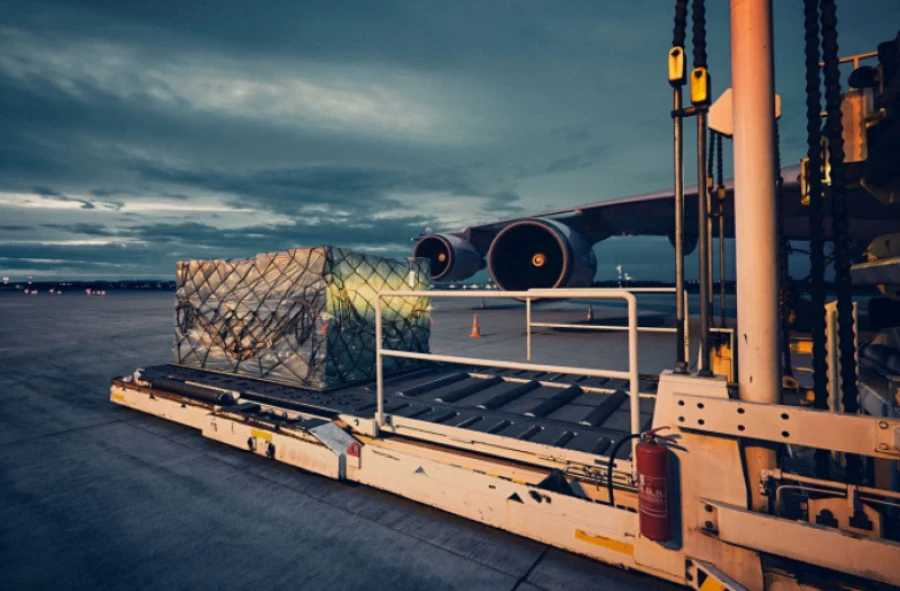
The situation in the region has already led to a 16-18% decrease in cargo air transportation.
As a result of the conflict in the Persian Gulf, which has been ongoing for just a week, there has been a sharp reduction in available capacities in the cargo air transportation market in some areas by up to 70%. If hostilities do not cease, the cost of air logistics services could rise significantly, reminiscent of the situation during the Covid-19 pandemic, reports Infranews.ru.
The closure of airspace and the halt of operations at the largest airports in the Middle East due to the escalation of the conflict have led to serious disruptions in supply chains. Experts from the research agency Xeneta report a decrease in capacity in the global cargo air transportation market of about 16-18%.
According to Niall van de Woof, head of air transportation at Xeneta, although the reported losses may seem small, they are part of a larger problem that is causing concern. In specific regions, such as India, where the market is influenced by Qatar Airways, Emirates, and Etihad, losses range from 50% to 70% of total transport capacities.
The consequences of potential chaos in the global air transport market could be much more serious than the impact of fuel prices during an oil crisis. While the cost of jet fuel may reduce the margins of air carriers, the prices themselves will largely depend on the available capacities in the market. If the conflict continues, rates for cargo air transportation could increase two, three, or even four times, although the reasons for this will differ from those observed during Covid-19.
Moreover, the price increases will affect all markets, regardless of their regional characteristics. Even shippers not using international hubs in the Middle East will feel the impact. As Niall van de Woof notes, although this may not affect their operational activities, the commercial aspects will be subject to changes, as airlines that continue to service these routes will seek to maximize their profits.
In conditions of instability, shippers are advised to focus on flexibility and short-term solutions. Niall van de Woof recommends temporarily suspending long-term tenders and maintaining close cooperation with freight forwarders to respond promptly to market changes. In a highly uncertain environment, any rates fixed today could quickly become irrelevant, whether in the case of a rapid resolution of the situation or during a prolonged crisis, analysts at Xeneta believe.
Photo www