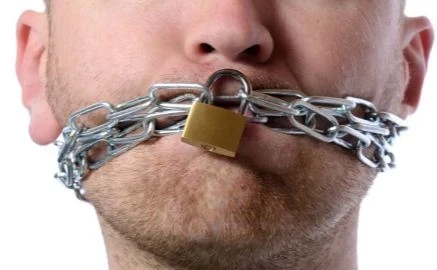
Recent changes in legislation were adopted by Kazakh senators in the field of crime prevention.
According to the new amendments, a wide range of individuals, including private organizations and citizens, will be able to participate in the prevention process. Examples of such participation are already being observed with the involvement of "public" organizations that conduct actions without the authority of law enforcement agencies.
These actions raise public concern and call into question the legality of the methods applied under the new norms. According to lawyer Elena Shvetsova, executive director and co-founder of the "Erkindik Qanaty" foundation, this means that surveillance of citizens' behavior and interference in their personal lives will increase.
Moreover, the list of public places where the new rules of conduct and order are applied has significantly expanded. Almost any space can be recognized as "public".
The new legislation may apply to:
- adjacent territories;
- public zones of cultural events;
- open festivals and street actions;
- temporary and informal spaces, such as street theater.
Behavior is now assessed through the lens of "moral norms". This, combined with the concept of "antisocial behavior", may lead to:
- jokes;
- performances;
- satirical statements;
- profanity;
- artistic and protest self-expression
being regarded as violations.
The lawyer notes that there have already been cases where Temirlan Yensibek was prosecuted for satirical content, and stand-up comedians faced persecution. She believes that the application of the new norms will only expand, as the law does not define clear boundaries between art, jokes, and "antisocial behavior," nor does it clarify who and by what criteria evaluates these boundaries.
Thus, if almost any place is considered public, and behavioral norms are assessed through "morality," this creates risks for:
- street performances that may be deemed "antisocial";
- public irony and profanity that may become grounds for intervention;
- cultural and artistic forms of self-expression that are subjected to pressure, not due to their illegality, but because of subjective perception.
Article 75 and other provisions of the law restrict freedom of expression, creating a situation where the permissibility of behavior is determined not by law but by subjective assessment of "normality." This is problematic for:
- artists and performers;
- stand-up comedians and satirists;
- street theaters and festivals;
- civic and cultural initiatives in public spaces.
"Although the stated goals of the bill concern prevention and public safety, in practice it expands the boundaries of state intervention: from reacting to specific offenses to controlling the behavior and lifestyle of citizens.
_
Ambiguous categories such as 'antisocial behavior,' the expansion of the list of public places, and the legalization of citizen participation in oversight create a parallel control system operating outside traditional procedural guarantees.
_
This system focuses on the 'impropriety' of behavior rather than legal violations. Decisions are made outside the judicial process, based on evaluative criteria, which opens the way for arbitrary interference in private life and the use of prevention as a tool of control.
_
As a result, the law does not so much prevent offenses as it normalizes the restriction of rights, reduces legal certainty, and undermines the principle that the state should intervene only in cases of law violations, not when someone's behavior is disliked by another," the expert opinion emphasizes.