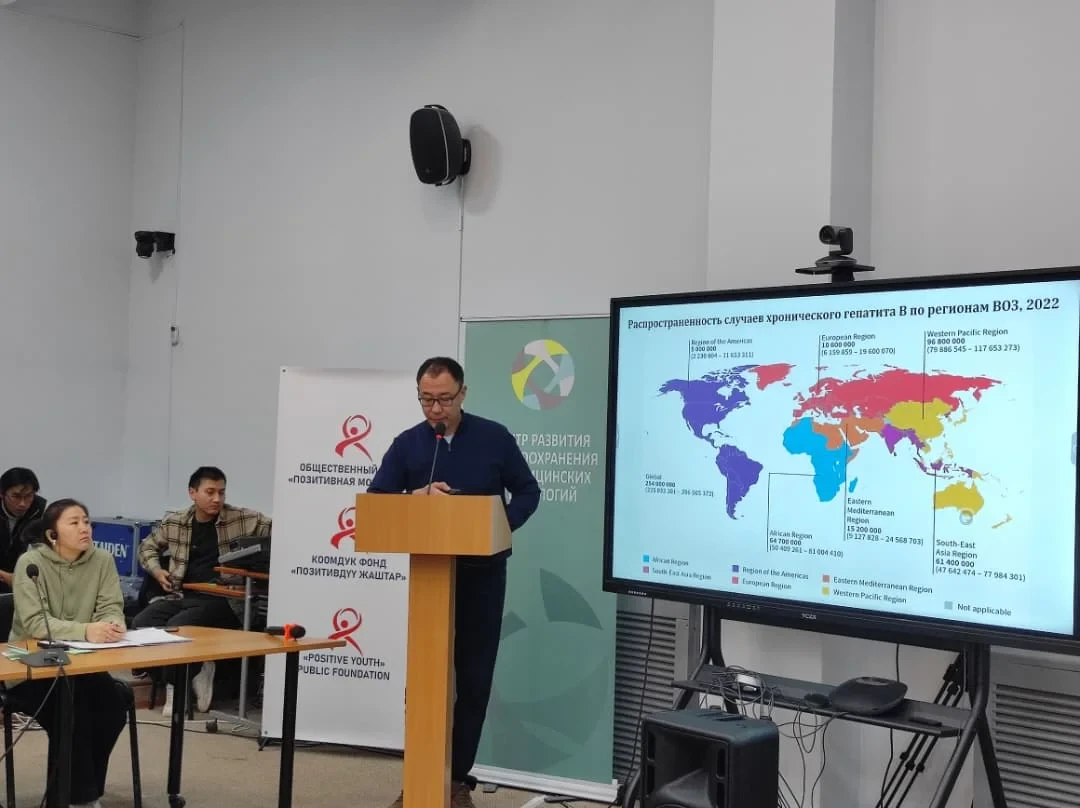
- I. V. Pershukov is a professor, Doctor of Medical Sciences, Doctor of Philosophy (PhD), head of the Department of Hospital Therapy with a course in Radiological Diagnostics and Oncology at Jalal-Abad State University, and a fellow of the American College of Cardiology (FACC) and the American Society of Cardiovascular Angiography and Interventions (FSCAI).
In his speech, he emphasizes that tumor diagnostics must be comprehensive and include mandatory morphological confirmation.
The comprehensive approach implies not only studying the patient's complaints and history but also using all necessary examination methods to identify the primary tumor, as well as metastases in regional and distant lymph nodes.
Morphological confirmation of the diagnosis is carried out through histological (e.g., biopsy, trepanobiopsy) or cytological studies. Various samples can be used for cytology, such as smears, prints, tumor punctures, fluids from cavities and ducts, as well as washings, sputum, and urine.
All malignant tumors are classified according to the TNM system, which helps determine the stage of the disease and the effectiveness of treatment for each patient.
The T criterion considers the primary tumor focus:
- T0 — the primary tumor is not detected;
- Tis — pre-invasive cancer;
- T1, T2, T3, T4 — various degrees of tumor enlargement and/or spread.
The N criterion shows the status of regional lymph nodes:
- Nx — the status of lymph nodes cannot be assessed;
- N0 — no metastases in regional lymph nodes;
- N1, N2, N3 — the degree of lymph node involvement in the pathological process increases.
The M criterion reflects the presence or absence of distant metastases:
- Mx — the presence of distant metastases cannot be assessed;
- M0 — no distant metastases;
- M1 — distant metastases are present.
The complexity of diagnosis may be related to the syndrome of metastases from malignant tumors, where the primary focus cannot be established, while metastases are found in lymph nodes, bones, the brain, lungs, liver, and other organs.
Professor Pershukov points out several reasons for the late diagnosis of cancer in Kyrgyzstan:
- the absence of a national cancer control program;
- insufficient oncological training of doctors;
- low level of public awareness about cancer diseases;
- limited use of cytological and morphological methods in healthcare practice.
In comparison, in Russia, morphological verification of the diagnosis reaches 80%. In the remaining 20% of patients, the diagnosis is not confirmed, leading to medical errors and the resorting to alternative treatment methods.
Thus, the issue of early diagnosis of malignant tumors remains extremely important.
It should be noted that timely diagnosis is quite possible. For example, in Russia, only 30% of cases of localized breast cancer (T1–2N0M0) are detected at early stages. At the same time, in some medical institutions, with proper organization of examinations, this figure reaches 70%.
Since the beginning of the 21st century, methods of DNA diagnostics for cancer have been actively developing. These methods investigate not only tumor markers but also the body's own DNA, identifying genetic defects, as explained by Professor Pershukov.
Materials for such studies may include blood and natural secretions of the body:
- urine (in kidney and bladder cancer);
- stool (in colorectal cancer);
- sputum (in lung cancer);
- saliva (in oral cavity and throat cancers, salivary glands).
“Soon, blood and urine tests will include not only biochemical and cytological but also genetic studies,” concludes Professor Pershukov.