In the last five years of their life together, she says, her husband's behavior towards the children became unacceptable.
“His actions were horrific. He not only systematically beat the children but also forced them to be undressed, even though the older ones were 14 and 16 years old. He would undress in front of them, took them to the bathhouse, where he could sit with them for hours, spreading the girls' legs and massaging their breasts and buttocks. He forbade our eldest son from going outside. In the evening, he would completely undress and lie under the blanket, calling the children to him, demanding the girls to undress, turning on cartoons, and spending time with them this way. Before bed, he insisted that everyone be without clothes, under the pretext of massage, he would rub them with oil and spend hours massaging their bodies. S.S. instilled in the children that they had problems with their spines. This was his way of trying to free them and rid them of complexes,” the case materials cited by Lina Kemler state.
According to the woman, despite her outrage and attempts to expose his actions, all accusations ultimately fell on her.
“He accused me of sexual obsession and threatened that if I contacted the authorities, my youngest son would be taken away from me. For years, the children and I were made to believe that his behavior was normal and natural. This was achieved through physical and psychological pressure, and the children were led to believe that I was 'obsessed.' I tried to leave him, suggested divorce, but it always ended in physical violence,” Lina says.
The woman claims that he harassed their three daughters, but only the eldest, who was 14 at the time of the abuse and is now 16, is involved in the case.
“There was a separate case regarding the two younger daughters, but it was quickly closed. He also beat our sons and me, but there was not enough evidence for a criminal case since we did not document the beatings. Once, when he beat me severely, our eldest son called the police. We decided to tell everything that happened. S.S. was detained and placed in a temporary detention facility, and then in a pre-trial detention center,” she recounted.
Initially, a civil case was initiated, in which her husband spent seven days in jail, after which a criminal investigation began.
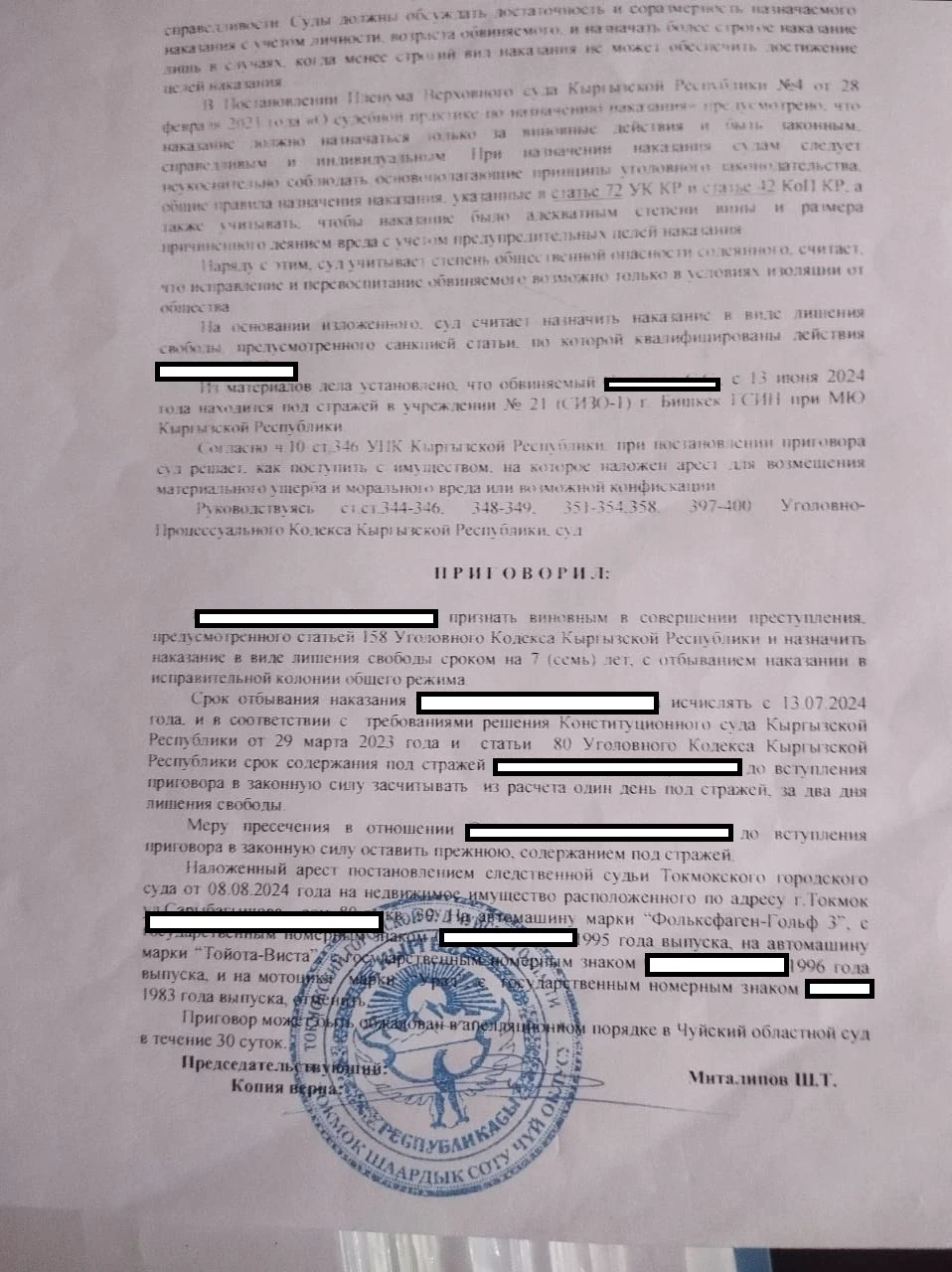
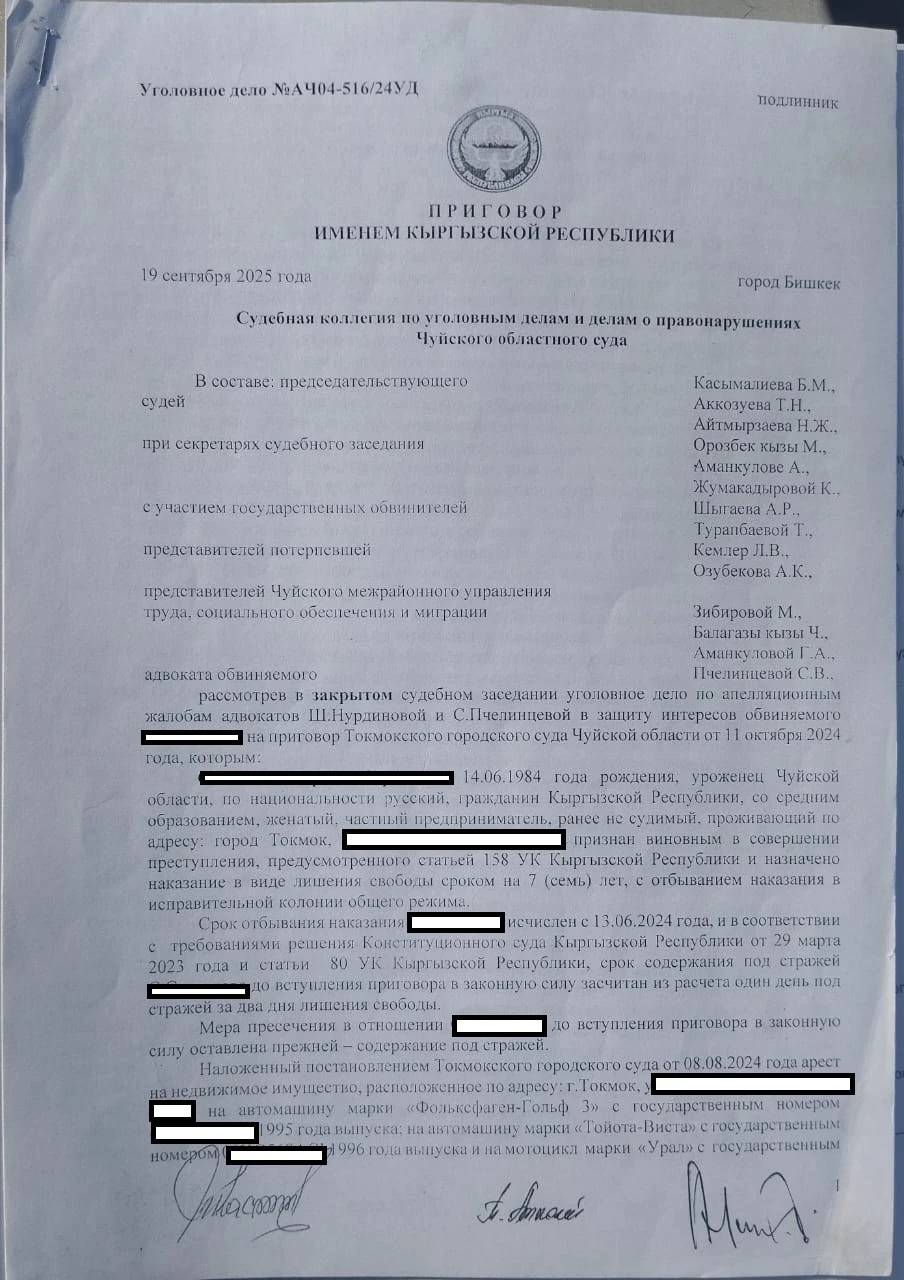
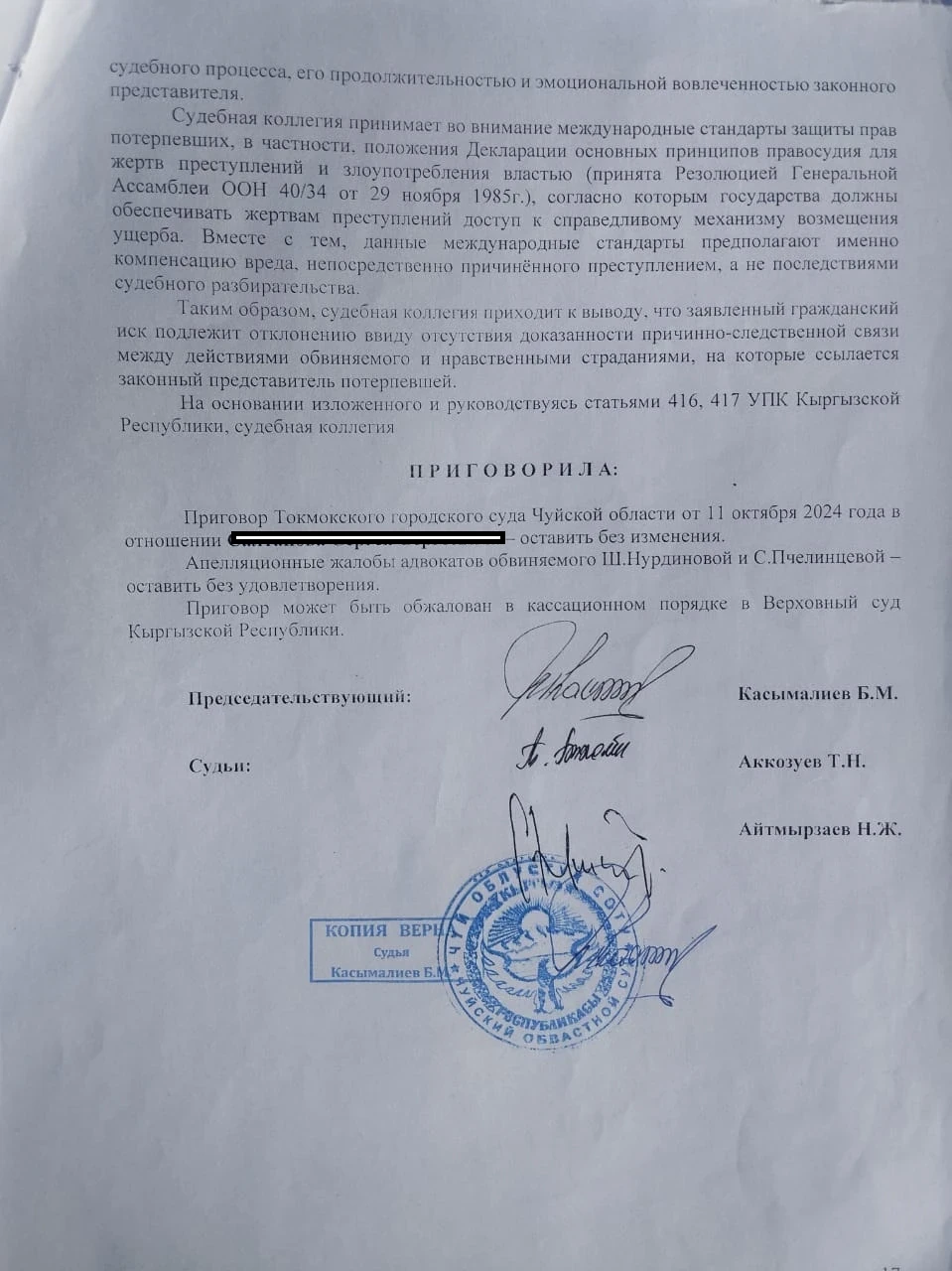
“The court proceedings lasted about six months, and he was sentenced to seven years under articles 158 (lewd acts) and 34 (continuing crime). During this time, the defendant changed three lawyers, while I and the children were represented by a public defender. They appealed to the regional court, where more than 12 hearings took place. At one point, the entire panel of judges changed. In the end, the regional court upheld the sentence, and S.S. was sent to colony No. 10 in Jalal-Abad. He spent only a few months there before his lawyer filed a cassation appeal to the Supreme Court, requesting to overturn the verdict of the Tokmok City Court and send the case to the Chui Regional Court for reconsideration.
We did not file an appeal against this cassation because we were unaware of the necessity. Our public defender assured us that there was no need to worry since we had already won the case, and the cassation only reviews procedural errors, which, according to him, did not exist. However, our lawyer did nothing, and we, along with the children, wrote various petitions and complaints ourselves. After his assurances, we relaxed. We were told that we would be summoned to the Supreme Court, and we waited. But in early February 2026, the lawyer informed us that our case was back in Tokmok. It turned out that the hearing in the Supreme Court took place without our participation, and our rights were violated. We were not even notified of the date of the hearing. My daughter and I always attended all court hearings, and this time we couldn't even express our opinion,” Lina lamented.
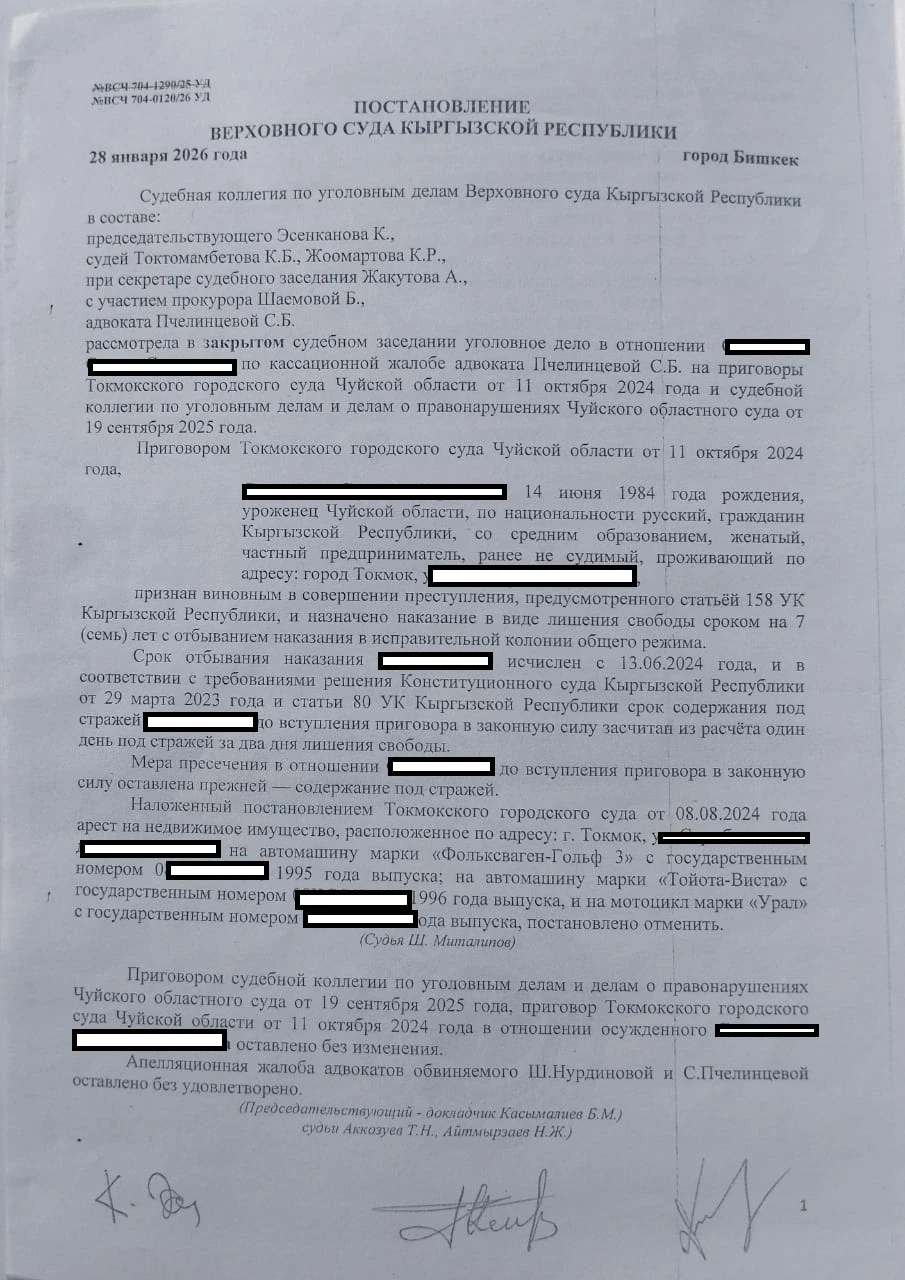
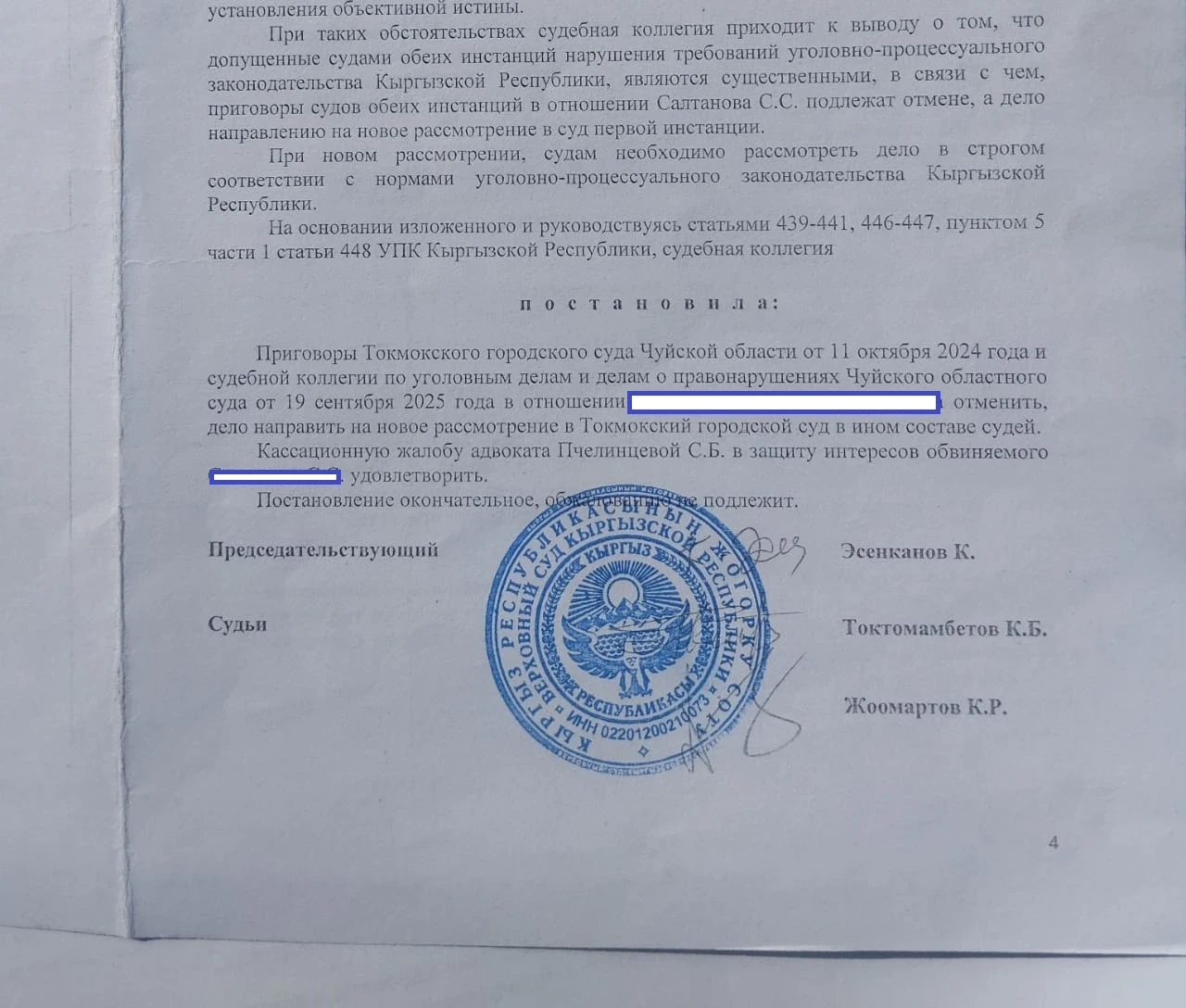
In the court ruling, procedural errors and violations in the questioning of the children are mentioned.
“I understand that the Supreme Court's decision cannot be appealed. But how do I explain to the children that they will have to undergo examinations and give testimonies again, possibly meeting with their father? Although during the first interrogation, video surveillance was conducted. Two years of court proceedings with five children is very difficult, and we have to go through this again. I hope that in the future, the rights of the children will be respected. The defendant has resources and lawyers, while we have nothing — this is terrible,” the woman added.
Lina noted that the process in Tokmok has already resumed, and the preventive measure for S.S. has been extended.
“Interestingly, in the appeal, his lawyer claims that S.S. supports four children in need of help and that they are allegedly left in a helpless state, and on this basis, they ask for his release. This concerns our children, against whom he committed crimes. How can this be? On the contrary, he should be protected from the children. They are completely dependent on me, fed and clothed, and everything is fine with them,” emphasizes Lina.
The woman intends to contest the appeal and has already submitted a rebuttal to the regional court. She hopes for a fair decision and the protection of her children's rights.
Ahead of her is a court case regarding the deprivation of her ex-husband's parental rights, and she fears that if he is acquitted, he will not be deprived of these rights. This would give him the opportunity to demand communication with the children and continue to exert pressure on them.
Lina has sought help from representatives of the ombudsman institution, and according to her, the human rights commissioner promised to attend the court hearings.