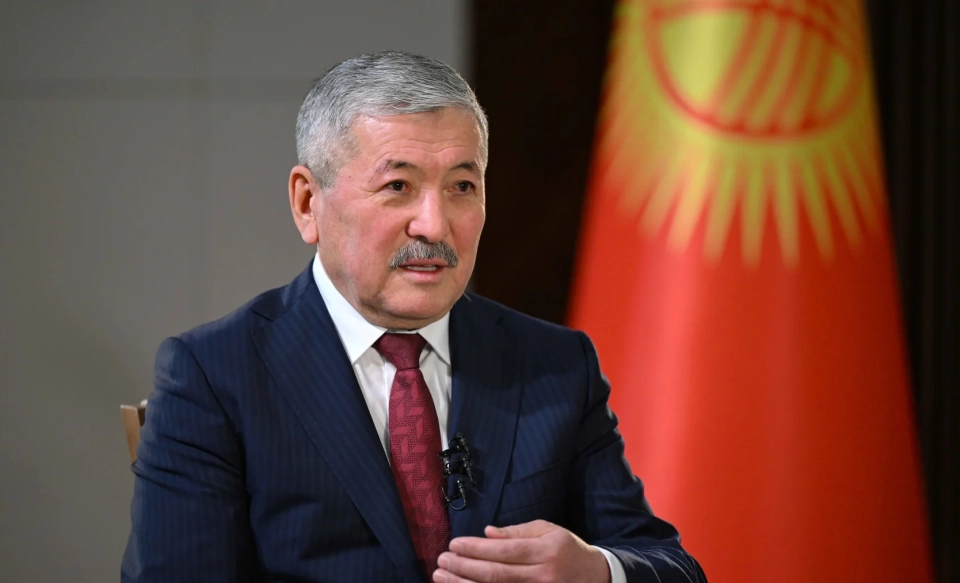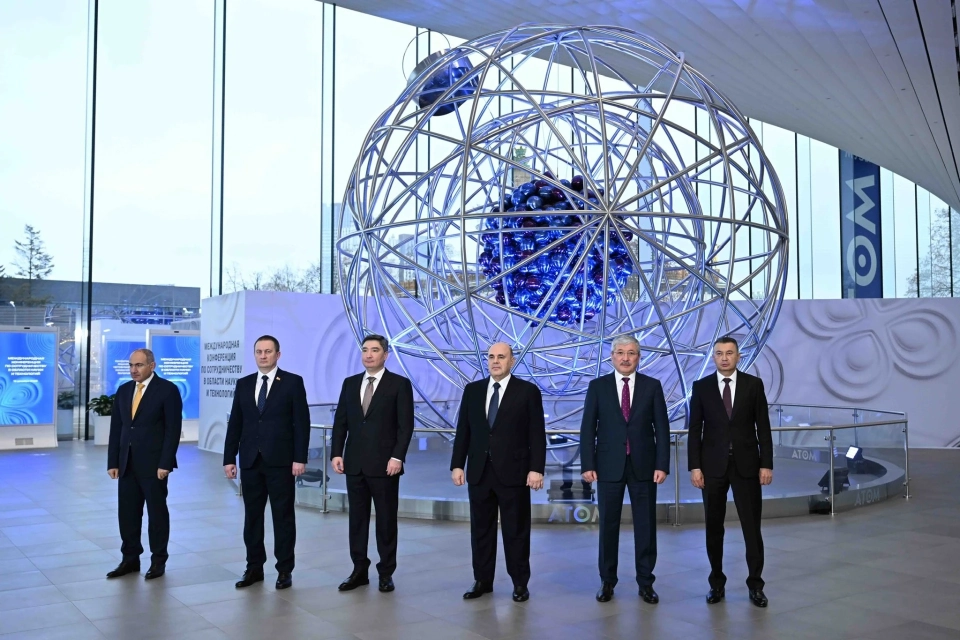
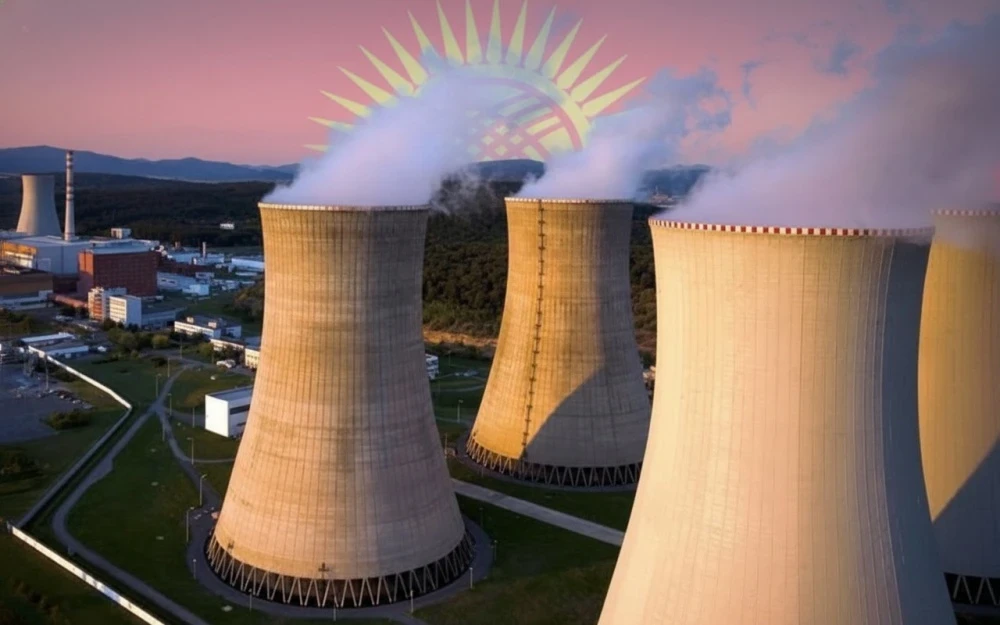
Recently, the Prime Minister of Kyrgyzstan, Adylbek Kasymaliev, spoke about the prospects of building a nuclear power plant (NPP) in the country, emphasizing that Russian technologies remain among the most advanced in the world.
“Studying the experience of our neighbors, one can notice that modern technologies have reached a new level. Today, the level of safety can be considered almost ideal,” he stated.
The Eurasian Development Bank also expressed its readiness to participate in the project of building an NPP in Kyrgyzstan; however, Bishkek needs to clarify its plans. In this regard, the government intends to organize extensive discussions with the population.
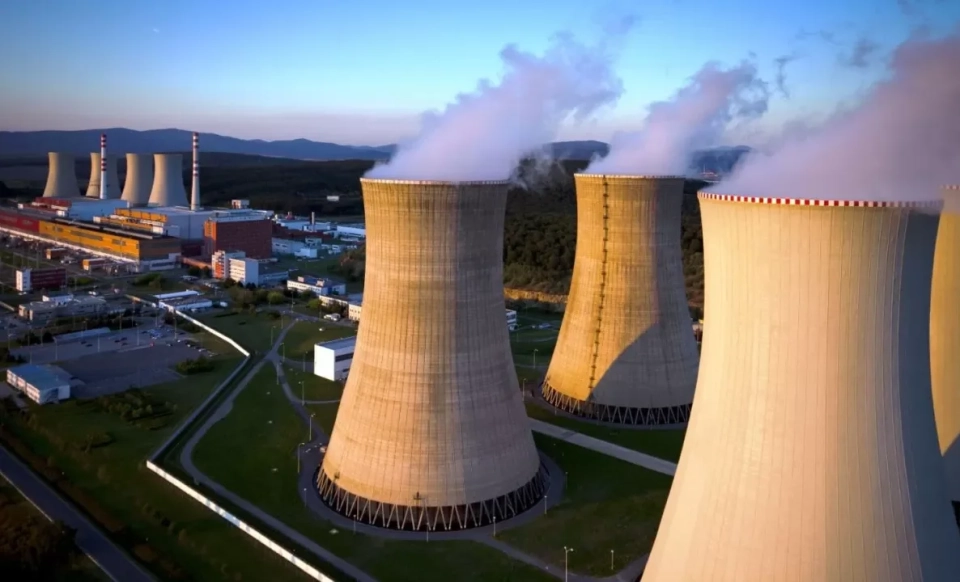
It should be noted that even if an NPP does not appear on the territory of Kyrgyzstan, the country is already indirectly involved in this process. Kazakhstan has begun construction of an NPP near the border with Kyrgyzstan, raising certain concerns about the energy independence of the republic.
Recently, the head of the Kazakhstan Atomic Energy Agency confirmed that the first nuclear power plant will be built in the Zhambyl region, and the construction of a second NPP based on small modular reactors is also planned on the shores of the Caspian Sea.
Kazakhstan's interest in nuclear energy is quite justified, especially in light of the energy crisis that has been observed in the country in recent low-water years. While Kyrgyzstan is trying to solve its problems through hydropower, Kazakhstan and Uzbekistan are focusing on the development of nuclear energy, gaining significant advantages from it.
The Problem of Low Water Levels and Glacier Melting
Experts in Kyrgyzstan are also calling for taking responsibility for the future of the country's energy sector, emphasizing the need to build an NPP or hold a referendum on this issue.
“Kyrgyzstan and Tajikistan are located in the upper reaches of rivers. But what will happen if the glaciers start to melt and the rivers run dry? This thought is alarming. We understand that Kazakhstan and Uzbekistan have made a far-sighted choice by investing in nuclear energy,” they noted.
According to climatologists, a study by the Institute of Science and Technology of Austria (ISTA) showed that even the most stable glaciers have started to melt rapidly. In 2018, a critical threshold was crossed when a lack of precipitation and a decrease in snow cover began to irreversibly affect the mass of glaciers.
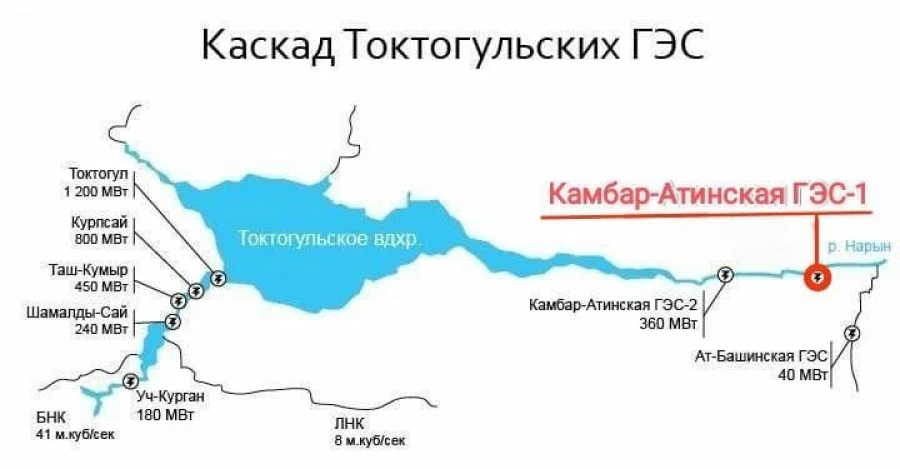
The transition to accelerated ice melting means that ice begins to compensate for the lack of water by breaking down. Central Asia is experiencing low water levels, leading to a decrease in reservoir levels and, consequently, a reduction in electricity production. Thus, dependence on hydropower in the coming years may prove unjustified. This fact is illustrated by the current low levels of the Toktogul reservoir, which has already been reported by the Ministry of Energy. The filling level is significantly lower than in previous years, forcing the state to import electricity in winter and cut expenses for the population, causing dissatisfaction among citizens.
Staffing Issues
Opponents of the construction of an NPP also point to a lack of specialists capable of ensuring the safe operation of the power plant. However, there are solutions to this issue, which were discussed at meetings of specialists.
Russian physicist Boris Martsinkevich, editor-in-chief of the publication "Geoenergetika Info," noted that the staffing issue can be effectively addressed. “When Uzbekistan made the decision to build an NPP, they sent about 50 students for training at the Russian National Research Nuclear University MEPhI. Soon, a branch of this university opened in Tashkent, allowing specialists to be trained locally. This experience can be adapted for Kyrgyzstan,” he added.
Regarding the safety of small NPPs, according to Ibrahim Aliyev, deputy head of the prospective development and capital construction department of the Electric Stations OJSC, they are environmentally cleaner compared to thermal power plants.
The general director of the Rosatom representative office in Kyrgyzstan, Dmitry Konstantinov, also emphasized that modern NPPs are equipped with reliable safety systems that minimize the human factor.
Neighbors such as Kazakhstan and Uzbekistan have already recognized the need for nuclear energy in the context of a changing climate and increasing low water levels. The problem is that Kyrgyzstan is trying to balance between supporting the "green projects" of the European Union and addressing energy issues within the country. However, as practice shows, the EU's ideas about "green projects" often turn out to be costly and ineffective. Alternatives in the form of wind and solar power plants can only be implemented on a limited scale and are unable to cope with current energy challenges.
The Need for an NPP
Local NGOs are raising questions about cooperation with Russia, trying to make the topic of building an NPP politically significant. However, in light of recent statements from Kazakhstan and the expansion of nuclear energy in Uzbekistan, the situation has changed. We will not be able to avoid environmental risks, but it is worth noting that over decades of NPP operation worldwide, there have been only a few incidents, while many plants operate efficiently.
Considering the statements from the Ministry of Energy about upcoming difficulties in winter due to the decrease in water levels in the most important reservoir, NPPs are becoming the only source of reliable electricity generation that is not dependent on weather conditions. Despite the opinions of opponents, the construction of an NPP is extremely necessary to solve the energy problems of Kyrgyzstan.