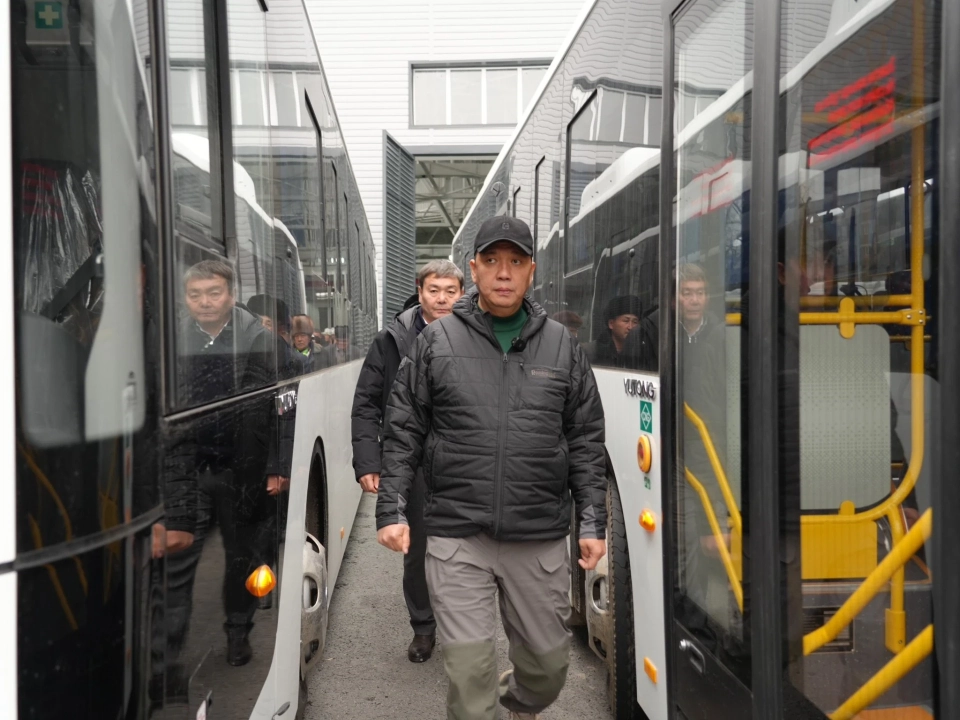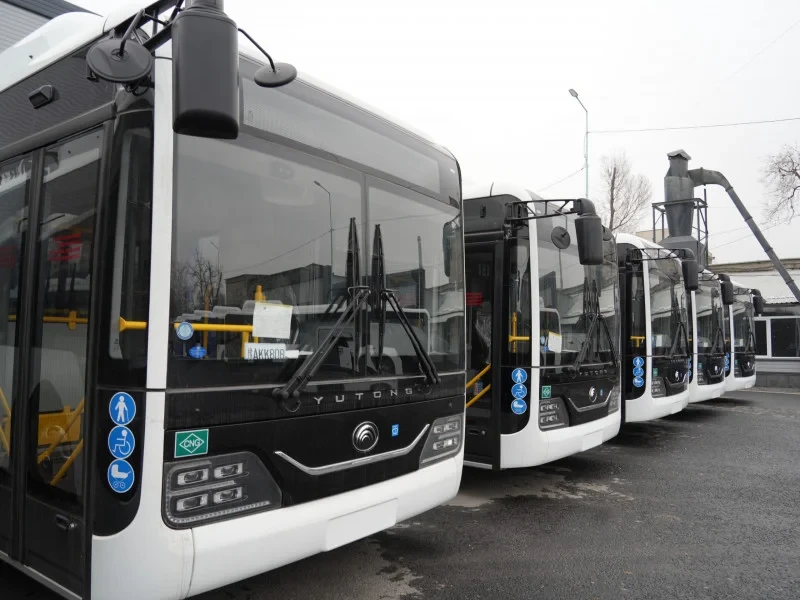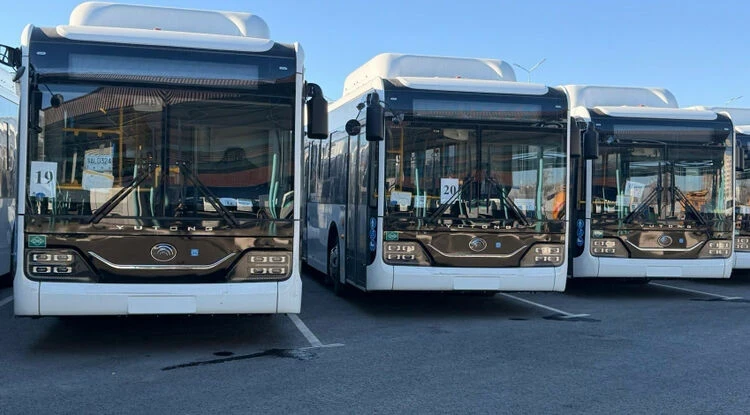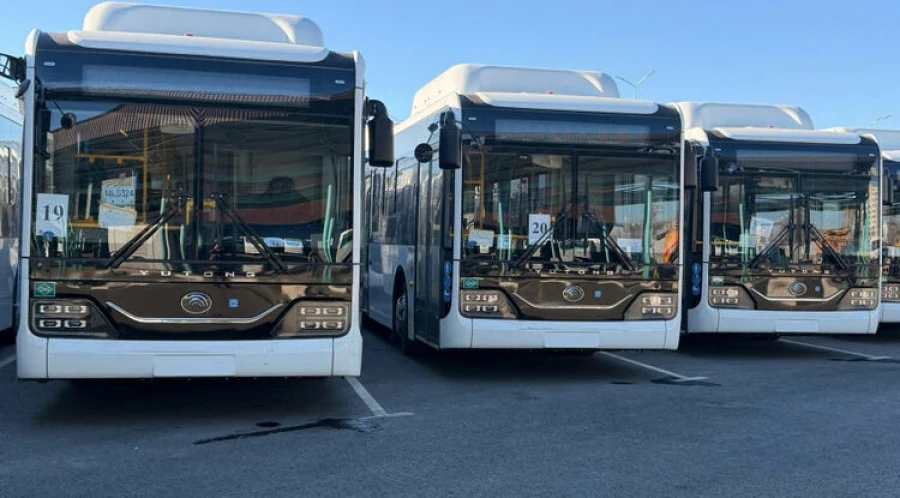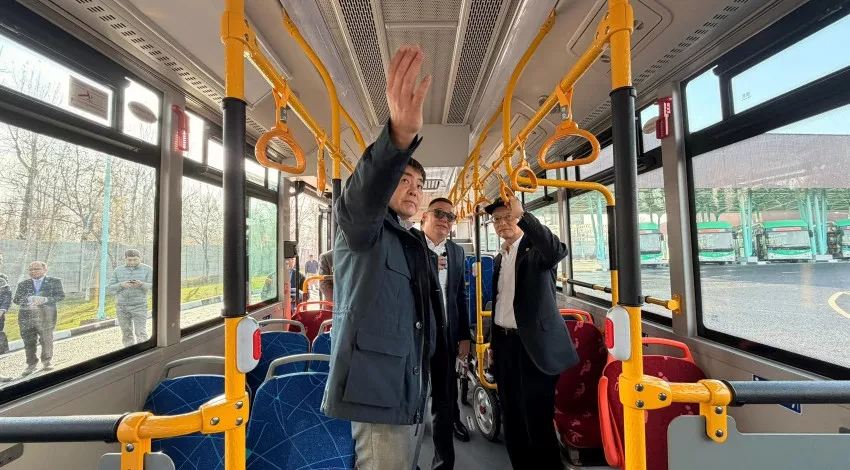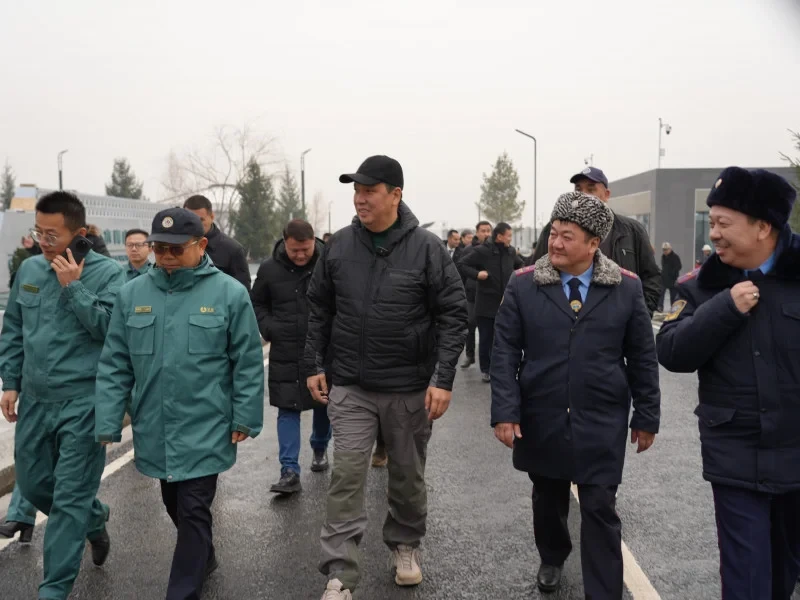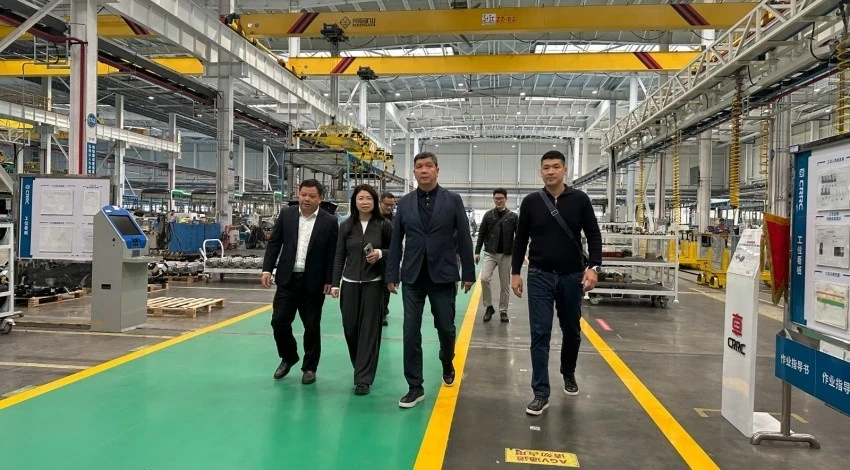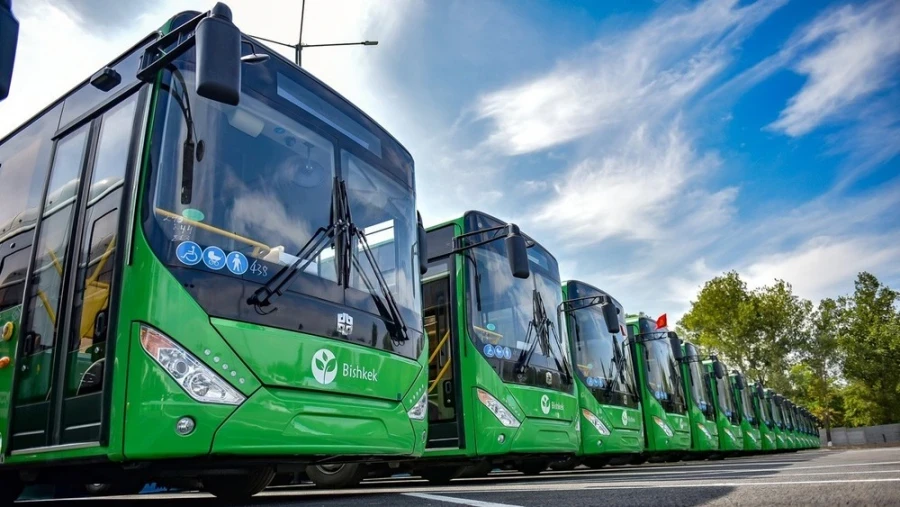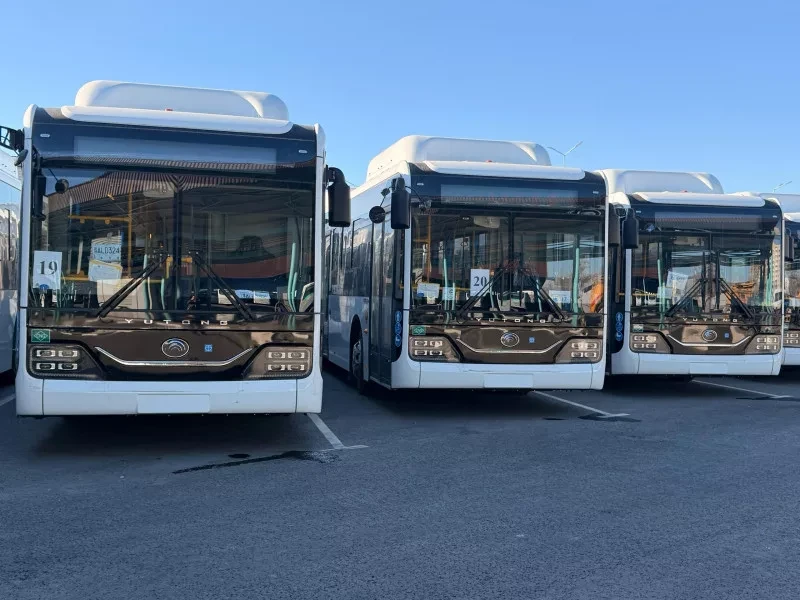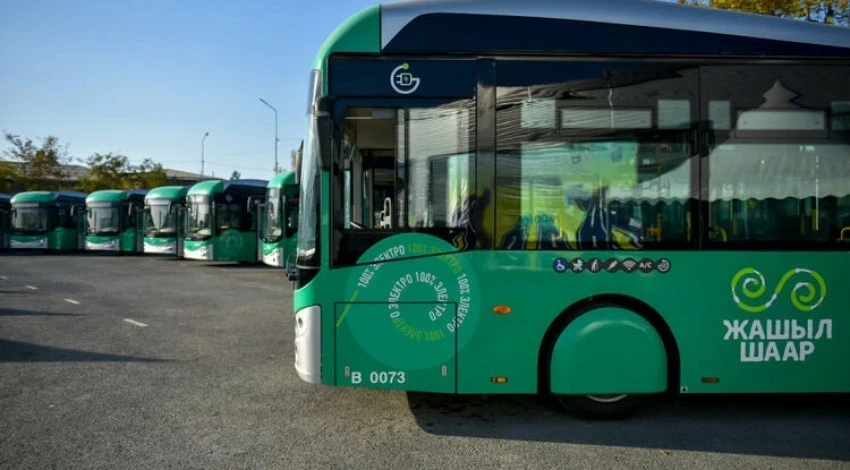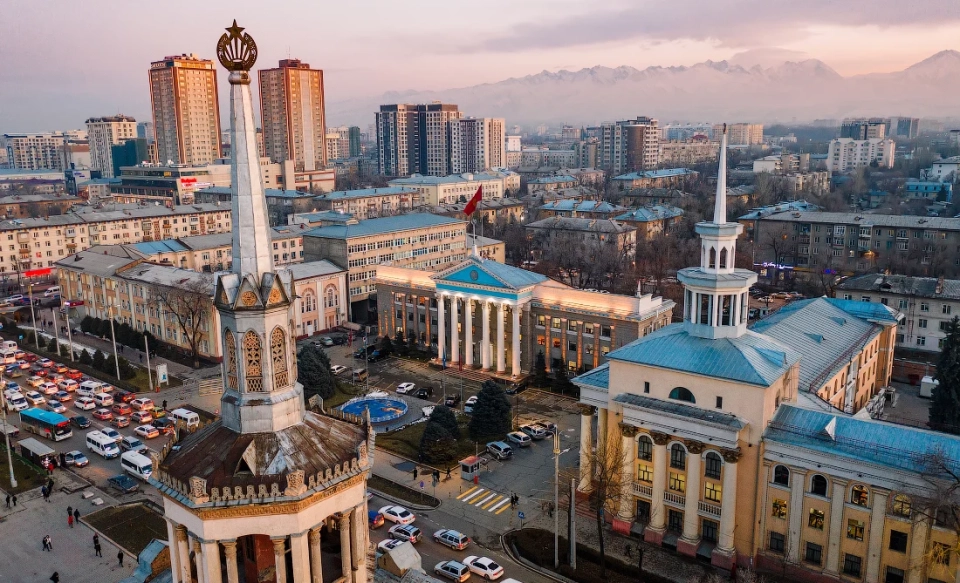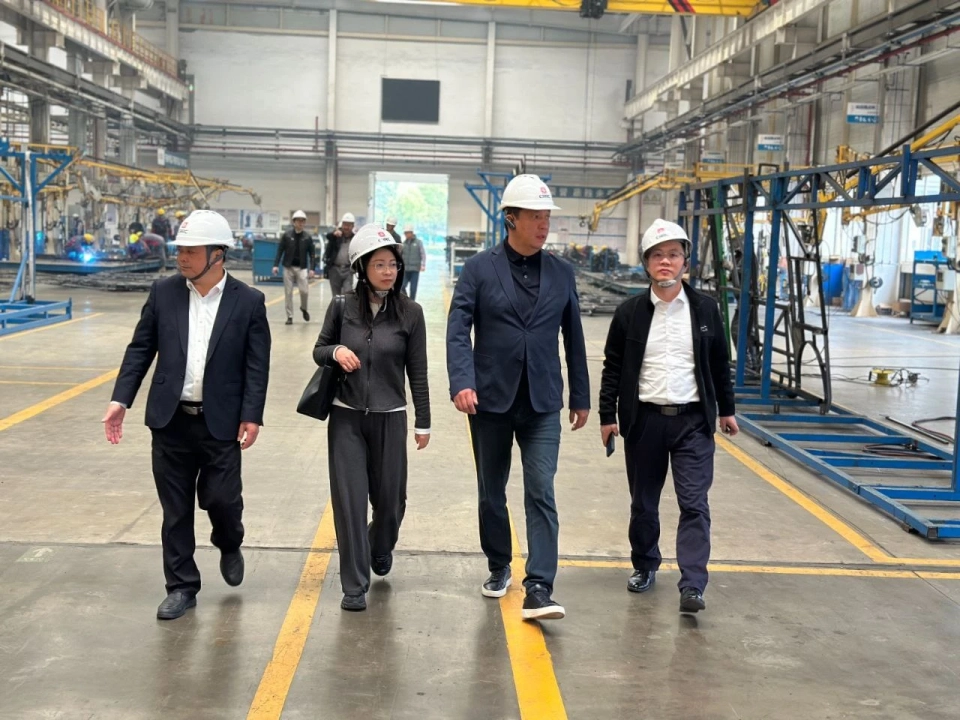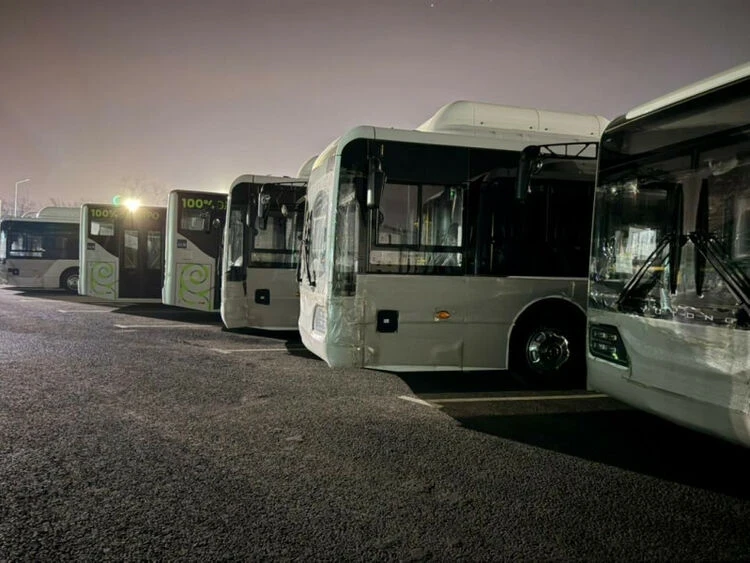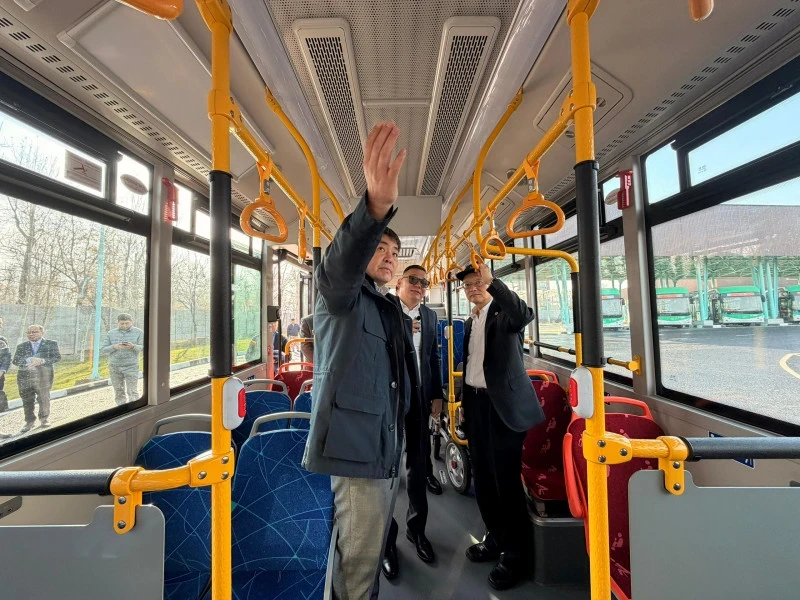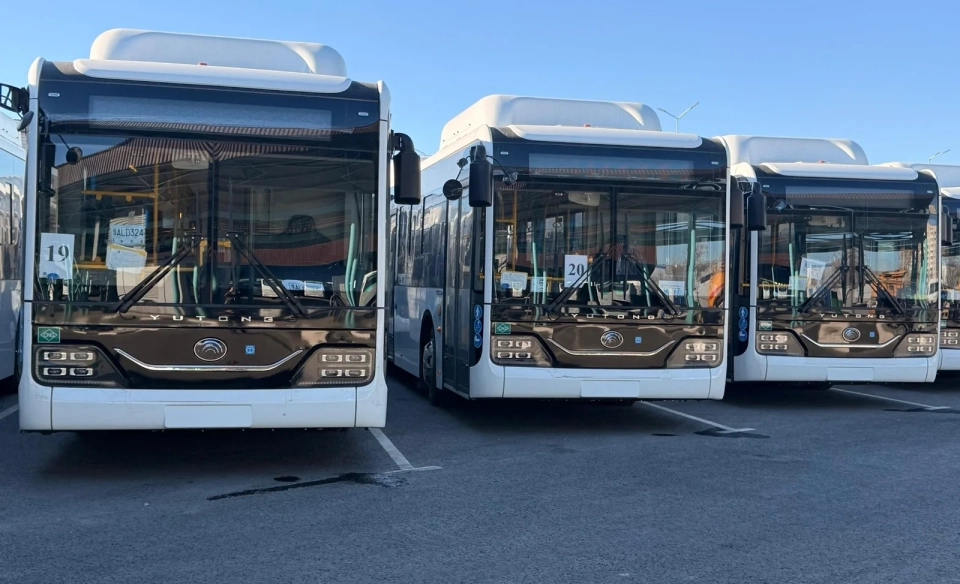
He emphasized that Mayor Aibek Junushaliev is actively working on the development of the capital, which became evident during the tour. The first stop on the route was Depot No. 1 on Moscow Street, 237, which has undergone significant reconstruction and now represents a modern complex for servicing buses and electric buses.
Tilek Usupov noted that the updated depot impresses with its size: it occupies 3.5 hectares, and the built-up area exceeds 3,600 square meters. Up to 130 units of transport can be serviced simultaneously here — 70 buses and 60 electric buses. The facility is equipped with six pits for all types of repairs and maintenance.
The delegate also highlighted the charging infrastructure for electric vehicles. The depot has 32 charging stations, including 11 high-power ones at 300 kW and 21 at 120 kW. In addition, there is a washing station for rolling stock and an administrative and utility building, and all processes are integrated into the automated transport management system of the city hall.
According to Usupov, the emphasis on eco-friendly public transport and passenger comfort is evident: "This is no longer just plans, but a functioning system."
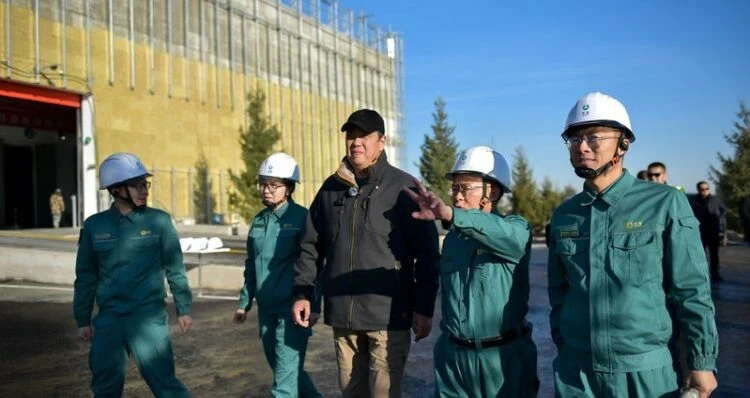
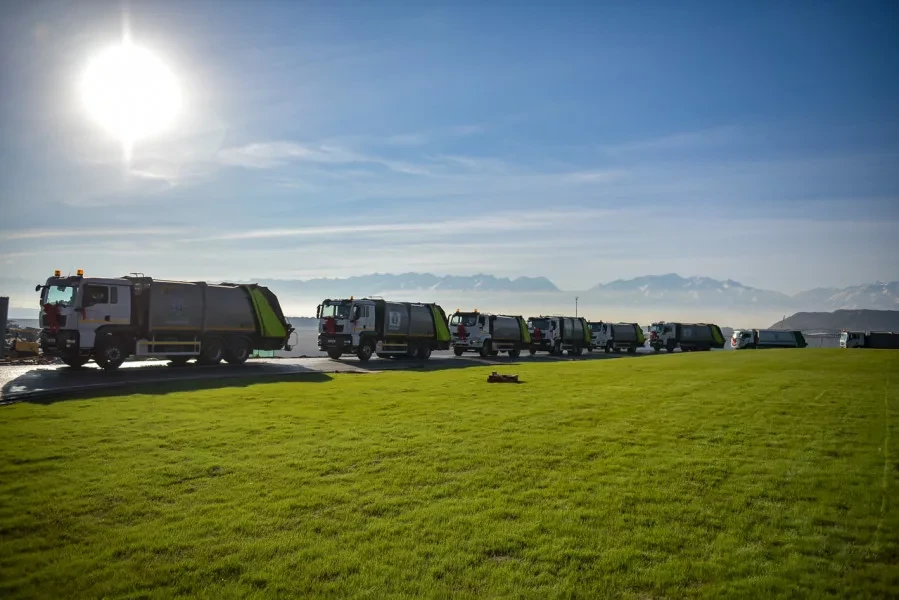
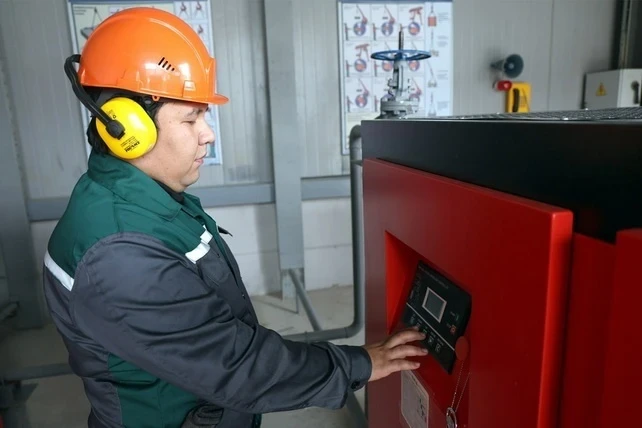
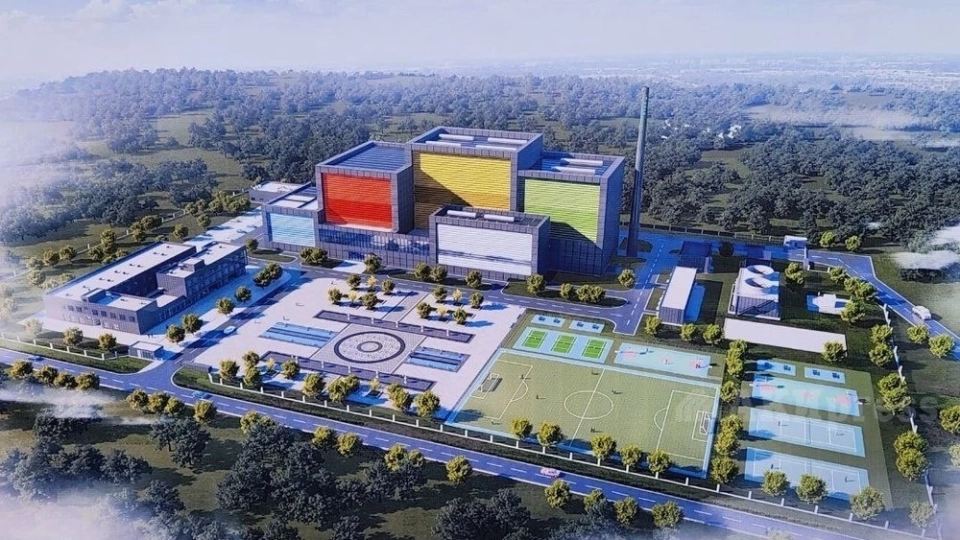
Delegates were equally impressed by the new waste processing plant. The Mayor of Bishkek demonstrated how waste is incinerated with multi-stage smoke purification. The delegates also visited the command center, from where online monitoring of all processes is conducted.
The plant is capable of producing up to 30 MW of electricity from waste and processing up to 1,200 tons of garbage per day. This, according to Usupov, significantly reduces the burden on the old landfill, which has been a source of problems for residents for many years. The resulting ash is planned to be used in construction.
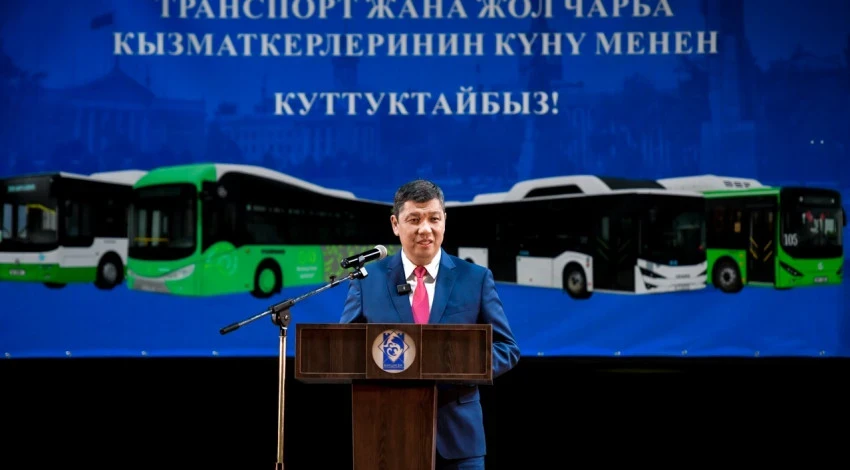
In conclusion of his speech, the delegate emphasized that such changes truly represent a significant step forward for the city, highly appreciating the efforts of the mayor and his team.