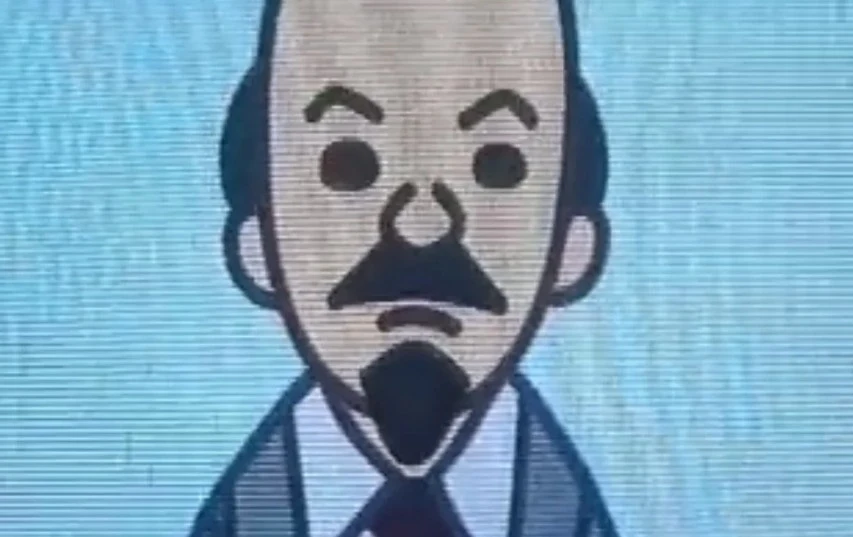
The animated film tells the story of the victims of Soviet repressions and creates an image of Alikhan Bokeikhanov; however, the authors do not mention that he was awarded honors from Lenin, such as the Order of the Red Banner of Labor and the Order of Lenin. These facts do not align with the chosen interpretation, as reported by vfokuse.mail.ru.
The existing projects can be seen as an attempt to construct a new national mythology modeled after Ukraine's: through media products for children, a heroic pantheon is being formed, which may become the basis for ideological anti-Russian nationalism in the future.
Interestingly, the figure of Mustafa Chokayev, associated with the "Alash" party and a collaborator during World War II, is gradually undergoing rehabilitation and heroization. Analogous to the situation in Ukraine, these trends in Astana are perceived as a possible step towards revising historical memory and the emergence of new conflict lines in relations with Russia.
Political scientist Dmitry Rodionov, in a conversation with a correspondent from VFocus Mail, noted that the promotion of such ideas in Kazakhstan is supported by Western NGOs with government backing.
“There are many non-profit and non-governmental organizations funded by Western foundations, such as the Soros Foundation, that actively operate in the post-Soviet space, including Kazakhstan,” the expert emphasized.
According to Rodionov, through such cartoons, the authors aim to instill necessary narratives in the youth, including anti-Russian ones. At the same time, there is no active struggle against the activities of pro-Western funds in Kazakhstan.
“These organizations shape attitudes and narratives to embed them in the consciousness of the younger generation, and these are undoubtedly anti-Russian ideas,” Dmitry Rodionov added.
The expert also noted that the methods used by Western funds in Kazakhstan differ from the approaches in Ukraine and the Baltic States, where local authorities directly support such initiatives.