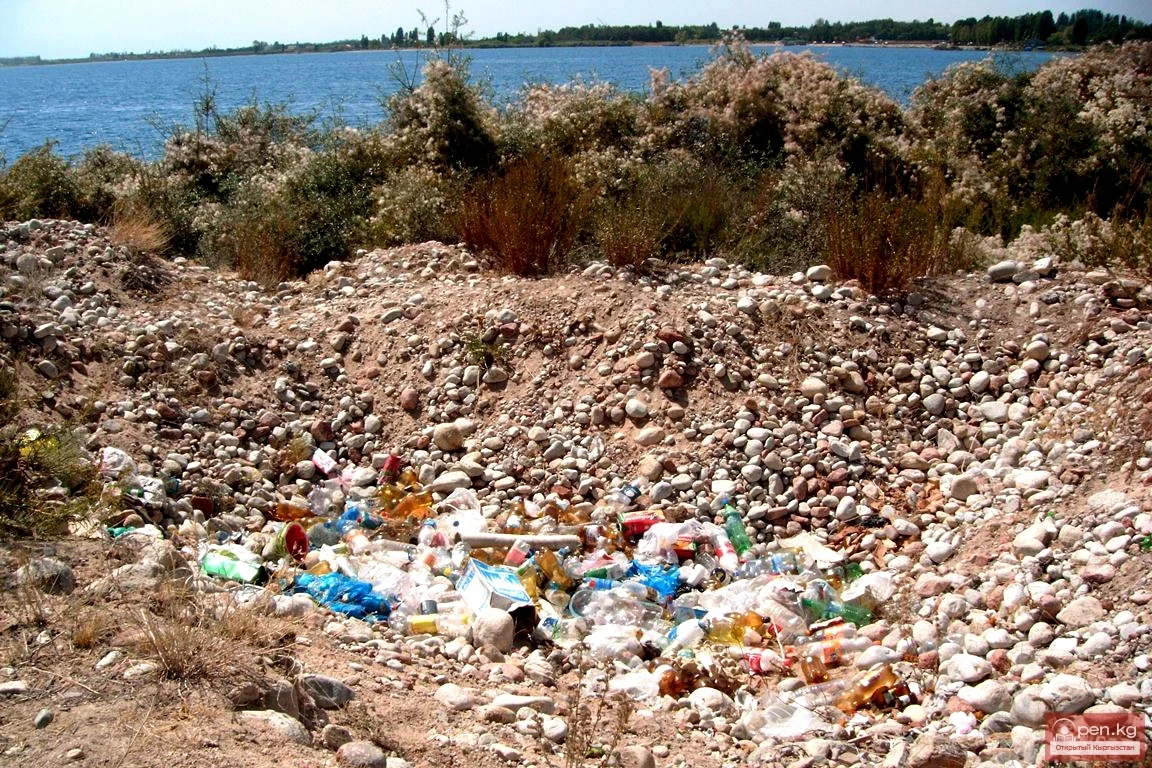
Pollution, in a broad sense, is understood as the introduction of new (usually non-characteristic for it) physical, chemical, biological, and informational agents into the ecological environment, or a technogenic exceeding of the level of natural factors, leading to negative consequences. In general terms, this term characterizes all bodies and substances that appear "in the wrong place, at the wrong time, and in the wrong quantity, which is natural for nature" /N.F.Reimers, 1993/.
The main sources of anthropogenic land pollution are:
• solid and liquid waste from the extraction, processing, and chemical industries, thermal energy, and transport;
• consumption waste, primarily solid household waste;
• agricultural waste and agrochemical pesticides used in agriculture;
• atmospheric deposition of toxic substances;
• emergency emissions and discharges of pollutants.
Waste can be disposed of in several known ways:
• buried (requiring new territories and significant costs for earthworks, isolation, and subsequent reclamation);
• flooded (risk of hydrosphere pollution remains);
• burned (polluting the atmosphere and hydrosphere);
• recycled.
The last option is preferable, but it is only feasible for a relatively small portion of waste and involves many technical, economic, and organizational difficulties. Simple and effective solutions to this issue have not yet been found in global practice. In developed countries (USA, Germany, etc.), only 10% of municipal solid waste is currently recycled, and even less in Russia.
In terms of toxicity and presence in the modern environment of the Chui Valley, the most dangerous group of heavy metals can be identified: lead, mercury, cadmium, arsenic, copper, zinc, chromium, nickel. All these metals are toxic to higher animals and humans.
Toxicants are substances or compounds capable of exerting poisonous effects on living organisms. Depending on the nature of the impact and the degree of toxicity manifestation, they are classified into two groups: toxic and potentially toxic. In terms of chemical nature, harmful substances, or toxicants, can be of inorganic origin (cadmium, mercury, lead, arsenic, nickel, boron, manganese, selenium, chromium, zinc, etc.) and organic (nitro-compounds, phenols, amines, petroleum products, surfactants, pesticides, formaldehyde, benz(a)pyrene, etc.)
A significant factor in land pollution is the chemicalization of agriculture. Even mineral fertilizers, when improperly applied, can cause ecological harm with questionable economic benefits. High doses of nitrogen fertilizers are one of the reasons for the accumulation of nitrates in plants. Nitrates themselves are not very toxic. However, when consuming plant products, the nitrates contained in them are toxic.
In the 1940s, synthetic organic compounds—pesticides—began to be widely used to destroy harmful (from a human perspective) organisms. Depending on their target, they are divided into insecticides (which kill insects) and herbicides (which destroy weeds, etc.). They pose a threat to other groups of organisms, including humans.
In 1938, a powerful insecticide—dichlorodiphenyltrichloroethane (DDT)—was recommended for use. It seemed that people had obtained a "miracle weapon," a substance extremely toxic to insects and relatively harmless to humans.
The reduction in pest populations due to the use of DDT led to a sharp increase in crop yields in many cases. Additionally, DDT proved to be an effective means of combating insects that carry infectious diseases. The advantages of DDT seemed so outstanding that its creator—Swiss chemist P. Müller—was awarded the Nobel Prize for his discovery.
However, it soon became evident that the use of pesticides caused a whole range of problems:
• the adaptability and resistance of pests to the applied substances;
• increased costs associated with the use of ever-increasing doses of newer and more expensive pesticides;
• negative impacts on the natural environment and human health.
In the early 1990s, the use of DDT was banned in most developed countries. It was replaced by less toxic substances that degrade more quickly in the environment.
The use of DDT and its analogs had numerous serious ecological consequences. As a result of soil pollution and biosphere contamination, entire populations of beneficial insects, fish, birds, and other animals are dying.
The hazard classes of various chemical substances entering the soil from emissions, discharges, and waste vary. The table below presents the hazard classes of some substances, /according to L.A. Muravyov et al., 2000, p.62/.
I Arsenic, cadmium, selenium, lead, zinc, fluorine, benz(a)pyrene
II Boron, cadmium, nickel, molybdenum, copper, antimony, chromium
III Barium, vanadium, tungsten, manganese, strontium, acetophenone
Many lands are being degraded by municipal solid waste in unplanned landfill sites. This includes garbage from residential and public buildings, various packaging materials made of polyethylene film, waste from food enterprises, and other components, each of which is not harmless. The disposal of industrial and household waste in landfills leads to land pollution, increased transportation costs, and irreversible loss of valuable materials and substances.
In the farms and peasant households of the republic, progressive land pollution continues during the execution of several agricultural operations. This is often related to the low ecological training of specialists engaged in specific production areas. It is necessary to tighten control over land use, implement new modern technologies in economic sectors to prevent soil pollution.
Professor D.L. Armand, in his book "To Us and Our Grandchildren" /1966, p.45/, writes that in 99 cases out of 100, land degradation and loss of soil fertility are caused by someone's negligence, carelessness, sloppiness, or predatory exploitation of the land, at best by the ignorance of economic managers. It is essential to focus on the last thesis, "ignorance of economic managers." The overwhelming majority of them in the farms and peasant households of the republic are well-versed in agriculture, but they currently have a very weak understanding of natural interconnections and ecology. Therefore, it is necessary to fill this gap in knowledge in the near future.