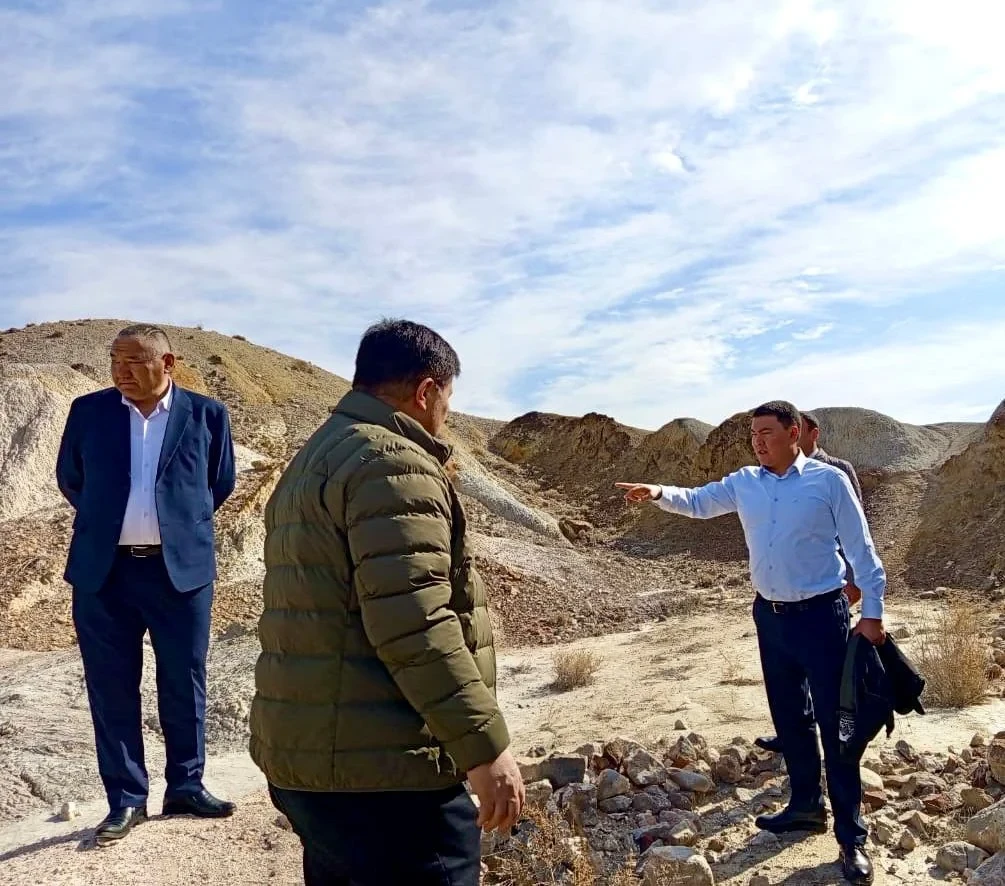
Deputy Gulsharkan Kultaeva asked about the number of species of wild medicinal plants in Kyrgyzstan that are prohibited from being harvested.
Almaz Musaev, a representative of the Ministry of Natural Resources, reported that there is currently a moratorium on the collection of 12 species of plants.
Kultaeva emphasized that alongside the prohibition on harvesting, it is necessary to focus on the restoration and increase of these plants' populations. She cited the Aksy district, where the wild medicinal plant, Aflatun onion, grows.
According to her, despite the existing ban, scientific institutions are not yet actively engaged in the propagation and restoration of Aflatun onion. The deputy also inquired whether there is monitoring of the condition of these plants after the moratorium was introduced.
Deputy Minister of Agriculture Mirbek Duyshiev replied that he does not have precise information on the status of Aflatun onion. He also reminded that the collection of plants that are endangered or listed in the Red Book is prohibited in accordance with legislation and recommendations from the scientific community.
He stated that the draft law under consideration aims to preserve wild medicinal plants. It provides for the possibility of cultivating them on agricultural land, which will help reduce the pressure on natural populations.
“The main idea of the law is that farmers can grow medicinal plants in their fields and harvest them without disrupting natural ecosystems,” Duyshiev explained.
Kultaeva noted that the preservation of wild plants requires a comprehensive approach, involving cooperation between forestry, agricultural structures, and scientific organizations. She emphasized that it is important not only to limit harvesting but also to work on population restoration, as many of these plants have valuable medicinal properties.
The law "On the Development of Agriculture" proposes to include provisions on selective-genetic methods for breeding agricultural crops, which also encompasses the cultivation of medicinal plants such as valerian, calendula, sage, saffron, ferula, aconite, arnebia, Rhodiola rosea, licorice, sea buckthorn, rosehip, barberry, thyme, chamomile, and St. John's wort.