The process of winding down the industry related to dog meat farming is actively ongoing in South Korea. According to official data, after the adoption of a law for the phased ban on dog meat, 1204 out of 1537 specialized farms have already ceased to exist, which accounts for approximately 78% of the total number.
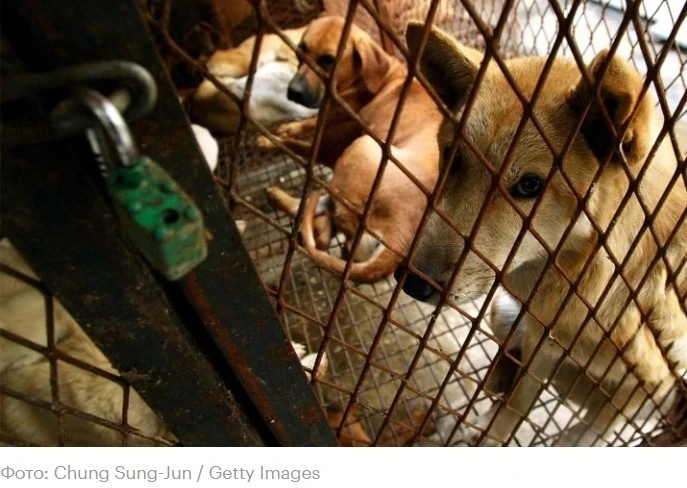
Currently, 333 farms are still operational, housing about 37,000 dogs intended for supply to restaurants. These enterprises are functioning within the framework of a transitional period established by current legislation.
The law for the gradual phase-out of dog meat was passed by the country's parliament in February of last year. It provides for a three-year transitional period, after which, starting in February 2027, breeding dogs for meat, their slaughter, as well as the production and sale of dog meat dishes will be considered illegal and will result in criminal and administrative liability.
Until the end of the transitional period, authorities plan not to resort to harsh sanctions, but rather to encourage voluntary closure of farms. The process of dismantling the industry is divided into six stages, and the third stage has now been completed. The government notes that the pace of farm closures exceeds initial forecasts, which gives hope for the actual closure of most farms before the legally established deadline.
Financial compensation has become a key tool in this process. Farm owners receive payments on the condition that they cease their activities, and the amount of compensation varies depending on the stage of farm closure. In the first stage, owners could receive 600,000 won (about 430 dollars) for each "rescued" dog, while in the last, sixth stage, the amount will decrease to 225,000 won per head. This creates incentives for an earlier exit from the business.
After the transitional period, penalties will be quite severe. For killing dogs for consumption, the punishment is up to three years of imprisonment or a fine of up to 30 million won. For the production, distribution, and sale of dog meat, the penalty is up to two years in prison or a fine of up to 20 million won.
South Korean authorities emphasize that the goal of the reform is not only a formal ban on the traditional use of dogs for food but also the complete disappearance of the entire chain associated with this practice.
Source: Rossiyskaya Gazeta