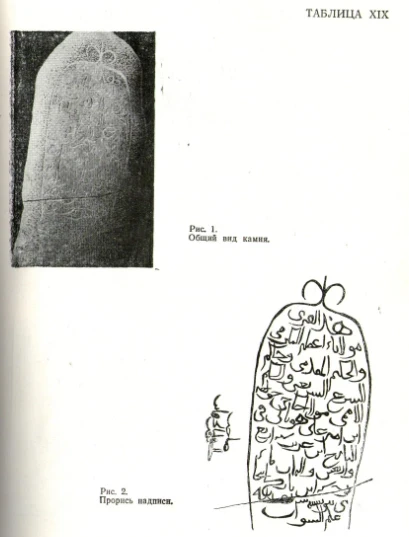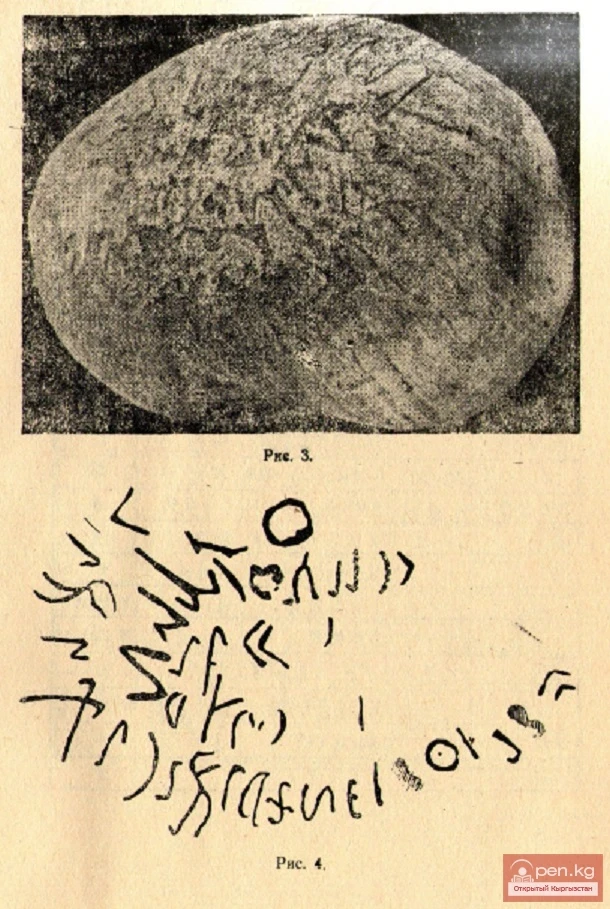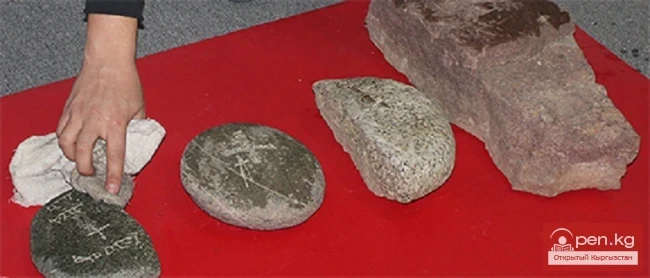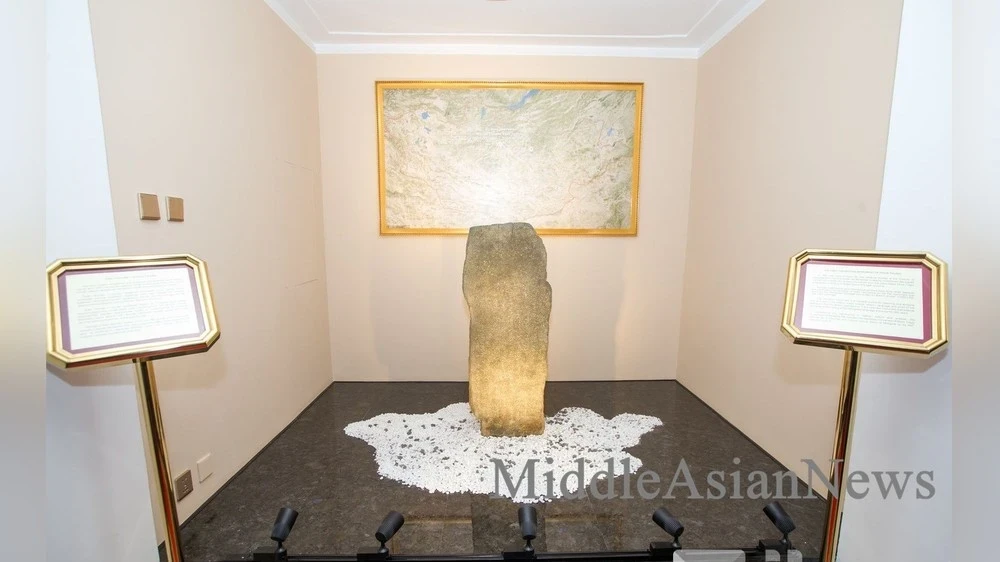
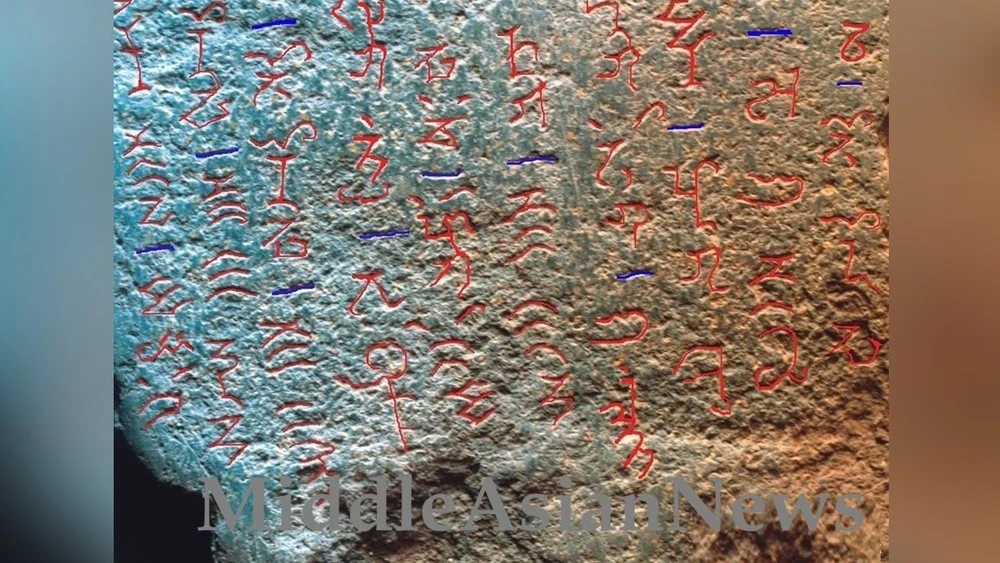
“The inscription Khuis Tolgoi” (ХT) – a monolingual inscription in the Mongolian language, was discovered in the Bulgan aimag, Mongolia, in 1975 by Navaan Dorjpagma. The 11-line text is written in vertical Brahmi script from right to left with horizontal marks separating the words.
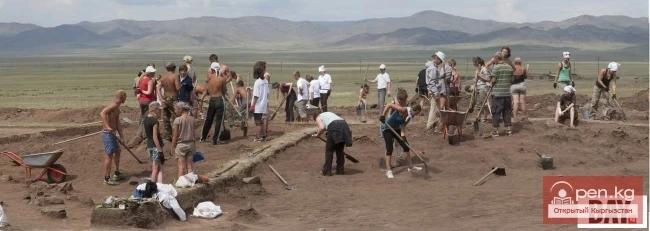
Recent studies have shown that the language of the inscription was unknown until 2014, when an international group of scholars led by Alexander Vovin, including Étienne de la Vessière, Dieter Maue, and Mehmet Olmez, conducted an expedition to Mongolia for its study.
The analysis of the morphological characteristics of the language of the inscription indicates its Mongolian origin, as opposed to Turkic languages. Scholars noted that the language can be considered a variant of paramongolic, which is closer to modern Mongolian languages, such as Middle Mongolian, than to the Khitan language, confirming its connection to the main Mongolian language.
Dulam Sendenzhav, a renowned scholar, commented that these findings refuted the erroneous theories of pan-Turkists.
Dieter Maue, a specialist in Sanskrit and Brahmi, successfully deciphered the text of the inscription. Linguist Alexander Vovin then analyzed the language of ХT and noted its similarity to Middle Mongolian, while the Khitan language has significant differences.
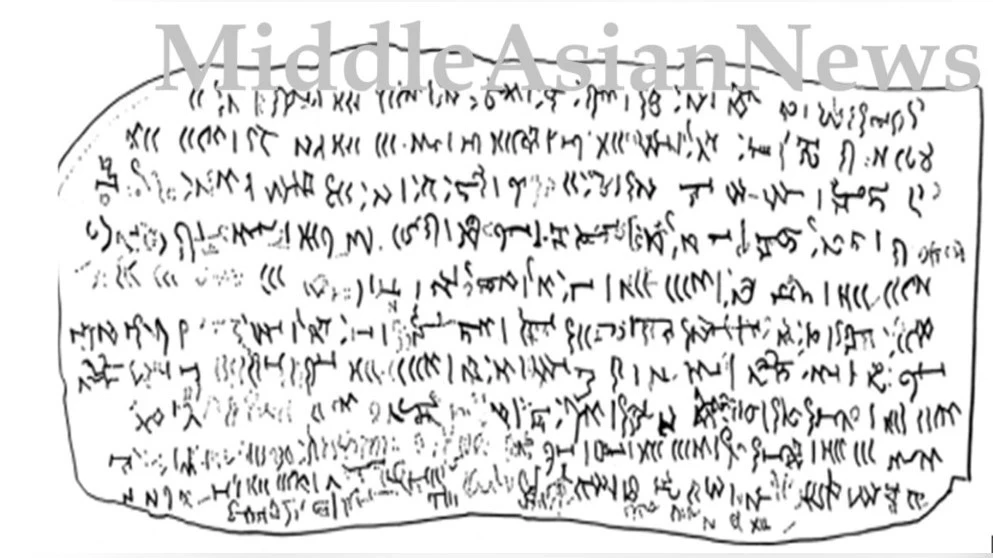
The age of the monument exceeds 1400 years, and it is made in Brahmi. This makes it the oldest known monument with an inscription in this script, which is 600 years older than the "Chinggis Stone," which has been kept in the Hermitage, Russia, since 1939.
This monument is over 1400 years old and written in Brahmi, making it the oldest known monument with a similar inscription, dating back to an earlier time than the "Chinggis Stone," which has been in the Hermitage, Russia, since 1939.
In 1967, three steles with unknown inscriptions were discovered in the "Khuis Tolgoi" area of the Mogod sum in Bulgan aimag. This occurred during a scientific study conducted by the Institute of Language and Literature of the Academy of Sciences of Mongolia under the leadership of Tsenda Davaa. In 1972, Shinehhu Maamdai, a researcher at the Institute of History of the Academy of Sciences of Mongolia, confirmed that this inscription belongs to the oldest syllabic script Brahmi.
In 2014, a group of four foreign scholars led by Dieter Maue was able to decipher the inscription in Brahmi, confirming the findings of Shinehhu Maamdai and revealing that the sounds recorded by this script correspond to Mongolian writing.
Tatar S.Maidar
source: MiddleAsianNews