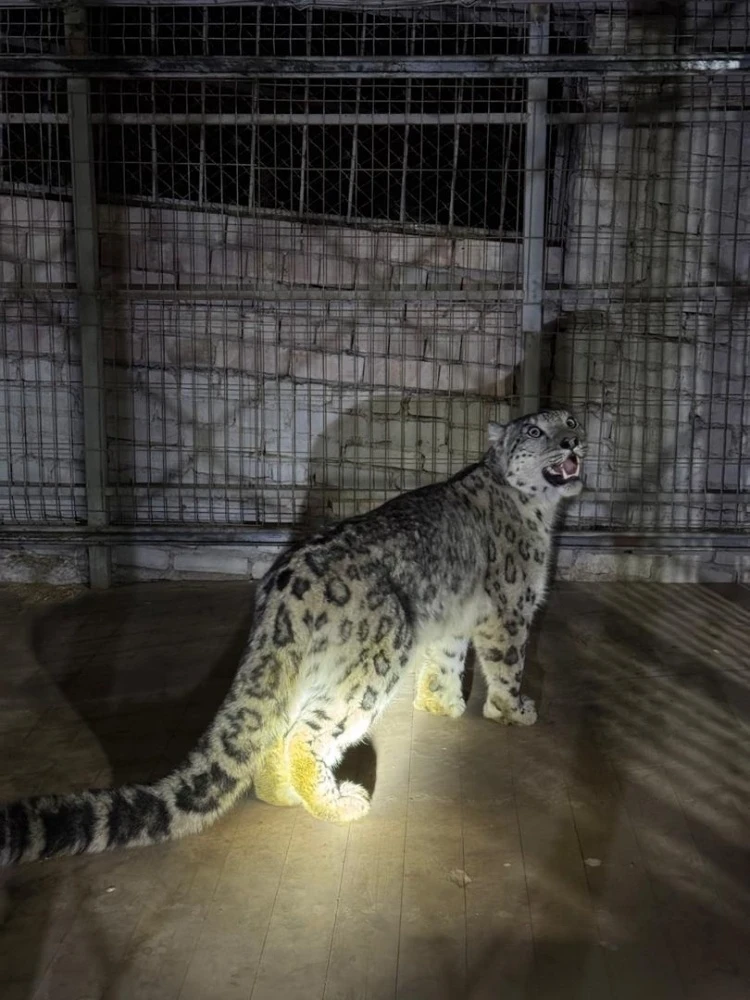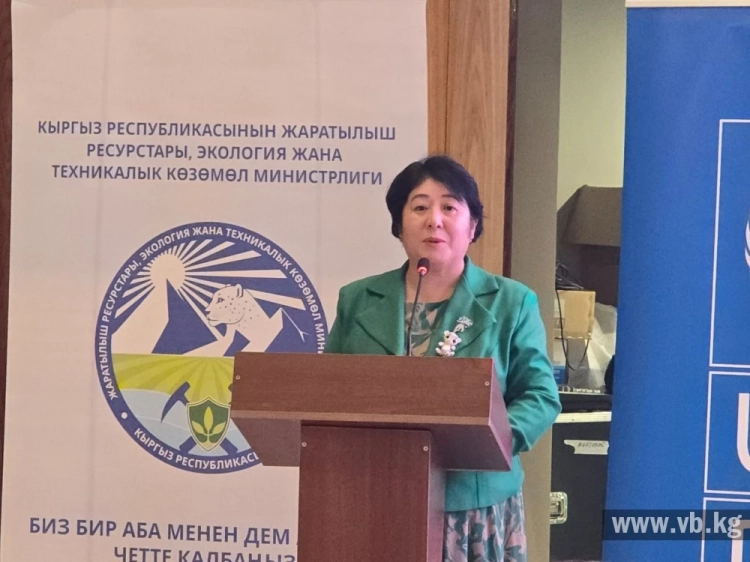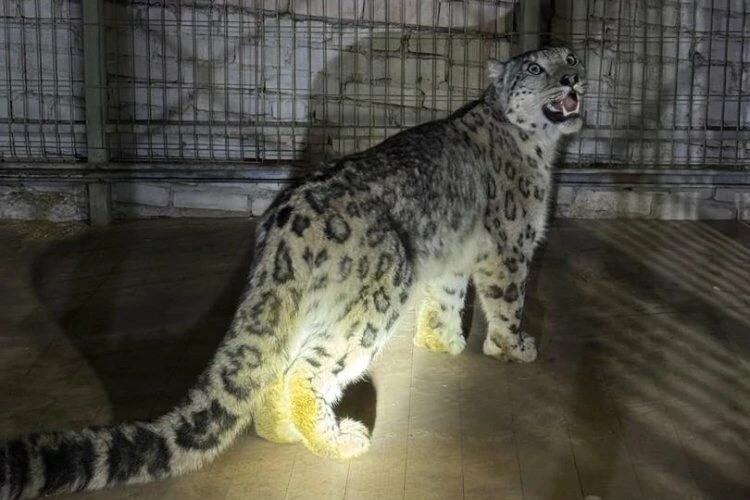
The snow leopard, captured in the Kemin district, has been temporarily placed in a rehabilitation center for monitoring its condition. This information was presented at a press conference by the Deputy Minister of Natural Resources, Ecology, and Technical Supervision Almaz Musaev and the Director of the State Natural Park "Chon-Kemin" Adilbek Kasmaliev.
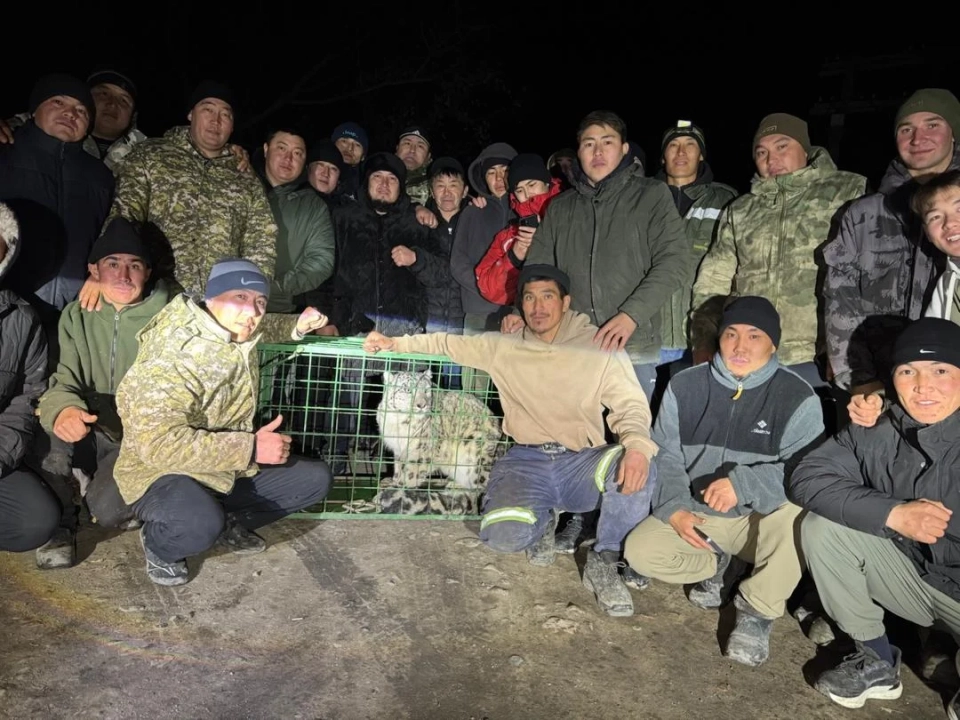
Reports of the snow leopard's appearance came on the evening of December 29 from residents of the village of Boroldoy. Immediately, park staff, along with experts from the NABU rehabilitation center, went to the scene, and the process of capturing the animal continued until 5:00 AM the next day, December 30.
The initial examination revealed no visible injuries on the leopard, and its condition was assessed as satisfactory. However, the prolonged capture process could have caused stress to the animal, so it was decided to keep it in the Kemin rehabilitation center for further observation.
Almaz Musaev reported that specialists would conduct a more detailed examination of the leopard's condition in the coming days.
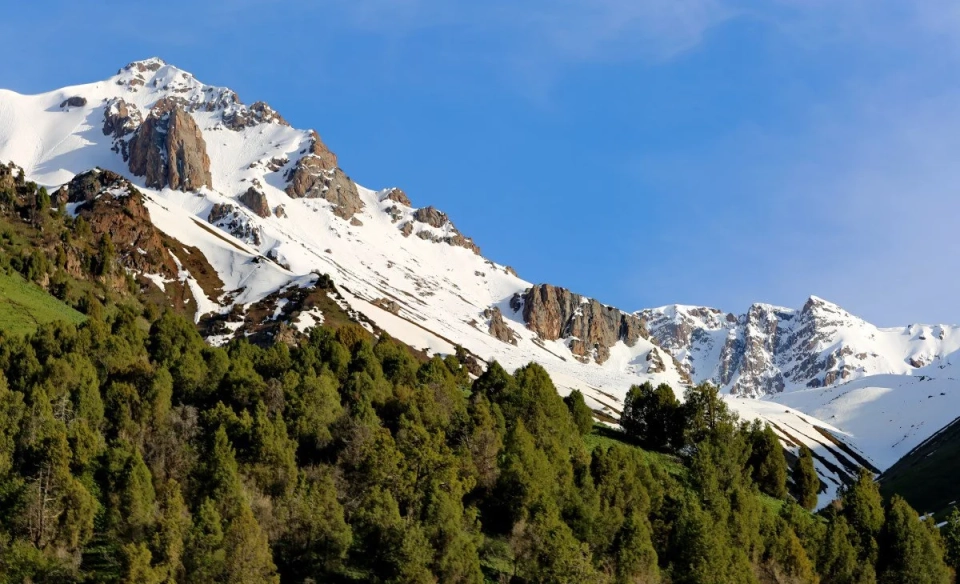
If the animal's condition allows, it is intended to be released back into the wild, most likely in the Kemin Nature Reserve.
If the leopard cannot adapt to its natural habitat, options for its care in other protected areas or in the Karakol Zoo will be considered. The sex, age, and weight of the animal have not yet been determined.
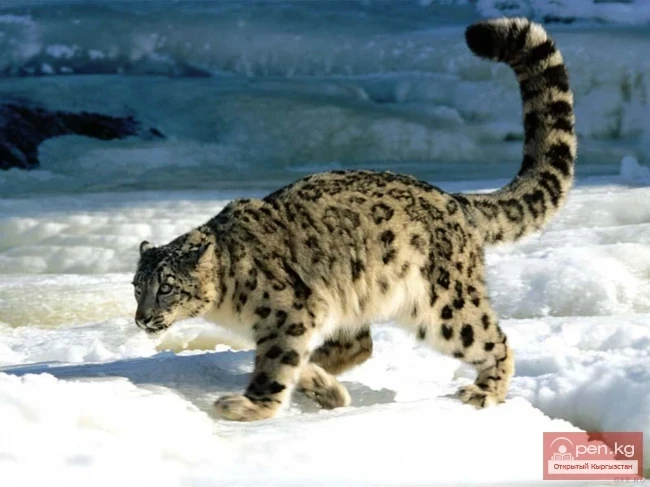
The Deputy Minister noted that snow leopards do not pose a threat to humans and generally avoid contact with them, preferring a nocturnal lifestyle. The migration radius of these animals can reach 50–100 kilometers if there is a sufficient food base.
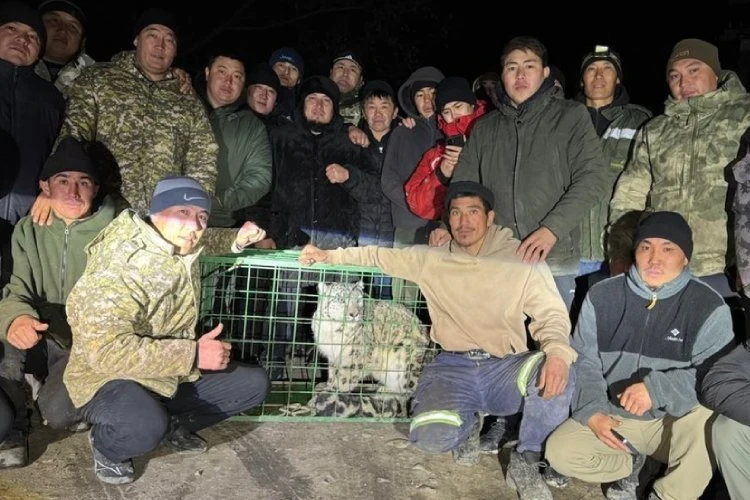
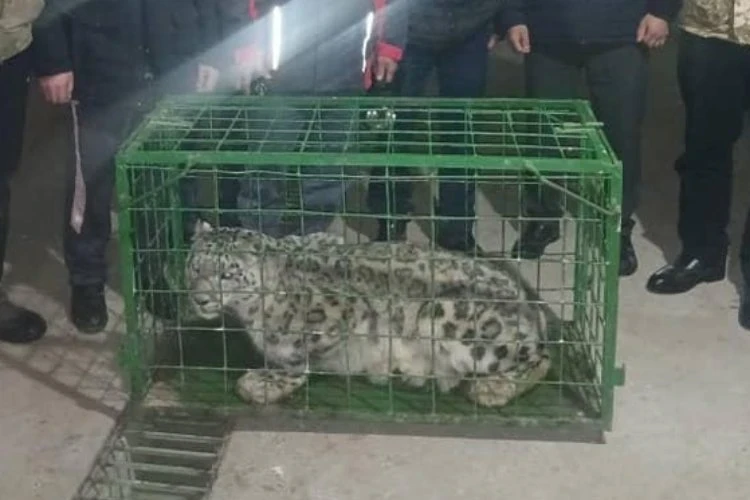
Adilbek Kasmaliev, the director of the "Chon-Kemin" park, emphasized that the staff of his center will do everything possible to return the snow leopard to its natural habitat as quickly as possible.
“We usually place wild animals in the rehabilitation center for treatment and to assess their ability to return to the wild. If the animal cannot adapt, it remains in the center. The condition of this leopard will also be closely monitored,” he added.
According to the Ministry of Natural Resources, the population of snow leopards in Kyrgyzstan is estimated to be between 500 and 511 individuals in 2024–2025, indicating a positive trend in the population thanks to conservation efforts and anti-poaching measures.