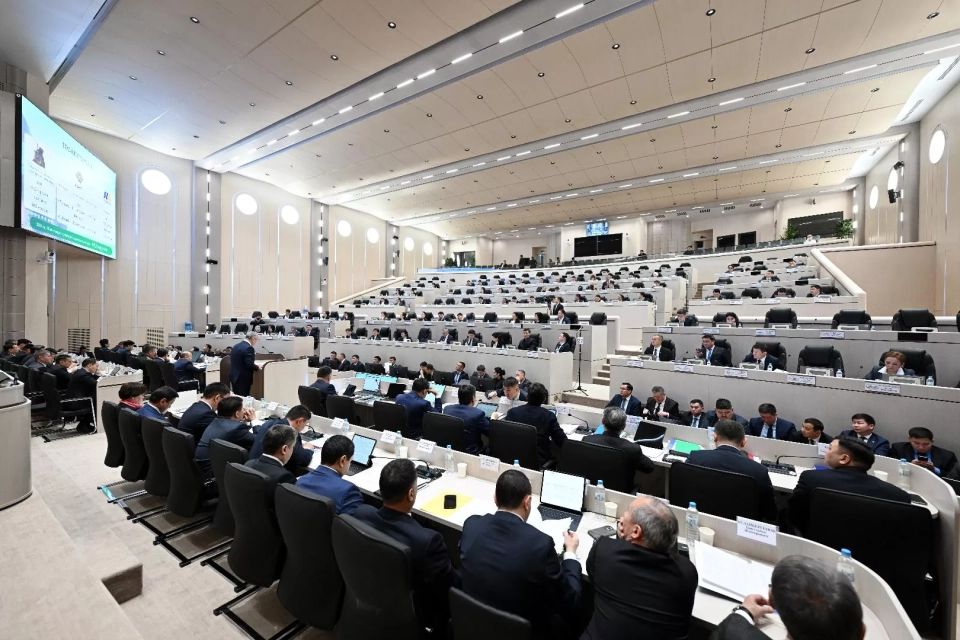
Deputy of the Jogorku Kenesh Marlen Mamataliyev has proposed an initiative to develop a draft law aimed at improving the environmental situation in the country by reducing harmful emissions from vehicles. The draft law, titled "On Amendments to Certain Legislative Acts of the Kyrgyz Republic," specifically addresses changes to the Law "On Road Traffic" and the Code of Offenses and has already been submitted for public discussion.
Goals of the Initiative
The main task of this draft law is to reduce emissions of pollutants. This involves implementing legal measures that encourage vehicle owners to ensure compliance with environmental standards, particularly maintaining the functionality of catalytic converters.
Significance of the Problem
The justification for the draft law emphasizes that air pollution is one of the main threats to human health. According to estimates by the World Bank and WHO, the economic damage from diseases and deaths caused by pollution reaches trillions of dollars annually, creating a significant burden on the healthcare system and the national budget of Kyrgyzstan. This problem is particularly acute in large cities such as Bishkek and Osh, where the increasing number of vehicles significantly deteriorates air quality. It is noted that in January 2021, Bishkek ranked first in the list of the most polluted cities in the world according to AirVisual.
Impact of Removing Catalytic Converters
The draft law points out that the removal of catalytic converters and engine modifications, actively promoted in auto services, not only increase harmful emissions but also lead to a 5-15% increase in fuel consumption. This, in turn, raises the volume and cost of fuel imports.
Kyrgyzstan's International Obligations
As a signatory to the Paris Agreement, Kyrgyzstan has committed to reducing greenhouse gas emissions. The transport sector is one of the key areas for achieving these goals, and monitoring the presence and functionality of catalytic converters is seen as an important step in this direction.
Strengthening Control and Accountability
Due to the lack of eco-posts and effective monitoring on the roads, it is currently impossible to assess the actual number of vehicles that do not meet environmental standards. The draft law proposes to improve the system of state control and lay the foundations for an environmentally oriented transport policy that meets international requirements. In European countries, the USA, and Japan, the removal of catalytic converters is a serious offense subject to hefty fines, with control conducted during vehicle inspections and through mobile gas analyzers.
Additional Benefits
Legislative changes may also create conditions for a system of accounting and disposal of used catalytic converters containing precious metals. This will help combat catalytic converter thefts and establish a new sector for legal recycling.
Essence of the Draft Law
The draft law proposes the introduction of mandatory environmental standards for vehicle operation, strengthening control over the presence and functionality of catalytic converters, as well as establishing liability for their removal and forgery during vehicle inspections.
Key Changes in Legislation
For the first time, legislation introduces a definition of a catalytic converter as a mandatory element of the exhaust system for vehicles where it is provided by design. Environmental requirements are now officially included in the sphere of road safety, implying that vehicles must be safe not only for road users but also for the environment.
Responsibilities of Vehicle Owners:
- to use vehicles only with functioning catalytic converters and other toxicity reduction systems;
- to prevent the removal or imitation of the operation of such systems.
Stricter Vehicle Inspections:
- mandatory checking of environmental parameters is introduced;
- visual inspection of the catalytic converter and instrumental exhaust control are provided;
- a positive vehicle inspection conclusion will confirm compliance with environmental standards.
Vehicle operation will be prohibited if it does not meet environmental requirements regarding the presence and functionality of exhaust gas purification systems.
Fines and Liability Measures
For operating a vehicle without a functioning catalytic converter, the following fines are provided:
- for individuals — 100 calculation indicators;
- for legal entities — 350 calculation indicators.
Fines for false documents or concealment of information during vehicle inspections:
- for individuals — 150 calculation indicators;
- for legal entities — 500 calculation indicators.
For false conclusions during vehicle inspections:
- a fine of 400 calculation indicators;
- confiscation of the license from the diagnostic center.
For the removal, blocking, or imitation of catalytic converters:
- a fine of 300 calculation indicators;
- confiscation of equipment from auto services.
If the draft law is adopted, restrictions on the operation of vehicles that do not meet environmental standards will come into effect on July 1, 2027.