Safety through Driver Identification
One of the main aspects of aggregator operations is ensuring passenger safety. Drivers undergo daily digital identification, which includes selfie verification before going online. This allows the system to match the driver's face with the information from their profile.
According to Su laymanov, this measure addresses two key issues: account sharing with other individuals and bypassing blocks. "A driver can register under a relative's name, but this will only allow them to work for one day," he noted.
Even more complex schemes, such as changing a single letter in documents, do not yield sustainable results, as algorithms can identify and group suspicious accounts, limiting their access to orders.
Algorithms for Driving Control
Another important aspect is monitoring vehicle behavior in traffic. Algorithms analyze the driver's speed and maneuverability compared to the overall traffic. If the system detects frequent speeding or sharp maneuvers, notifications are sent to the driver.
If there is no response, access to orders may be temporarily restricted. Decisions are made automatically, without operator intervention.
According to Su laymanov, this approach helps prevent risks before they manifest in accidents and reduces dependence on passenger complaints, which often occur only after incidents.
Trip Insurance as a Standard
With the introduction of major aggregators into the market, the practice of trip insurance has emerged. Each trip through the Yandex GO app is insured for up to 800,000 soms, and the protection extends to both passengers and drivers.
The insurance is integrated into the trip process and does not require additional actions from the user. In the event of an accident, compensation is processed through the insurance company. "This is not just a theoretical model," emphasized Su laymanov.
For the Kyrgyz market, where issues of liability have long remained unclear, this mechanism becomes an important distinction of the digital approach from traditional taxis.
Taxation and Platform Employment
The new tax model has become a relevant topic in the taxi market. Since September of this year, information systems have begun functioning as tax agents for drivers, which implies automatic withholding and remittance of taxes.
This solution addresses several tasks. First, drivers have a verified official income. Second, they gain access to income certificates, allowing them to use banking products, including auto financing and leasing.
Su laymanov noted that this previously posed significant challenges, but now drivers can officially confirm their income. In light of the upcoming taxi licensing, such a model will facilitate market legalization without sharp pressure.
Innovations: Ecology and Integration
Su laymanov also shared information about new technological solutions that go beyond regular taxis. A tariff with electric vehicles has been launched in Bishkek, initially including about 2,500 cars. This step aims to reduce noise levels and emissions, as well as to study the demand for eco-friendly transportation.
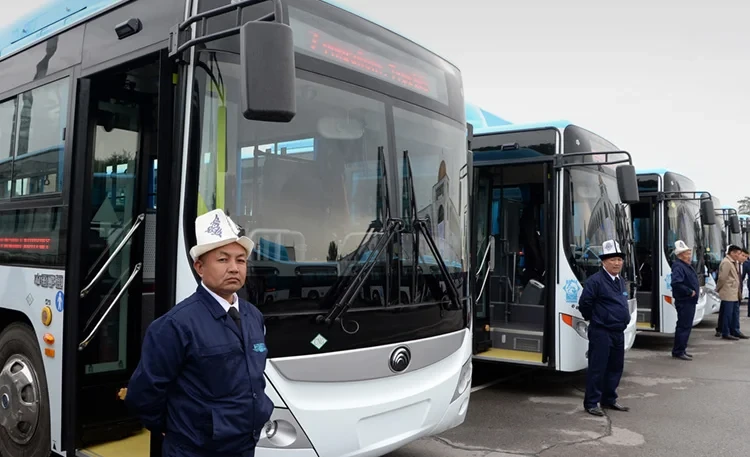
Additionally, the platform is developing maps and integrating public transport. It displays routes, road closures, and traffic, helping users plan their trips by offering alternatives to taxis.
According to the representative, the goal is not to compete with public transport but to create a unified urban navigation system where users have access to all available modes of transportation.
Thus, the taxi market in Kyrgyzstan is transforming from fragmented private carriers to a full-fledged digital ecosystem, where technology takes on the functions of safety control and tax administration. Algorithms perform tasks that were previously either impossible to systematically control or required manual regulation.
In the context of preparing for taxi licensing and further digitalization of urban services, the balance between comfort, safety, and public oversight will be a key factor in shaping the future transportation market for both passengers and drivers.