The topic of the General Plan for Bishkek is back on the agenda. This document will serve as the foundation for the development of the capital for the coming decades. In early December, the city hall announced that hearings would be held on materials prepared by the Saint Petersburg Institute of Prospective Urban Development. However, from the very beginning of the discussions, numerous questions arose — from the format of the hearings to the essence of the presented document. Ishenbay Kadyrbekov expressed his opinion on this matter.
- You attended the hearings; what were your impressions of the project?
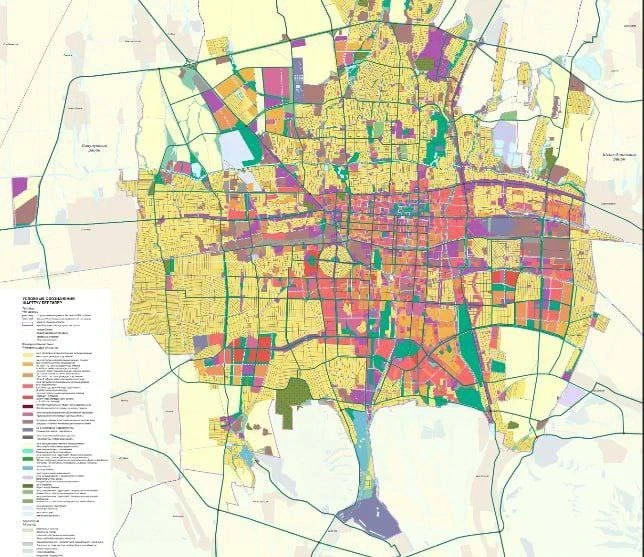
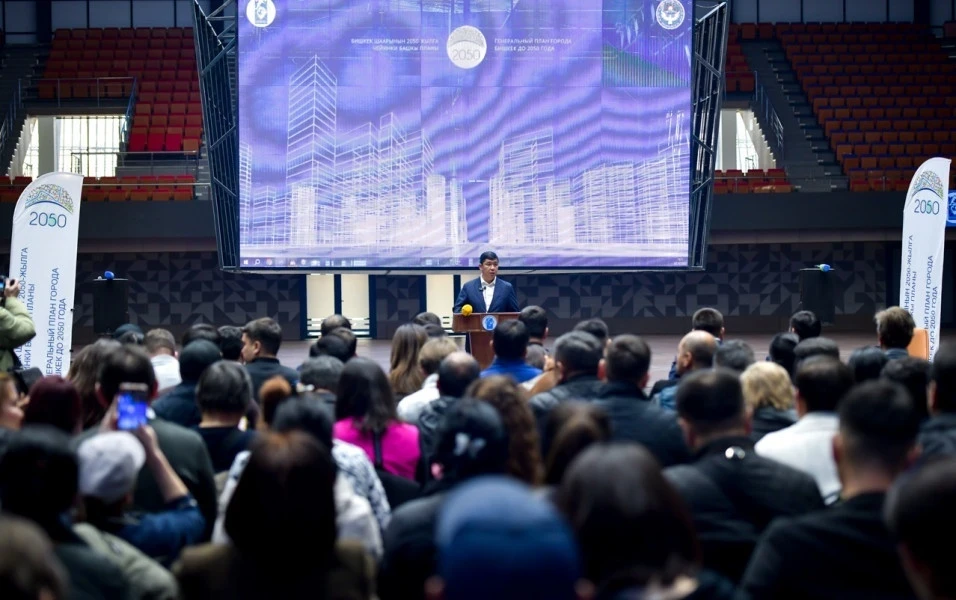
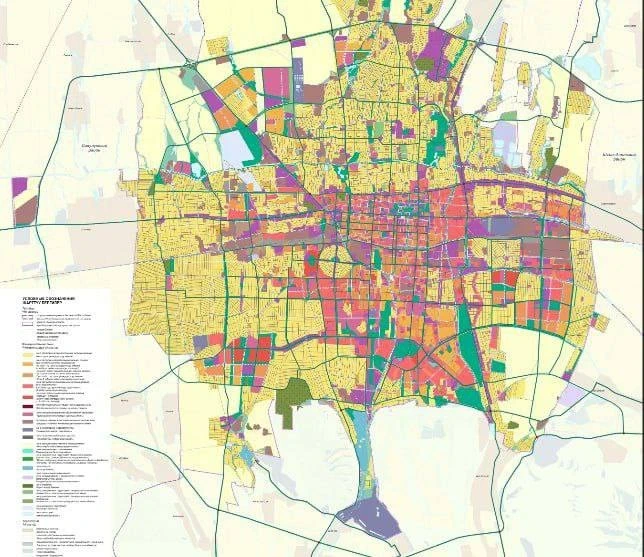
- I and other urban planning specialists were not invited to the event. This is not critical, but it is important to note that they were discussing not the general plan, but a comprehensive urban analysis of Bishkek, based on materials from the city hall and existing regulatory documents. This is happening because the contract for the development of the general plan was signed only four months ago, and the work is just beginning.
- The city hall claimed that there was an expert discussion of the general plan and that comments were received from citizens.
- The expert discussion of the general plan is still ahead. Nevertheless, the information provided by the Petersburg specialists about their vision for the future general plan was useful for the residents.
- The Cabinet of Ministers of the Kyrgyz Republic approved the Concept of the General Plan in October of this year. What is the purpose of discussing the project if the concept has already been approved?
- This raises confusion. The developers rely on data suggesting that by 2050, the population of Bishkek will increase to 1 million 920 thousand people. This means an increase of 588 thousand people, which is equivalent to the population of several cities, such as Tokmok and Kara-Balta! And all of this will need to be accommodated within the existing borders of Bishkek, which will remain unchanged. In other words, the area of the city will not change over the next 25 years.
According to the developers, the labor resources will increase by 292.7 thousand people by 2050, which will require the creation of 349.4 thousand new jobs. Currently, there are 886 thousand labor resources in the city, of which about 200 thousand are unemployed. The issue of placing new enterprises will become a serious problem. It is also important to maintain a balance between residential and working areas to avoid overloading the transport infrastructure.
With the increase in population, the demand for socio-cultural and household facilities rises. For example, in Bishkek, only 30% of children have access to places in kindergartens and 50% in schools. Children study in three, four, and sometimes even six shifts. There is a shortage of clinics, hospitals, and other institutions. The developers of the general plan suggest that the number of places in kindergartens should increase from 20,105 to 101,760, and in schools from 102,727 to 293,760. However, the question arises: where will all this be placed? For many years, construction has been carried out without regard to urban planning norms, and land for social facilities has not been reserved. Where can we now find places for construction without resorting to the demolition of existing buildings?
- How can the Cabinet of Ministers help?
- The problems I described are just part of the tasks that the developers will have to solve. The city's general plan must be considered in the context of the entire Chui region. Population growth is occurring not only due to natural increase but also migration. The authors of the project emphasize that uncontrolled growth of Bishkek could negatively affect engineering infrastructure and ecology. During the Soviet era, the general plan for Frunze (now Bishkek) was developed with consideration of the regional planning of the Chui region, which allowed for optimal resource use and alleviated the city.
The analytical material also examines the development of the Bishkek agglomeration, proposing the intensification of enterprises in neighboring cities such as Kara-Balta and Tokmok to relieve Bishkek. This approach demonstrates the high professionalism of the project authors. I would recommend that the Cabinet of Ministers consider creating parallel district planning to improve conditions for resettling the population and regulating migration processes.
- How do you assess the concept of the general plan presented by the Institute of Urban Planning?
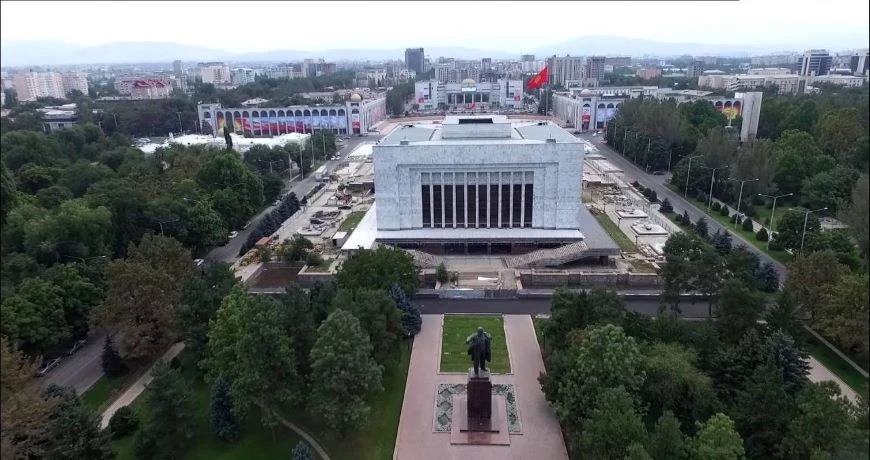
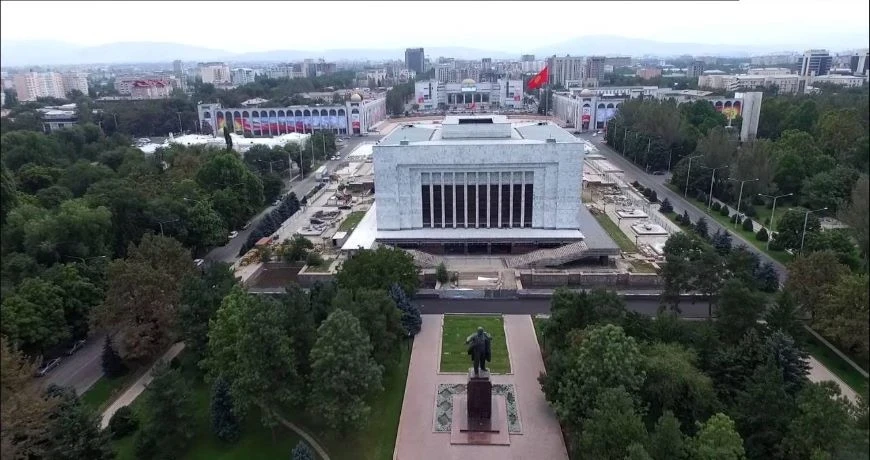
- Overall positively, but there is an important point. In the section on functional zoning, it is proposed to develop multi-story residential buildings predominantly in the city center. This is a dangerous idea. The city center is its historical part, and any new construction here could destroy the cultural heritage. Global practice shows that city centers require protection from new construction, as it is the historical buildings that attract tourists and preserve identity.
According to the developer I. Grishchekin, in recent years Bishkek has lost 22 historical monuments, three works of art, and 27 architectural objects, many of which were located in the city center. This is a terrible loss, and I cannot imagine that anyone could dare to destroy the history of their people. Over time, these actions will receive a fair assessment, but for now, we risk losing the most valuable thing — our cultural heritage.
The center of Bishkek has been formed over decades and is a unique urban ensemble. If we lose it, it will be impossible to restore.
The Ministry of Economy proposed to hand over historical buildings in state ownership to investors and also to amend the laws, which would allow for the demolition of objects of historical and cultural heritage. It is not hard to imagine that new owners would prefer to demolish old buildings to construct high-rises.
Meanwhile, the Ministry of Culture and the Union of Architects remain on the sidelines.
It is also dangerous to include key avenues in the planned polycentric structure of the city. A good idea can be distorted if investors begin to use it for their purposes, leading to the demolition of historical buildings.
- Why are you so against high-rise buildings along the avenues?
- Firstly, most of the objects of historical and cultural heritage are located along these streets. Secondly, the increase in population will necessitate the construction of new social facilities and the expansion of infrastructure, which could trigger a chain reaction resulting in the destruction of existing buildings.
- Do investors really have such power?
- Unfortunately, yes. It seems that they are the ones determining the urban planning policy in the country.
- Can the general plan stop this process?
- No, investors intend to destroy the cultural heritage of the city center. They have already succeeded in excluding from the list of objects of historical and cultural heritage buildings constructed in the 1930s-1950s, which played an important role in the formation of our country.
I urge my colleagues from Petersburg to take into account the current situation in Bishkek. If the destruction of historical and cultural heritage is inevitable, let it not be at the hands of urban planners.
- Why develop a general plan if it does not solve problems?
- The general plan is necessary because the previous term has expired. Besides issues of historical heritage, there are many other tasks that need to be addressed.
- Is it really impossible to stop this process?
- Only the President of the country can stop this. We all hope for him. Not everything is lost yet.
- What is your opinion on the renovation of the city?
- Skeptical. I hope that the Ministry of Construction will implement its ideas outside the city center and will not touch objects of historical and cultural heritage.
- Today, the capital is turning into chaos. Streets and yards are becoming parking lots, and living in such a city is becoming inconvenient. The construction of social facilities is significantly lagging behind housing. What are the actions of the city hall in this direction?
- The results of urban planning decisions manifest over time. The current mayor faces the consequences of the decisions made by his predecessors. Despite his intentions to improve the situation, he has a lot to do. The mayor, as the head of the city, should surround himself with professionals, but there are none in his team.
- But Bishkekglavarkhitektura is engaged in preparing construction documentation, where architects work?
- Unfortunately, there are no urban planning specialists there. Architects have general information about urban planning, but this is not enough to solve current problems.
- What is the cause of all these problems?
- City leaders have stopped following laws that require planning based on urban planning documentation. For thirty years, point construction has been carried out in the city, which violates legislation.
City leaders probably did not want to break the law but found themselves in a difficult situation due to the lack of professionals in their team. Compliance with laws requires urban planning documents, and they simply do not exist. The investment pressure is enormous!
- Why are urban planning documents not being developed?
- There is a shortage of specialists. A large team is needed to cover the entire territory of the city. During the Soviet era, there was a design institute that dealt with urban planning, but it no longer exists, and new institutes have not been created. As a result, the city hall makes decisions based on urgent needs.
For example, transportation problems. According to experts, about 100 thousand people travel by transport in Bishkek every day, leading to street congestion.
Residents travel to areas where there are places in kindergartens and schools. The lack of such institutions within normal accessibility is the main reason for the transport collapse.
Thus, the absence of professionals and urban planning documentation negatively affects urban planning policy. The consequences, as can be seen, are dire.
- Have you met with the mayor to discuss urban planning?
- Yes, I was able to meet with him, but time was short. I shared my opinion on the general plan and recommended creating an urban planning institute, attracting specialists from various fields.
Next week, I have signed up for an appointment; I hope we can discuss many issues.
- What do you think about the idea of building a tram as part of the transport infrastructure?
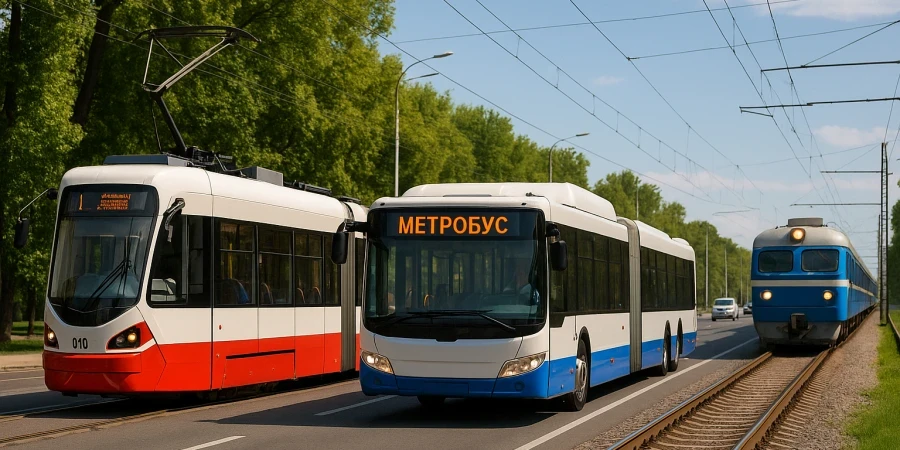
- Returning to trams seems exotic, but I hope the city hall will consider this issue. Bishkek will sooner or later become part of the Chui agglomeration, so we should not reject ideas for building new transport systems due to their high cost.
- The previous general plan lay in the archives for 19 years. Is the same fate awaiting the new general plan?
- Unfortunately, yes. I hope this is not the case, and the new general plan will still be used in practice.
Meanwhile, there was a funny case with the previous general plan. When the need for new territories arose, the city hall tried to expand the city borders, but everyone forgot that the innovations were approved 19 years ago. As a result, the land was used by neighboring districts, and the city hall did not fulfill the government's instructions.
- If the general plan is useless, why develop it?
- The General Plan for Bishkek until 2050 is a strategic document for long-term development. It is necessary for urban planners for further work, as well as for related structures in the city hall responsible for engineering communications. It is unfortunate that among officials there is no understanding of the importance of the general plan, and it ends up forgotten in the archives, which can lead to serious problems for the future of the city.